


When should you replace the Toyota Tundra engine air filter?
Toyota Tundra
Toyota Tundra•
•66 views
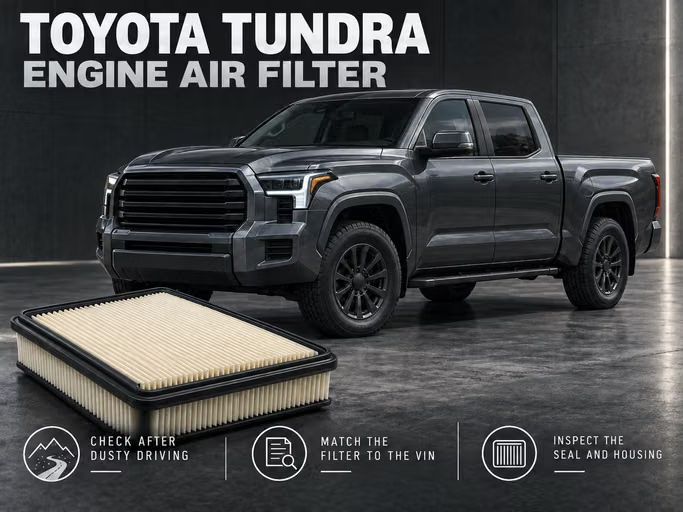
Replace the Toyota Tundra engine air filter when the vehicle’s applicable schedule requires it, or sooner if the element is torn, wet or heavily clogged. In the UAE, an additional inspection is sensible after prolonged sandy driving or exposure to another vehicle’s dust plume. A single replacement mileage cannot cover every Tundra: identify the year, engine and relevant maintenance schedule first.
This article covers the filter supplying air to the engine. The cabin element serves passenger ventilation and does not protect the engine intake. A hybrid Tundra also retains a petrol engine that needs effective air filtration.
Recognising a dirty Tundra air filter
Driving behaviour alone is a poor way to judge filter condition: a restriction may be barely noticeable at light load. An inspection reveals accumulated debris as well as defects that let air bypass the filtering material.
- Sand has collected deep in the pleats. Examine the full working area; pale outer edges can conceal compacted deposits between the folds.
- Dust trails extend beyond the element. Marks along the seal and near the housing outlet deserve particular attention. Investigate leakage or contamination left during earlier servicing.
- The frame has lost its shape. A folded edge, crushed section or separating material can prevent the seal from doing its job.
- Response has changed under load. If acceleration or trailer-pulling performance deteriorates, include the intake in the checks. That symptom alone does not identify a faulty filter.
- An unfamiliar sound follows maintenance. Rattling near the airbox or whistling may indicate an unsecured lid or a disturbed duct connection.
Why a dusty journey matters beyond the odometer reading
Two trucks covering the same distance can expose their filters to very different amounts of dirt. A Tundra visiting construction sites, towing on unsealed tracks or following another vehicle through sand warrants attention to intake condition. Towing by itself does not prove that the filter is dirty; the surroundings during that journey matter.
After substantial dust exposure, inspect the element once the engine bay has cooled. This is a practical condition check, not a newly prescribed Toyota service interval. Heat alone does not establish a replacement deadline either: assess contamination, element integrity and the applicable documentation.
Defects that require replacement before the scheduled date
Cuts in the media, a separating joint and a damaged sealing edge compromise engine protection. Replace a soaked or visibly distorted standard paper element while investigating what caused the damage. If water may have travelled farther through the intake towards the engine, leave the vehicle switched off pending diagnosis.
What happens when air filter replacement is delayed
Restriction and leakage have different consequences. Heavily loaded media obstructs airflow, whereas an imperfectly seated frame gives particles a route around filtration. Fitting a new element therefore needs to include checking the enclosure and its connections.
- Air supply under load can suffer. A substantial intake restriction may become apparent during acceleration, climbing or trailer work. On a turbocharged version, diagnosis must also consider the condition of the boost system.
- Abrasive wear becomes a concern. Dust passing through a defect or gap can reach downstream intake and engine components. Fresh media cannot compensate for a cracked airbox or broken fastener.
- Symptoms become harder to interpret. Fuel consumption and pulling performance have many influences. There is no basis for promising a fixed fuel saving or power increase after changing the element.
Establishing the schedule and choosing a Tundra filter
Obtain inspection and replacement requirements from the owner’s manual and maintenance schedule applicable to the VIN, model year and original market specification. Check normal-use instructions and dusty-road provisions separately. Until that documentation is identified, quoting one interval for the entire model range would be misleading.
Earlier V8 applications and more recent turbocharged V6 versions require separate parts-fitment checks. The i-FORCE MAX hybrid designation is not a parts reference either. Before ordering, establish whether the original intake remains installed: VIN-based selection alone may be insufficient for a replacement aftermarket housing.
| What to establish | How to use the finding |
|---|---|
| VIN, year and engine | Identify the relevant catalogue and service documentation. |
| Original or modified intake | Compare the installed housing with the vehicle specification. |
| Part number and kit contents | Confirm the required elements and quantity in the catalogue. |
| Inspection and replacement timing | Record each requirement from the applicable schedule. |
| Dusty operating conditions | Check the additional provisions in the relevant section. |
| Media and seal condition | Replace a damaged element before the planned service date. |
Applying the requirements to a vehicle in the UAE
Keep the confirmed schedule with the service history. Useful entries include the date, odometer reading, installed part number and inspection findings. If the schedule uses different distance units from the vehicle’s display, identify those units before converting them: identical numbers may represent different distances.
Before working on an i-FORCE MAX, switch the power system fully off and check that the READY indicator has gone out. A silent engine is not proof of shutdown; the hybrid system can start it automatically. Air-filter inspection does not involve handling high-voltage cables or components.
Checks for contamination and after filter installation
Begin with accessible connections disturbed during the service. If the complaint existed before replacement, do not restrict diagnosis to the new consumable. Duct condition and engine-control data help distinguish an assembly problem from another fault.
| Observation | Possible problem | Next action |
|---|---|---|
| Dirt on the clean side | Seal bypass, torn media or contamination from disassembly. | Examine the element, seating and housing. |
| An unevenly seated lid | Misaligned frame or an unsuitable part. | Verify the part number and seal position. |
| Whistling or rattling | A loose joint or unsecured fastener. | Inspect the disturbed ducts and retainers. |
| Loss of response under load | Air restriction or another engine fault. | Check the intake and, where fitted, the boost system. |
| Engine warning | Filter appearance cannot establish the cause. | Read codes and their operating context before clearing them. |
| A wet element | Water has entered the housing. | Find the source; do not start if it may have reached the engine. |
Safe inspection and replacement checklist
☐ Check the vehicle details and the application of the replacement kit.
☐ Park securely, apply the parking brake, switch off the engine or hybrid system and allow hot parts to cool.
☐ Arrange stable access to the engine bay without leaning on plastic covers or hot components.
☐ Clear loose dirt from outside the airbox before opening it; note the element and fastener positions.
☐ Open the housing using the procedure for that version, without pulling on wiring or ducts.
☐ Lift out the element without spilling grit into the downstream passage; inspect the media, frame and seating surface.
☐ Remove accessible debris from the housing without carrying it into the intake or touching sensitive sensor elements.
☐ Fit the element with an evenly seated seal and restore all connections without forcing the lid shut.
☐ Remove tools, check the assembly, then start the vehicle and record the service findings.
Mistakes when servicing a Tundra intake
- Choosing a filter from a photograph. A similar frame does not establish compatibility between the seal and housing.
- Borrowing a schedule from another Toyota pickup. A shared purpose does not make maintenance requirements identical.
- Assuming an element is washable from its appearance. Its manufacturer determines the permitted care method.
- Leaving the intake open during other work. Sand, fasteners and engine-bay debris can fall inside.
- Running without a filter to assess performance. The engine then loses its normal protection against airborne dirt.
- Clearing faults immediately after reassembly. Preserve diagnostic information and investigate the warning first.
Checking the completed job
The lid should sit evenly, with its retainers holding it squarely in place. Look for disconnected plugs, loose clamps and trapped wiring. New noises or warnings after starting require an assembly check; a test drive cannot replace that inspection.
Conclusion
Effective Tundra air filtration requires an intact element of the correct specification inside a sealed housing. The relevant vehicle documentation determines scheduled servicing, while damage and heavy dust exposure deserve attention regardless of the distance remaining until the next visit.
When comparing current offers for a used Tundra, check filter-service records and whether the original intake is intact. A recently fitted consumable alone cannot establish the vehicle’s previous operating conditions.


