


Toyota Tundra Brake Fluid Replacement
Toyota Tundra
Toyota Tundra•
•84 views
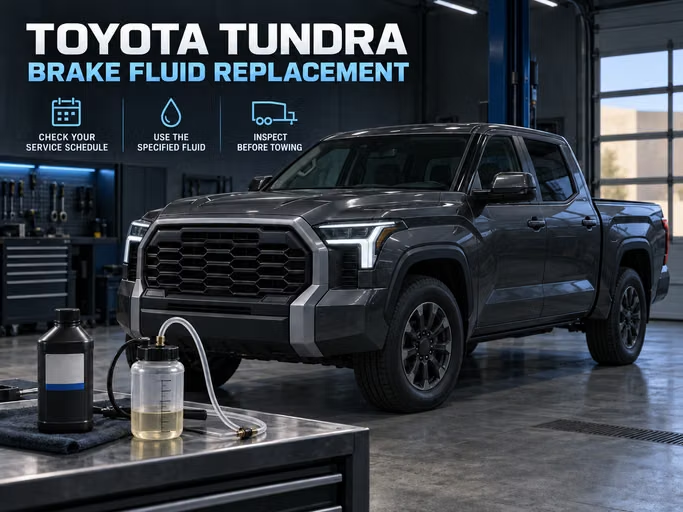
Service Toyota Tundra brake fluid according to the documentation for the individual truck: one replacement interval cannot cover every generation and configuration. Check the required specification, service history and hydraulic system before starting. If the truck carries heavy loads or tows a trailer, do this before the next demanding journey.
When the brakes need prompt attention
When booking an inspection, explain how far pedal travel has increased, whether resistance holds steady under pressure and when braking becomes less effective. These observations help the technician decide what to investigate.
- The pedal travels noticeably farther before the truck begins to slow effectively.
- The pedal continues sinking under steady pressure while the truck is stationary.
- After several consecutive stops, more pedal pressure produces less deceleration than usual.
- The reservoir level drops quickly, connections show fresh leakage or repeated topping up is necessary.
- The red brake system warning remains illuminated after the parking brake is released.
Why low mileage does not eliminate fluid concerns
Brake fluid carries hydraulic pressure to the wheel brakes. Glycol-based fluid gradually absorbs moisture, reducing its boiling margin. Under severe heat, vapour can interfere with pressure transmission: the pedal moves, but the expected braking response does not follow.
On a Tundra, this is particularly unwelcome with a loaded bed or a trailer attached. Vehicle weight alone, however, cannot determine a replacement date. The applicable maintenance schedule, previous service records and system condition all matter. Clear-looking fluid in the reservoir is not proof that it remains suitable.
Topping up and replacement serve different purposes. Adding fluid does not renew the fluid at the wheels or correct the reason for a loss. A small level reduction can accompany pad wear; frequent refilling calls for an investigation.
Maintenance schedule and fluid specification
The owner’s manual for the 2023 V35A-FTS Tundra explains level checks and fluid handling on pages 473–474. It permits FMVSS No. 116 DOT 3 / SAE J1703 or FMVSS No. 116 DOT 4 / SAE J1704. These specifications apply to the version described and are not a blanket prescription for every Tundra.
Check inspection frequency and any scheduled replacement requirement in the service documentation for your truck. A different Toyota model’s interval or an individual workshop’s recommendation does not establish a factory Tundra requirement. If the applicable schedule has no fixed replacement interval, fluid condition still needs attention.
| Item | What matters | Action before servicing |
|---|---|---|
| Specification | For the stated 2023 Tundra: DOT 3 / SAE J1703 or DOT 4 / SAE J1704 | Confirm the VIN-matched manual and reservoir marking. |
| Frequency | Schedule for the relevant model year and market | Distinguish inspection, scheduled replacement and condition-based advice. |
| Level | Between MIN and MAX under the specified checking conditions | Account for pad wear and brake system state. |
| Quantity | Reservoir capacity is not the amount needed for a complete exchange | The workshop allows enough fluid for the correct procedure. |
Choosing a suitable fluid
Read the complete specification on the container. A higher DOT number does not automatically establish compatibility. Where DOT 3 and DOT 4 are permitted, select a product explicitly meeting one of the approved standards. Silicone DOT 5 is not a substitute for these fluids.
- Open a new sealed container immediately before the work.
- Use a clean funnel and equipment free of oil, fuel and water.
- Clean around the cap before opening the reservoir.
- Never reuse drained fluid or fluid stored under unknown conditions.
Operating a Tundra in the UAE
Repeated urban stops, heat and heavy loads make the entire brake system worth checking: pads, discs, hoses and fluid. These conditions can justify additional inspections. They do not, by themselves, create a new mandatory Toyota replacement interval.
Towing and payload
Before towing, check the weight limits for your exact configuration, the truck’s brakes and the trailer braking system where fitted or required. A working trailer controller cannot compensate for a hydraulic leak in the Tundra. On long descents, use engine braking as directed in the manual and avoid continuously holding the brake pedal to control speed.
If braking weakens after a descent, allowing the brakes to cool is not enough to declare the problem resolved. Establish the cause of overheating and have the system checked before continuing. Smell and vibration also warrant diagnosis, although neither proves a fluid fault on its own.
Non-hybrid trucks and i-FORCE MAX
The Tundra name covers different powertrains and brake control systems. A hybrid drivetrain does not remove the need to service the hydraulics. For i-FORCE MAX, verify the fluid specification and repair procedure separately; do not borrow pump, pressure or electronic control instructions from another Toyota hybrid.
What a complete replacement should involve
Make sure the service order covers fluid exchange through the required circuits. Extracting fluid only from the reservoir leaves much of the old fluid in the system. If hydraulic components were opened during repairs, air removal must follow the relevant repair instructions.
- Identify the truck and obtain the procedure for its installed brake system.
- Inspect lines, hoses, calipers and the reservoir; check pad condition and fault warnings.
- Correct identified defects before replacement, then prepare the specified fluid and suitable equipment.
- Exchange the fluid and perform the required bleeding sequence without letting the reservoir run dry.
- Check the level, inspect for leaks and verify pedal operation. Carry out a road check only after stationary checks pass.
- Record the date, mileage, fluid specification and completed operations on the invoice.
Is this a suitable DIY task?
The owner’s manual explains level checks but does not replace repair documentation for a complete exchange. DIY work requires the correct procedure, equipment and a reliable way to verify the result. Without instructions for the particular truck, use a workshop familiar with its brake system.
Checking a used Toyota Tundra
New discs and pads do not establish that the fluid was changed as well. Compare records with the actual brake condition, particularly on a truck that has regularly towed a trailer.
☐ Find the date and mileage of the last documented complete fluid exchange.
☐ Confirm the fluid specification and any previous hydraulic repairs.
☐ Inspect the reservoir, accessible connections and wheel areas for leakage.
☐ Ask about warnings, increased pedal travel or overheating on descents.
☐ Arrange diagnosis before a road test if symptoms are present.
Common servicing mistakes
- Applying an interval from another model or generation.
- Treating a reservoir-only refresh as a complete replacement.
- Selecting fluid solely by colour or price.
- Filling above MAX without following the specified level-check conditions.
- Concealing a leak through repeated topping up.
Conclusion
Tundra brake fluid maintenance starts with identifying the configuration and reviewing previous work. Assess the system, select an approved fluid and complete the exchange using the correct procedure. For a tow vehicle, investigate any loss of braking performance before the next loaded trip.
When choosing a truck, current listings can help compare equipment and service history; each vehicle’s brake condition still needs an individual inspection.


