


How often to change the oil filter on a Toyota Tundra
Toyota Tundra
Toyota Tundra•
•63 views
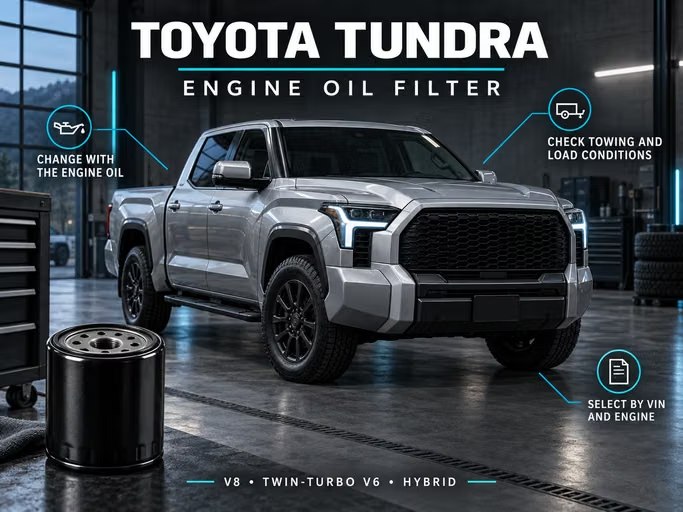
Fit a new engine oil filter at every scheduled oil change on a Toyota Tundra. The timing depends on the maintenance schedule for the individual version and how the truck is used. A Tundra that regularly carries loads or pulls a trailer may need a different schedule from one in ordinary use. Track both elapsed time and distance, and service the vehicle when the first limit is reached.
When the Tundra oil filter is due for replacement
There is no need to wait for the engine to run differently. Neither engine sound nor the outside of the filter housing reliably shows the condition of the filter medium. These situations call for attention.
- The specified interval is ending. The time limit still applies when mileage is low. Several months parked do not reset the time since the last service.
- Previous work is unclear. An invoice may list oil without mentioning a filter. If replacement cannot be confirmed, discuss a complete oil service and document the work.
- The truck’s workload has increased. Tell the workshop about trailer use, regular loads, dusty routes and long periods with the engine idling. These details help identify the appropriate schedule.
- There is leakage or an oil-pressure warning. A fault needs investigation before the next routine appointment. Neither symptom alone proves that the filter is blocked.
Finding the interval for your truck
For example, the maintenance guide for the 2021 Tundra allows 10,000 miles or 12 months for vehicles approved for 0W-20 when that oil is used under normal conditions. This is approximately 16,000 km, not 10,000 km. That example applies to the specification covered by the document, rather than every Tundra.
The maintenance guide for the 2024 Tundra lists additional work for special operating conditions, including dusty roads. Before setting a due date, confirm that the document covers the vehicle and check the oil-and-filter replacement entry. A general maintenance visit is not necessarily an oil-change interval.
For driving in the UAE and Gulf countries, describe the actual workload: towing a boat, carrying equipment, sand driving or extended idling. “Hot weather” alone does not replace the conditions listed in the schedule. Use the hybrid’s own documents for a hybrid Tundra; do not automatically apply the conventional V6 schedule.
What delayed filter replacement can cause
The filter captures solid contaminants carried by the circulating oil. As these build up, the element’s flow characteristics and remaining capacity change. The driver may notice no clear warning while this happens.
- Contaminants fill the filter medium. Less capacity remains to retain new particles.
- Oil meets greater resistance. The pressure difference depends on both contamination and oil viscosity, with start-up conditions particularly relevant.
- The bypass valve may operate. At a specified pressure difference, it allows oil around the filter medium. Flow is maintained, but some oil passes without full filtration.
- Protection against abrasive particles decreases. Contaminants still circulating can accelerate wear. However, an old filter is not an automatic explanation for an engine knock.
Selecting an oil filter for the Toyota Tundra
Start the parts order with the vehicle’s VIN and exact engine variant. Body trim or the word Tundra on a box is insufficient: the catalogue needs to confirm fitment for that vehicle.
Ask for the filter part number and the contents of the kit. If the manufacturer has superseded the number, establish that the replacement is suitable. Where the assembly uses a replaceable element inside a housing, check the required seals and the condition of the cap as well.
| Identification | What to establish | Why it matters |
|---|---|---|
| Model year and VIN | Build date and factory specification | Similar-looking trucks may differ |
| Engine | V8, turbocharged V6 or hybrid version | A family name is not precise enough for fitment |
| Filter design | Element or complete filter, plus supplied seals | All required installation parts must be available |
| Part number | Current reference and approved replacements | The manufacturer may have superseded the old number |
| Supplier | Traceable origin, markings and paperwork | Packaging does not guarantee what is inside |
Why the old filter is not always a reliable reference
A used truck may already have an incorrectly selected part. Copying its number without checking the catalogue can repeat that mistake. If the engine has been replaced or the filter housing modified, the workshop also needs to establish the actual configuration; the VIN alone may then be insufficient.
When reviewing current listings, compare the Tundra’s service records as well as its mileage. Invoices showing dates, oil specifications and filter references are more useful than a general claim of regular servicing.
Work to include with the filter replacement
- Choose oil for the installed engine. Check viscosity, the required quality standard and refill capacity with a new filter. Oil left over from another Toyota is not necessarily suitable for a Tundra.
- Renew the specified seals. Clean the seating surfaces and remove the old ring or gasket. Fit the new parts using the procedure for that particular assembly.
- Check the result before handover. After the prescribed test run, inspect the filter and drain plug. Verify the level using the specified procedure rather than relying only on the volume poured in.
The service record should identify whether the odometer reading is in miles or kilometres. Record the next replacement by date and odometer reading so the workshop and owner use the same reference.
Assessing symptoms after servicing
Leakage, noise and changes in oil colour can have different causes. The table helps identify the next step; it does not provide a diagnosis.
| Observation | Possible explanation | Response |
|---|---|---|
| Oil near the filter | Residue from the change or a leaking joint | Clean the area and check whether fresh leakage appears |
| Falling oil level | A leak or engine oil consumption | Establish the cause and monitor the level |
| Oil-pressure warning | A lubrication fault or a monitoring fault | Stop the engine and arrange checks |
| Metallic knocking | A mechanical fault, possibly involving lubrication | Avoid loading the engine; stop for pronounced knocking |
| Darker oil | Changes during operation | Do not base filter replacement on colour alone |
Checklist after the filter change
☐ Obtain the fitted part number and the specification of the oil used.
☐ Verify the level after the wait and under the conditions stated in the manual.
☐ Confirm that the inspection found no leakage at the filter or drain plug.
☐ Ask whether regular towing and load carrying were considered.
☐ Check the next service date and the mileage units recorded.
☐ Before inspecting a hybrid yourself, switch the system off and confirm that READY is not illuminated.
Tundra maintenance mistakes to avoid
- Reading miles as kilometres. A figure of 10,000 can produce the wrong due date if its units are overlooked.
- Choosing a schedule without considering workload. Regular trailer use and hours of idling need to be discussed before setting the interval.
- Matching a filter only to the old one. The same shape does not prove that the previous part was correct.
- Tightening the housing by guesswork. Excessive force can damage threads, the cap or a seal; use the specified procedure.
- Extending the interval because the truck is a hybrid. Its petrol engine still needs oil and filter servicing according to its own schedule.
Keeping future maintenance on track
Keep the filter reference, oil specification and replacement record together. Before the next appointment, tell the workshop about changes in the Tundra’s work: a new trailer, frequent dusty routes or long periods idling. This gives the workshop the information needed to select the schedule for the truck and helps prevent missed replacements when mileage is low.


