


How to prepare a Toyota Tacoma for sale A pre-sale checklist
Toyota Tacoma
Toyota Tacoma•
•3 views

Editorial illustration. Vehicle appearance and equipment are illustrative; verify specification and condition on the individual truck.
Prepare a Toyota Tacoma for resale in the UAE with diagnosis and a cost estimate. Polishing will not answer questions about the frame, drivetrain or previous use. Resolve defects, document work and protect the return after expenses. The cargo bed, load restraints and evidence of towing deserve attention alongside the cab.
This guide concerns the third generation, primarily American-market trucks from model years 2016–2023. Compare the 2.7 and 3.5 engines, cab styles and drivetrains separately. The fourth generation, introduced for model year 2024 with a 2.4-litre engine, is outside these technical references.
Where should Tacoma sale preparation begin?
Create a vehicle record covering model year, original market, engine, transmission, drivetrain, cab, bed length, mileage and known repairs. Match the VIN* on the truck to its documents. Confirm factory specification through vehicle data, not a grille, stickers or wheels from a higher trim. For an American import, check whether the recorded mileage is in miles or kilometres.
* VIN means vehicle identification number, used to check factory data and available history.
Review current Toyota Tacoma offers and select comparable trucks. An identical model year does not justify pricing a rear-wheel-drive pickup against a four-wheel-drive example. Resolve gaps in repair history before spending on cosmetics.
What should be cleaned on the body and cargo bed?
Start by washing the body, wheel arches, wheels and accessible underside. The 2023 Tacoma owner’s manual recommends rinsing away dirt before using a soft cloth or sponge. Do not direct high-pressure water continuously into door gaps or around windows. Inspect the dry vehicle in daylight afterwards and record the damage that remains.
Empty the bed and remove loose mats and organisers. Toyota’s 2023 American-market brochure describes a composite bed surface and deck rails for securing cargo. Check for cracks, damaged mounts, tailgate hinge or latch problems and missing advertised tie-down fittings. Ordinary wear on a working bed does not automatically indicate major damage; a new cover should not conceal a crack.
Does the whole pickup need polishing or repainting?
No. Decide from coating condition and a written estimate. Local treatment of shallow marks may make more sense than repainting everything. Have a specialist assess the finish before polishing. Photograph the original defect, retain the repair invoice and disclose the work. A refinished panel does not become factory paint because the repair looks good.
Inspect the frame before choosing a treatment. Fresh black coating over unassessed corrosion makes evaluation harder. Suspected deformation or loss of structural strength needs professional assessment; cosmetic preparation cannot resolve it.
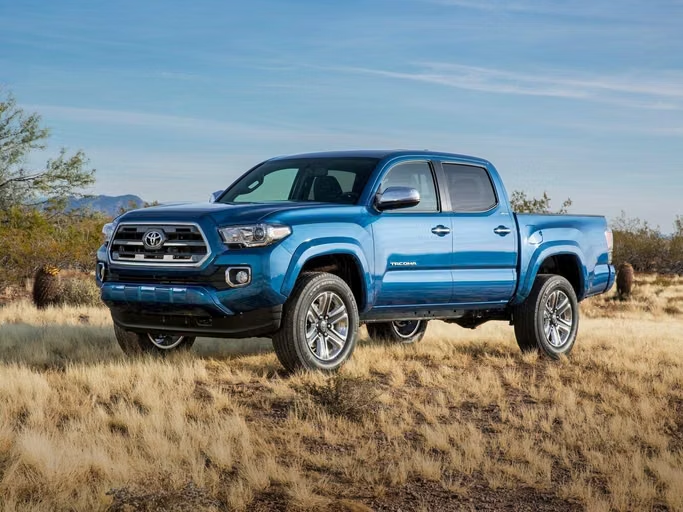
Third-generation Tacoma with a four-door cab: preparation covers the cab body and cargo bed. Model photograph.
Which faults should be resolved before the first viewing?
Prioritise brakes, steering, damaged tyres, leaks, overheating and safety-system faults. Diagnose first, then authorise the repair. Do not arrange an ordinary test drive in a truck with a dangerous defect. Verify the result afterwards; a paid invoice alone does not establish that the fault has been fixed.
On four-wheel-drive trucks, check the specified transmission modes according to the manual, any fitted differential lock and the driveline. Examine the tow hitch, mounts, wiring and rear suspension. A hitch does not prove overloading, while its absence does not rule out previous towing. An aftermarket lift needs an installation assessment, not merely a wheel alignment.
Is a major service necessary before selling?
Compare records with the schedule for the exact model year. Include overdue maintenance and condition-dependent replacements in the estimate. Replacing every fluid arbitrarily does not substitute for diagnosis. State where history is unknown: a new service entry confirms only the work actually completed.
For example, the 2023 American-market Tacoma maintenance schedule specifies spark-plug replacement on the 3.5-litre engine at 60,000 miles, approximately 96,600 kilometres, or 72 months, whichever comes first. These are ignition spark plugs; the petrol versions discussed do not have diesel glow plugs. Deep sand, mud or water use brings additional checks, including the engine air filter and chassis components.
For a V6 truck, consult the s[eparate guide to the service life and weak points of Toyota Tacoma’s 2GR-FKS* engine.](https://auto.ae/blog/car/toyota/toyota-tacoma/toyota-tacoma-2gr-fks-engine/556051/) It connects maintenance history with specific symptoms. Do not apply its data automatically to the 2.7-litre engine or the newer 2.4-litre generation.
V6 describes six cylinders arranged in two banks forming a V. * 2GR-FKS is the designation of the 3.5-litre petrol engine.
How should the cabin be prepared for inspection?
Remove sand from seat tracks and storage areas, then clean glass, upholstery and mats with suitable products. Dry the cabin thoroughly after wet cleaning. A damp smell needs investigation rather than stronger fragrance. Test air conditioning, windows, locks, cameras, seat belts and seat adjustments. Show the cabin in normal lighting without dressings that make surfaces excessively glossy.
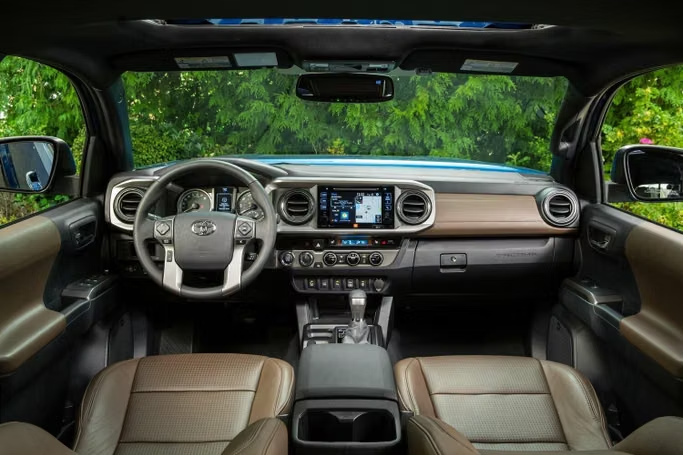
Tacoma cabin: cleaning should make controls and upholstery easier to inspect. Model photograph.
Should off-road modifications stay on the truck?
Ask three questions about each modification: is it safely installed, is documentation available, and will the intended buyer value it? An expedition rack, extra lighting or larger wheels does not guarantee recovery of the original cost. Standard specification may be easier to assess for someone seeking an everyday pickup. Consider removal costs and consequences before reversing modifications.
List installed equipment and retained factory parts. A body kit does not establish factory trim. When removing an accessory, inspect remaining holes, mounts and wiring. Removing equipment without restoring its installation points creates another defect rather than improving the vehicle.
How much preparation spending can the deal support?
Calculate the limit before commissioning work. Assume an expected AED 94,000 sale, an AED 82,000 purchase, AED 2,000 in other costs and a desired AED 7,000 surplus. That leaves AED 3,000 for preparation. This is an illustrative budget, not a Tacoma market valuation or workshop quotation; account separately for taxes and all actual expenses.
If the estimate rises to AED 4,500, the surplus falls to AED 5,500, all else unchanged. Do not recover the overrun by skipping necessary repairs. Reassess optional cosmetics, the expected sale price and whether the deal remains worthwhile. Assuming that expensive polishing will pay for itself is not a calculation.
What should be ready before the listing is published?
Photograph the truck after the work and verification drive. A practical set is 12–16 landscape images covering overall views, both sides, the bed, cabin, instruments, wheels, engine bay and visible defects. This is an editorial recommendation for completeness, not a platform requirement. Place each photograph separately; editing should not remove damage.
Before the first buyer enquiry, confirm four points:
- The specification and mileage description agree with the documents.
- Invoices support the claimed servicing and repairs.
- Known defects are disclosed and inspection remains possible.
- All costs are included in the minimum acceptable sale-price calculation.
Conclusion
A well-prepared Tacoma has a clear history and checked condition, and is straightforward to inspect. Resolve technical problems before addressing bodywork, the bed and cabin. Transparent costs and repair records help explain the price. Cosmetics and accessories are useful when they address a specific buyer need.


