


When Should You Change the Transfer Case Oil in a Toyota RAV4?
Toyota RAV4
Toyota RAV4•
•42 views
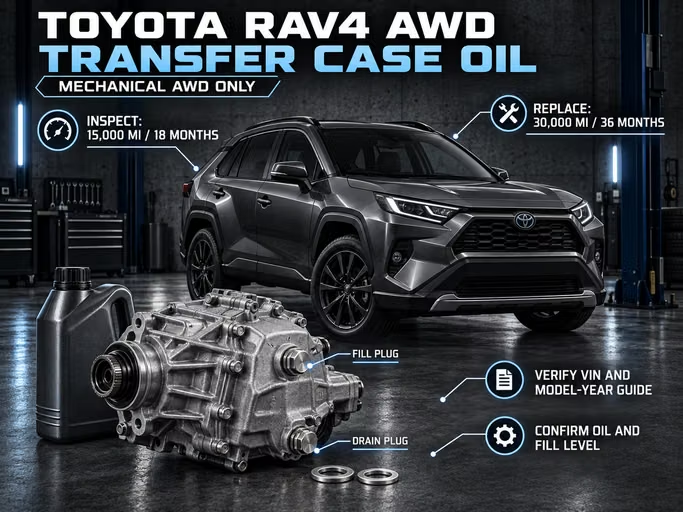
For a 2024 petrol Toyota RAV4 with mechanically driven all-wheel drive, Toyota schedules a transfer-unit oil inspection at 15,000 miles or 18 months and replacement at 30,000 miles or 36 months, whichever limit is reached first. Those figures do not apply to every RAV4. Front-wheel-drive vehicles have no separate transfer case, while hybrid versions with an electrically driven rear axle use a different layout.
Confirm the architecture by VIN, model code, and the hardware fitted to the car before buying fluid. A petrol AWD model sends torque rearward through an angle drive and propeller shaft. An AWD badge on a hybrid may instead refer to a dedicated rear electric motor without a conventional mechanical transfer case. Requirements can also vary within one generation according to model year and destination market.
When Does a RAV4 Transfer Unit Need an Early Check?
The scheduled interval assumes that the unit is sound and sealed. Inspect it sooner after an underbody strike, water exposure, fresh oil residue, or the purchase of a car with an unclear maintenance record. A fluid change should never take the place of finding the cause of a fault.
- The AWD design has not been verified. A badge or trim name does not show how the rear axle is driven. Match the VIN and model code to the manual and confirm that a mechanical transfer unit is physically present before arranging service.
- Oily dust is visible on the undertray or housing. Examine the fill and drain plugs, case joint, and shaft seals. Clean the area, drive a short distance, and inspect it again; this makes old residue easier to distinguish from active seepage.
- The vehicle has encountered water or suffered an underbody impact. A RAV4 should not be treated as a deep-water vehicle. Water entering through a damaged seal or breather weakens lubrication, while a distorted shield can damage the housing. Cloudiness, foam, or emulsion calls for correction of the cause and a complete fluid change.
- The sound changes during acceleration or deceleration. Humming, shudder, or a brief grinding noise can originate in the transfer unit, rear differential, propeller shaft, wheel bearings, tyres, or an electromagnetic AWD clutch. Locate the source and check AWD fault data before blaming the lubricant.
- Previous service cannot be documented. A statement that the oil was changed is incomplete without a date, mileage, and product name. On a used RAV4, establish the hardware, inspect the level and sealing, and create a new traceable maintenance baseline.
How Heat, Sand, and Carrying Loads Affect the Unit
High ambient temperature, loose surfaces, and long journeys at high vehicle weight add heat to the AWD components. Some Toyota schedules specify extra work for towing, a car-top carrier, or sustained heavy loading. Heat alone, however, is not permission to substitute a thicker lubricant or invent a shorter interval.
External sand does not pass through a sealed housing, but it holds oil residue and obscures inspection. After dusty-road use, clean the undertray and case without directing high-pressure water at seals or connectors. Then examine the plugs, shaft areas, and nearby assemblies. Engine, transmission, or rear-differential fluid can travel across a shield and imitate a transfer-unit leak.
What Happens When the Oil Level Is Low or the Fluid Is Contaminated?
The compact transfer unit holds a modest amount of lubricant, so even a slow leak can remove a meaningful share of its protection. Temperature and surface loading rise first, followed by noise and accelerated wear. Once the damage is mechanical, new fluid cannot restore bearings or gear contact surfaces.
- The protective film becomes less reliable. With a low level, some surfaces receive less oil, particularly after a long journey with the housing at a stable high temperature.
- Contaminants continue to circulate. Wear debris and moisture pass through loaded contact zones, alter additive performance, and speed up damage to moving components.
- Noise and vibration increase. Bearing and gear wear creates additional clearance. Symptoms may occur only under drive or on overrun, so quiet operation with the vehicle lifted does not necessarily rule out a problem.
- Leakage begins to reinforce the fault. Heat and increasing clearance load the seals, the level falls more quickly, and accumulated dirt conceals the original path of the oil.
- Advanced damage requires repair. Large metallic fragments, obvious free play, persistent humming, or damaged gear teeth cannot be addressed by fluid service alone. Diagnosis determines the repair scope.
What Toyota Specifies for a Mechanically Driven AWD RAV4
In Toyota’s maintenance guide for a 2024 petrol RAV4 with mechanical four-wheel drive, the transfer-unit oil is inspected at 15,000 miles or 18 months and replaced at 30,000 miles or 36 months. The notes attached to towing, a car-top carrier, and heavy loading must also be read before applying the schedule.
| Parameter | What to Confirm for a Toyota RAV4 |
|---|---|
| Applicability | Petrol versions with mechanical AWD and a separate transfer unit |
| Scheduled inspection | 15,000 miles or 18 months for a 2024 RAV4, whichever comes first |
| Scheduled replacement | 30,000 miles or 36 months for the same configuration |
| Special conditions | Read the separate notes for towing, a car-top carrier, and heavy loading |
| FWD and electric AWD | A conventional mechanical transfer case may be absent; use the matching schedule |
| Oil and level | Confirm by VIN, model code, and the procedure in the exact manual |
For another model year, destination market, or hybrid powertrain, select the matching document from the manuals directory. VIN and model-code information takes priority over a generic retailer recommendation or a conveniently selected container label.
How to Apply the Maintenance Interval Correctly
Measure the interval from the last documented inspection or replacement and track both time and mileage. When either limit arrives first, do not wait for the other. Record the date, odometer reading, exact lubricant, batch or repair-order reference, and the condition of the removed sealing washers after every service.
Assess the duty cycle separately. Routine towing, permanent heavy loads, and extended unpaved-road use differ from one short trip with a roof carrier. Match the real pattern to the notes in the schedule for the correct model year and market rather than automatically labelling every urban vehicle as severe service.
Choosing the Oil Without Confusing the Driveline Units
The RAV4 name and an AWD badge are not enough to select a container. Ordering requires the model year, VIN, model code, and transmission type. Use the manual to verify the fluid specification, reference capacity, sealing parts, and plug torque. Set the final level by the prescribed procedure with the vehicle positioned correctly.
- Do not carry the rear-differential specification over to the transfer unit. Both may use driveline lubricants, but their viscosity and additive requirements can differ.
- Do not use ATF merely because the transfer unit is attached to an automatic transaxle. Proximity or a shared exterior assembly does not prove that the lubrication circuits are the same.
- Do not choose a thicker product as a hot-climate upgrade. The factory requirement already accounts for operating temperature; alter it only where Toyota expressly provides an alternative.
- Do not treat the entire bottle as the fill quantity. Published capacity helps with preparation, but the correct level is set by the fill opening and the manufacturer’s procedure.
What Can Drained Oil and RAV4 Behaviour Reveal?
Fluid condition contributes evidence but is not a diagnosis by itself. Fine, even paste on a magnet is evaluated differently from large reflective fragments; an overheated odour or milky appearance needs investigation. Check the propeller shaft, rear differential, wheel hubs, tyres, mounts, and AWD controls at the same time. A noise that changes in a bend, under acceleration, or on overrun helps narrow the search.
| Condition | Effect | Possible Driver Observation |
|---|---|---|
| Leak or low level | Lubrication and heat removal deteriorate | Oily dust, heated-oil odour, or a new hum |
| Water contamination | The oil film weakens and corrosion risk rises | Cloudiness, foam, or pale emulsion |
| Incorrect product | Viscosity and additives do not match the requirement | Noise, heat, or no early warning |
| Overheating | Fluid oxidation accelerates | Colour or odour changes after high load |
| Mechanical wear | Clearance and impact loading increase | Hum, shudder, or noise on torque reversal |
| Another source | A neighbouring driveline or chassis part is faulty | Noise varies with steering, speed, or tyres |
Practical Service Checklist
☐ Confirm by VIN and hardware that the RAV4 has mechanical AWD and a separate transfer unit.
☐ Record the model year, model code, destination market, mileage, and last service date.
☐ Open the manual for this exact version and read the operating-condition notes.
☐ Identify when the fluid was last inspected or changed and which product was used.
☐ Inspect the undertray, housing, plugs, joints, shaft seals, and nearby assemblies for leakage.
☐ Before draining, confirm that the fill plug can be removed with the correct tool.
☐ Check the drained oil for water, an overheated odour, and visible metallic fragments.
☐ Use the verified specification and renew sealing parts where the procedure requires them.
☐ Set the level, tighten the plugs as specified, and recheck for leakage after a road test.
Mistakes to Avoid
- Servicing a unit before identifying the drive system. FWD, mechanical AWD, and electric AWD use different components and fluids.
- Applying one market’s interval to another. Matching model years can still use different equipment, schedules, and special-condition notes.
- Ordering oil by model name alone. The VIN and model code prevent confusion between transfer-unit, differential, and transmission fluids.
- Masking a hum with thicker oil. Viscosity cannot repair bearings, gears, shafts, or an AWD clutch.
- Treating fluid replacement as diagnosis. After leakage, impact, or water contamination, correct the cause and recheck sealing.
Conclusion
The Toyota RAV4 transfer-unit interval depends on model year, market, drive system, and operating conditions. The 2024 petrol guide specifies inspection at 15,000 miles or 18 months and replacement at 30,000 miles or 36 months for mechanical AWD; FWD and electrically driven AWD require different treatment. Confirm the VIN before ordering fluid and arrange an early diagnosis after leakage, impact, or water exposure. Toyota RAV4 current listings can be reviewed separately, but drive type and fluid requirements must be established from the documents for the individual vehicle.


