


5 mistakes resellers make when selling a Toyota Raize in the UAE
Toyota Raize
Toyota Raize•
•12 views
Editorial illustration. The vehicle and objects are illustrative and do not establish the specification or condition of a particular car.
When reselling a Toyota Raize, the gap between the buying price and the advertised price is not profit. Preparation, holding costs, a buyer’s negotiated discount and inaccurate descriptions can reduce the return. Even a modest unexpected bill matters when the initial margin is small.
These five seller mistakes can cost money and buyer trust. The article covers petrol 1.2-litre and 1.0-litre turbo Raize versions offered in the UAE. Imported cars require separate specification and sale-condition checks. The calculations are illustrative examples, not valuations of individual vehicles.
1. Why should different Raize versions not share one valuation?
The first mistake is setting a price from the most expensive advertisements without checking the version. On 8 November 2026, the model page lists new Raize starting prices of AED 63,900 for the 1.2-litre and AED 66,900 for the 1.0-litre turbo. That AED 3,000 difference does not make every used turbo car worth exactly AED 3,000 more than every naturally aspirated example.
The new versions also list different wheels: 16 inches for the 1.2 and 17 inches for the turbo. For a used car, confirm its original specification, mileage and history. Wheels fitted by an earlier owner do not turn a lower trim into a higher one. Do not transfer the current equipment list automatically to a 2022 or 2023 vehicle.
Compare current offers for the same year and engine, then account for mileage, repairs, origin and sale terms. Check the GCC* designation separately: it describes regional specifications, not an accident-free history. An export price is not a direct benchmark for a car being sold for local use.
* GCC means Gulf Cooperation Council; GCC Specs describes a specification intended for this region.
The useful outcome is a supported price range rather than a copy of the highest asking price. Save the comparable listings and comparison date. If few close matches exist, acknowledge that uncertainty instead of treating the desired price as established market value.
2. Why is the buying-to-selling price gap not earnings?
The second mistake is calculating returns before expenses and negotiation. Suppose a Raize costs AED 38,000, is advertised at AED 45,000 and sells for AED 43,500. The purchase-to-sale gap is AED 5,500. Deduct AED 1,200 for preparation, AED 800 for transaction costs and logistics, and AED 600 for advertising and holding costs: AED 2,900 remains before tax and other uncounted expenses.
An extra AED 1,400 repair reduces that result to AED 1,500. These figures do not represent typical Raize returns. They illustrate why the calculation must start from an expected transaction price rather than the number in the seller’s advertisement.
Set a minimum acceptable price and preparation budget beforehand. Update the calculation when costs change. Trying to recover every expense through a higher asking price creates no automatic benefit for the buyer and may extend the time needed to sell.
3. Which preparation expenses consume the margin?
The third mistake is spending on appearance while leaving technical questions unresolved. Before polishing or adding equipment, check the air conditioning, brakes, tyres, engine and transmission. The petrol versions considered here use a CVT*. Jerking, warnings or unusual noises need a diagnosis and repair estimate first.
* CVT means Continuously Variable Transmission.
Separate work required for safe operation from necessary maintenance and cosmetics. The first two determine whether the car can honestly be offered as roadworthy and serviced. Set a limit for cosmetics: buyers are not obliged to repay the full cost of ceramic coating, expensive multimedia equipment or aftermarket wheels they did not choose.
Select service parts for the specific engine. Petrol Raize versions use spark plugs; replacing them merely to advertise the car as “fully serviced” makes little sense without checking the schedule and condition. Keep invoices, dates and mileage records. They explain what was done without promising freedom from future expenses.
For the 1.0 Turbo, also assess the turbocharging system and its service history. See the Toyota Raize 1KR-VET turbo engine guide covering boost, fuel consumption, applications and faults https://auto.ae/blog/car/toyota/toyota-raize/toyota-raize-1kr-vet-turbo/555769/. This guide does not apply to the naturally aspirated 1.2-litre version.
Document cosmetic repairs too. A clean cabin and clear photographs help present the car but should not conceal known damage. If a fault remains unresolved, tell the buyer beforehand and agree how it will be handled.
4. Which advertising claims undermine buyer trust?
The fourth mistake is claiming “full options”, “original paint” or “under warranty” without evidence. Check the engine, equipment and year against the records and VIN*. Confirm that the camera, air conditioning and other advertised equipment actually work. A screen does not establish every feature copied from another listing.
* VIN means Vehicle Identification Number.
Where accident or service history is incomplete, explain the limits of what is known. “According to available records” and “supported by invoices for this period” are more precise than absolute promises. Do not present a new car’s full warranty term as the remaining cover on a used example: verify its documents and applicable conditions.
Use photographs of the actual car: exterior views, cabin, boot and visible imperfections. Do not retouch damage. If a viewing reveals discrepancies with the photographs or description, the conversation starts with distrust rather than the Raize’s merits.

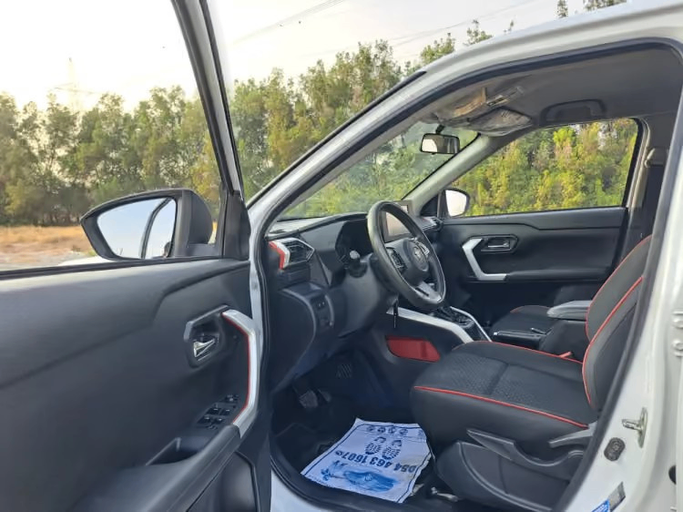
Toyota Raize exterior and cabin: photographs should show the actual condition and equipment of the car being sold.
5. How can a seller lose the deal during and after a viewing?
The fifth mistake is treating detailed questions and independent inspection as obstacles. A buyer may need to establish whether the compact Raize suits their seating, luggage and driving needs. Instead of saying the model has no drawbacks, offer to check what matters to them: rear-seat comfort, air conditioning, noise and performance during an agreed test drive.
This also addresses a common question about the Raize’s weaknesses: compact-car characteristics must be distinguished from faults in the individual example. Do not promise identical driving responses from the 1.2 and 1.0 turbo or present one driver’s fuel consumption as a guaranteed result for everyone.
Send accurate details before the meeting and agree the location, time and inspection arrangements. Prepare service records and a list of completed work. If diagnostics identify a problem, discuss the findings and quotation. Pressure about another buyer arriving shortly does not answer a question about a discovered defect.
Before handover, record the price, included accessories and agreed commitments in writing. Keep those records after the sale and respond substantively to reasonable concerns. Reputation depends on whether the delivered vehicle matches the buyer’s expectations as well as on the advertisement itself.
Conclusion
Avoid five errors when selling a Raize: mismatched price comparisons, ignoring costs, excessive preparation, unsupported claims and unclear communication. Verified specifications, a realistic cost estimate and an honest description cannot guarantee profit. They do, however, support decisions based on evidence and help preserve buyer trust.


