


McLaren 720S Spider: What 120 Fault Codes Revealed About a Modified Supercar
McLaren 720S
McLaren 720S•
•7 views
#
A real diagnostic case involving modified ECU software, engine misfires and transmission problems.
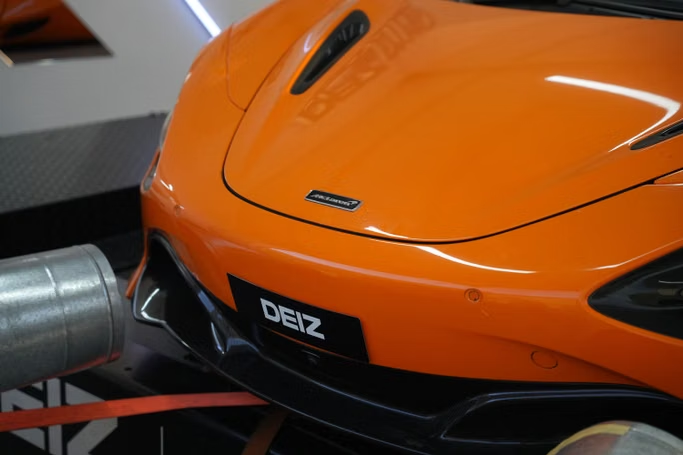
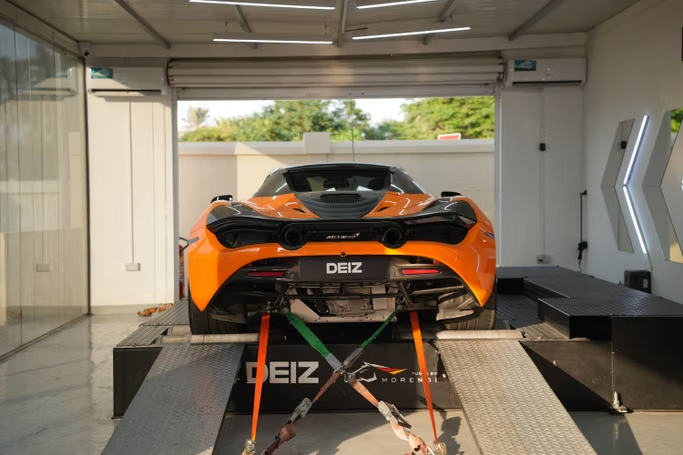
A 2019 McLaren 720S Spider with 49,357 km arrived at DEIZ GARAGE in Dubai with multiple dashboard warnings and several aftermarket modifications.
The vehicle had modified downpipes, intake and exhaust components, and a third-party ECU calibration featuring a pops-and-bangs function.
An initial diagnostic scan revealed 120 active and historical fault codes. A separate mechanical inspection identified 16 groups of findings involving the engine, transmission, brakes, suspension and electrical systems.
The challenge was to distinguish genuine component faults from secondary electronic warnings and determine how the modified software affected vehicle operation.

Why Modified McLaren 720S Cars Require Careful Diagnosis
The McLaren 720S is powered by a 4.0-litre twin-turbocharged V8 producing 720 PS and 770 Nm, paired with a seven-speed dual-clutch transmission.
Its engine, gearbox and electronic stability systems rely on communication between multiple control modules.
When engine software is modified, the original factory calibration no longer provides a complete description of how the vehicle operates.
In this case, technicians identified three concerns in the installed ECU software.
The ignition timing had been modified, potentially affecting combustion behaviour under load.
Knock-sensor processing had also been altered or filtered, raising questions about the engine’s protective responses.
Finally, the pops-and-bangs overrun function could increase exhaust temperatures and thermal stress.
These findings required investigation but did not establish engine damage.
The existing ECU calibration was reviewed and replaced with a single new calibration. However, the aftermarket hardware remained, so the car was not fully returned to factory specification.
The available records do not confirm whether all original engine-protection strategies were restored.
What the 120 Fault Codes Revealed
An Autel MaxiSys MS919 diagnostic scan identified 120 active and historical fault codes across 15 of the vehicle’s 19 control modules.
The engine ECU recorded 17 faults, including historical misfires and communication errors.
The transmission contained five codes related to input-shaft speed information and clutch temperature.
The stability-control system reported 14 faults, while the display modules recorded 26 entries, primarily involving network communication.
Body and security systems contained 19 faults. Door modules recorded another 14, parking systems 12, and other vehicle systems 13.
More than half of the recorded faults involved communication between electronic modules.
This is an important distinction: 120 diagnostic codes do not necessarily indicate 120 independent component failures.
One missing engine or transmission message can trigger warnings across several systems that depend on the same information.
Key Diagnostic Findings
Historical engine misfires were recorded under code P030000, with additional faults P030500, P030600 and P030800identifying cylinders 5, 6 and 8.
Transmission codes P2766 and P276564 indicated a problem with the second input-shaft speed signal.
The scan also recorded historical clutch overheating under P278700, while active electrical faults included B120296 for the battery sensor and B130701 for the right-door latch.
These codes provided diagnostic direction but did not automatically establish which individual components had failed.
Engine Misfires and ECU Calibration
The inspection identified worn spark plugs, and replacement of all eight was included in the work plan.
However, the available repair records do not confirm that the spark-plug replacement was completed.
Possible causes of misfires on a twin-turbocharged engine include ignition problems, fuel-delivery irregularities, intake leaks and boost-control faults.
McLaren technical guidance identifies intake-system sealing and boost-control checks as relevant diagnostic procedures for this model.
For this vehicle, the records did not establish one definitive cause of the historical misfires.
The modified ECU software added another consideration.
Changes to ignition timing and knock-sensor processing can influence engine behaviour and the control system’s response to abnormal combustion.
The workshop therefore reviewed the existing calibration and installed one replacement configuration.
This was confirmed work, but the available evidence does not establish that every original protection function was restored or that all historical misfires were permanently resolved.
Transmission Faults and Speed-Sensor Replacement
The McLaren exhibited intermittent difficulty engaging reverse gear and abnormal transmission behaviour.
Diagnostic codes P2766 and P276564 pointed towards the second input-shaft speed signal.
The seven-speed dual-clutch transmission depends on accurate shaft-speed information to coordinate gear selection and clutch operation.
Following investigation, the transmission speed sensor was replaced.
The vehicle subsequently passed its final checks.
The scan also contained a historical clutch overheating fault.
McLaren’s technical guidance describes protective torque reduction above 105°C and additional intervention above 110°C under specified conditions.
These are manufacturer thresholds, not temperatures measured during this diagnostic case.
The available records did not establish an internal clutch failure or confirm a specific cooling-system defect.
What the Mechanical Inspection Found
The inspection identified 16 groups of findings across eight vehicle areas.
Brake-related issues included worn pads and a low brake-fluid level.
The wheels and tyres showed cracking and damage, while the steering system had rack leakage and component play.
Suspension findings included worn arms, bushes, joints and dampers.
Engine-related observations involved oil leaks, a possible oil-separator issue, dirty filters and worn spark plugs.
Additional findings concerned damaged exterior and carbon-fibre components, passenger-classification fault history and CAN/LIN communication problems.
These were inspection findings, not confirmed completed repairs.
The available records do not establish that every identified issue was corrected during this visit.
Final Results
The confirmed work included reviewing the ECU software, installing one replacement calibration, investigating engine and transmission faults, and replacing the transmission speed sensor.
An engine warning appeared during an intermediate road test, requiring further attention before completion.
The McLaren subsequently passed its final checks.
However, no complete post-repair diagnostic scan or final dynamometer report was available.
Therefore, it would be inaccurate to claim that all 120 fault codes were permanently resolved or that the vehicle achieved a specific power increase.
The confirmed result was completion of the documented software and transmission work, followed by successful final verification.
What McLaren Owners Can Learn
Modern supercars rely on interconnected electronic systems, which means a single communication problem can produce warnings across several modules.
For modified vehicles, the installed ECU calibration and aftermarket hardware must also be considered when interpreting diagnostic results.
Transmission symptoms require similar care. An input-shaft speed-signal fault can affect gear selection without automatically establishing internal gearbox damage.
The most important distinction is between faults identified, repairs recommended, work completed and results verified.
FAQ
Why can a McLaren 720S show so many fault codes?
Communication problems can generate warnings across several electronic systems. The 120 codes recorded in this case did not establish 120 separate component failures.
What caused the engine misfires?
Historical misfires affected cylinders 5, 6 and 8. Ignition, fuel supply and intake-system faults were possible explanations, but no definitive cause was established.
What transmission repair was completed?
The transmission speed sensor was replaced following investigation of input-shaft speed-signal faults and intermittent reverse-gear problems.
Was the McLaren returned to factory specification?
No. A replacement ECU calibration was installed, but the aftermarket intake and exhaust components remained.
Were all 120 errors cleared?
The vehicle passed its final checks, but no complete post-repair scan was available to confirm the permanent resolution of every recorded fault.
Conclusion
This McLaren 720S Spider arrived with extensive electronic fault history, modified engine software and transmission problems.
The investigation identified concerns involving ECU calibration, historical misfires and input-shaft speed monitoring.
After software work and replacement of the transmission speed sensor, the vehicle successfully completed its final checks.
The key lesson is that diagnosing a modified supercar requires separating real mechanical faults from secondary electronic warnings and confirming which repairs were actually completed.
Case information: DEIZ GARAGE, Dubai. Vehicle: 2019 McLaren 720S Spider, 49,357 km.


