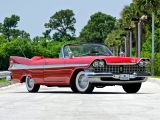
Plymouth Sport Fury, 1959
Plymouth Fury I
Plymouth Fury I•
•38 views
Chassis No.: M294100126
Auction: Monterey 2019
Auction date: August 17, 2019
Lot No.: S94
$80,000 | High bid
- Exterior: Bronze/White
- Interior: Bronze
- 118 inch wheelbase
- 318/260 HP OHV V-8 engine
- Cast iron block
- 9.0:1 compression
- Carter AFB 4-barre carburetor
- Dual exhaust
- Pushbutton automatic transmission
- Semi-floating rear axle
- Independent torsion bar front suspension
- Longitudinal rear leaf spring suspension
- Power steering
- Power hydraulic drum brakes
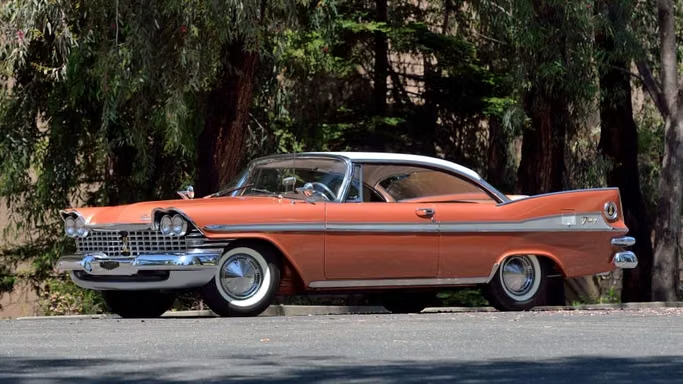
- Bronze Metallic with White roof
- Bronze vinyl interior with patterned cloth inserts
- Padded dash
- Pushbutton radio
- Full size wheel covers
- Whitewall tires
With the decade concluding, many consider that Plymouth saved the best for last. The stylish lines of the 1957 release blossomed into fitted fins and chrome-laden accents on the 1959 Sport Fury.
Indeed, the stylish idea of power resulted in one advertisement from that model season that showed the car amidst the charging steeds at that start of a horse race at Florida’s Hialeah Park, “Full of Fury and Ready to Run!” While positioned toward a lower-cost market segment of buyers, there was nothing small about this 118-inch wheelbase machine, which in this case is powered by the polyspherical 318 A-series OHV engine rated at 260 HP and featuring a cast iron block, 9.0:1 compression, a Carter AFB 4-barrel carburetor and dual exhaust. This engine is in turn backed by an automatic transmission with pushbutton operation and a semi-floating rear axle design.


Chrysler engineers had only recently debuted the Torsion-Aire independent torsion bar front suspension, coupled here with longitudinal rear leaf springs, power steering and power hydraulic drum brakes. With body lines from the creative genius of Virgil Exner, the exterior of this hardtop Fury is appointed in rich Bronze Metallic paint with a white-painted roof, replete with the faux decklid wheel cover, widening side spears, gold-toned Fury trim and broadly fashioned bumpers. Inside is a bronze-hue vinyl interior with patterned tone-matched cloth inserts, a padded dash, the pushbutton radio, two-spoke steering wheel and Jet Age dash appointments.
With its full-size wheel covers and whitewall tires, the result is an epic representation of late 1950s automotive styling. The uniquely chosen angles to the fins, cab pillars, grille and wheel openings were part of what led to Exner’s fame in this era. As Chrysler’s best known response to the basic Chevrolet and Ford brands, most Sport Furys of this era did not survive the rigors of shifting cultural desires, making cars like this 1959 example both desirable and exclusive in the modern collector car market.