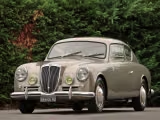
Lancia Aurelia B20 GT Series II Coupé, 1952
Lancia Aurelia
Lancia Aurelia•
•29 views
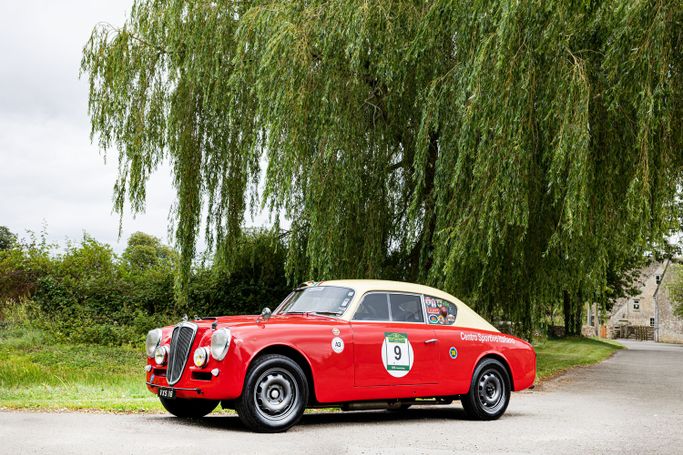
Chassis No.: B20 2065
Estimate: £140,000 - £180,000 GBP
- Landmark Gran Turismo design
- Recently rebuilt by marque specialists Thornley Kelham
- Prepared for historic rallying
- Eligible for many of the most prestigious historic motoring events
Introduced in 1907, the Vincenzo Lancia's first car showed an independence of thought and defiance of convention that would remain associated with the marque well into the modern era. Lancia recommenced production after WW2 with the Aprilia and its smaller cousin the Ardea, but waiting in the wings was yet another groundbreaking design: the Aurelia. Lancia's classic Aurelia, the first car ever to employ a V6 engine, was launched at the 1950 Turin Motor Show.
Designed in wartime by Francesco de Virgilio, the 1,754cc 60-degree V6 was of all-aluminium construction and used overhead valves operated via short pushrods instead of Lancia's traditional overhead camshafts. An advanced unitary construction design, the Aurelia retained Lancia's 'sliding pillar' independent front suspension, first seen on the Lambda, but used a novel semi-trailing-arm layout at the rear, another world first. The transmission too, was unusual, comprising a two-piece prop-shaft and combined gearbox/rear transaxle on which were mounted the inboard brakes, though for once this was not an entirely new departure.
The B10 saloon was joined the following year by the Pinin Farina-styled B20 Coupé, a fastback '2+2' on a shortened wheelbase which, with its combination of sports car performance and saloon car practicality, can be said to have introduced the


Gran Turismo
concept to the world. The Aurelia engine had been increased to 1,991cc in 1951 and it was this unit in up-rated form that went into the B20. Lighter and higher geared than the saloon, the B20 was good for a top speed of over 100mph. Stunning the motor racing world, a mildly race-developed B20 driven by chain-smoking, brandy-swigging Giovanni Bracco finished 2nd in the 1951 Mille Miglia, beaten only by Luigi Villoresi's 4.1-litre works Ferrari! It is worth noting that the nimble Aurelia was actually faster than the Ferrari over the mountain passes north of Florence.
Introduced in 1953, the 3rd and subsequent series B20s were powered by a 2,451cc, 118bhp version of the pushrod V6, while 4th-series onwards cars had De Dion rear suspension instead of the original semi-trailing-arm arrangement. The Lancia factory publication, 'The History of Lancia 1906-1989', states that 1,231 2.0-litre B20 GTs were produced (Series I and II) plus a further 1,880 2½-litre cars (Series III to VI). An engineering tour de force clothed in sublime coachwork by Italy's foremost


carrozzeria
, the Aurelia B20 represents for many the zenith of Lancia's post-war production.
One of 731 Series II models built, '2065' arrived at renowned marque specialists Thornley Kelham's workshop direct from a US auction, at which it had been purchased unseen by their UK-based client. According to TK: "Although the car came with little written history, it was clear from the various stickers, decals, etc that it had been used extensively for rallying. In addition, various rally modifications and the generally very tired condition of the car confirmed that it had led a full and hard life."


Owner of an extensive collection of classic and Vintage cars, all regularly and enthusiastically driven, the vendor instructed that the Lancia should be made "safe, structurally sound, mechanically and electrically strong and reliable, and capable of some serious rallying here in Europe". These requirements necessitated significant bodywork repairs, particularly to the sills; an electrical rewire; rebuild of the engine, transmission, suspension, and brakes; and a thorough overhaul of the fuel and cooling systems.
Sadly, the original 2.0-litre engine was in such poor condition that TK were forced to source and rebuild a new correct Series II engine from scratch, adding an original Nardi upgrade kit for the carburettors to improve both maximum power and mid-range torque. Additional works included upgrading the interior with new rally seats, rubber mats, and seals plus additional instrumentation and improved safety features. Indeed, virtually the only area TK left untouched was the paintwork!
In total, the owner spent over £180,000 to bring the Aurelia to its present condition, and since the rebuild's completion he has successfully driven it on a rally around Ireland. If you are seeking for a sorted, fast and comprehensively equipped early B20GT, particularly suitable for competitive historic rallying, then look no further.