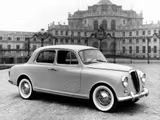
Lancia Appia GT Zagato Berlinetta, 1957
Lancia Appia
Lancia Appia•
•46 views
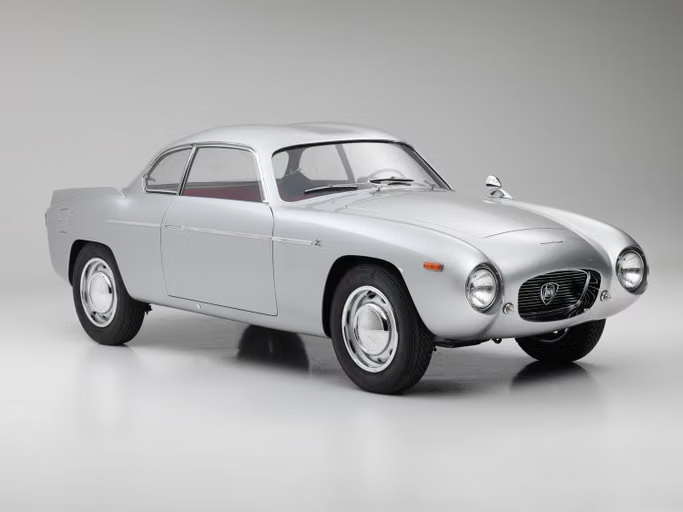
Chassis No.: 812.01.1258
US$280,000 USD | Sold
- Berlinetta
- Coachwork by
- Carrozzeria
- Zagato
- 1,089cc OHV V-4 Engine
- Single Solex Carburetor
- 53bhp at 5,200rpm
- 4-Speed Manual Transmission
- Independent Front Suspension, Live Rear Axle
- Four-wheel Drum Brakes
- One of only 10 bodied by Zagato to this design
- Identical to the class-winning Appia Zagato entered in the last Mille Miglia of 1957
- Fully restored by Zagato specialist Vincenzo Malerba (Mavi Cars) in Milan
Styled like its Aurelia B10 big brother, Lancia's new small car - the Appia - was premiered at the Turin Motor Show in 1953. At the end of 1937 Lancia had acquired the services of the celebrated automobile engineer, Vittorio Jano, formerly with Alfa Romeo, and the Appia was one of the great man's first post-war designs.
The Lancia tradition of innovation in automotive technology was exemplified by the Appia's ultra-compact engine: a narrow-angle (10 degrees), 1,089cc V4 whose inclined overhead-valves were set in hemispherical combustion chambers and operated by twin, block-mounted camshafts. The unitary chassis construction adopted on the pre-war Aprilia was, naturally enough, continued, as was Lancia's traditional sliding-pillar independent front suspension. Body styling was similar to that of the bigger Aurelia, and Series I cars featured aluminum doors, wings and bumpers. In a tradition inaugurated by the pre-war Augusta, the front doors were hinged forwards, the rears aft, and there was no central pillar.
'Notchback'-styled Series II cars (1956-1959) came with a lengthened wheelbase and more power (up from 38 to 43bhp) while the final (third) series boasted further styling revisions and 48bhp. Designed and constructed to Lancia's typically high standards of engineering, the Appia was expensive to develop, yet, being a small car in a highly competitive market sector, was unable to realize the profits that Lancia so sorely needed, despite selling well.
Complementing the standard Appia saloon was a series of limited edition models produced on a separate chassis and bodied by leading


carrozzeria
, Pinin Farina being responsible for the coupé, Vignale the cabriolet, and Zagato the GT coupé. Engine power was increased to 53bhp for these more sporting Appias which, when equipped with Zagato's trademark lightweight, aluminum, aerodynamic coachwork, could touch 100mph (160km/h).
THE CAR OFFERED
One of the rarest and most desirable Appia variants, this Zagato-bodied GT reflects automobile designers' then-current fascination with aircraft inspired styling devices, most notably the nacelle-shaped front wings, jet-fighter-like central air intake, and fins (


pinnute
) atop the rear wings. The chassis was supplied to Zagato by Lancia in 1957, as documented in the factory registry, and is one of only 10 bodied with this design, which included Zagato's famous 'double bubble' roof, covered headlights, and their own bucket seats.
This particular car is identical to the class-winning Appia Zagato entered in the last Mille Miglia of 1957. It is equipped with all the Zagato racing options to include its original long-range fuel tank; a speedometer reading to 180km/h (111mph); and a Jaeger rev counter on the dashboard.
Acquired by the current owner in 2014, the Appia benefits from a documented five-year restoration carried out by Zagato specialist Vincenzo Malerba (Mavi Cars) in Milan, Italy. Works undertaken included a full restoration of the body; full renovation of the engine, gearbox, suspension and wiring; re-fabrication of the windscreen and Plexiglas side and rear windows; overhaul of the instrumentation; interior re-trim to the original specification and far too many other minor but important details to list.


Documented by Giugno & Chioetto in
Lancia da Corsa Appia Zagato
(2019), this charming little sporting Lancia is eligible for some of the most important classic car events worldwide. Bonhams recommend close inspection of this rare and beautifully presented Lancia, now on sale since residing in the same private European collection since nearly a decade.
Cost
1,028,300 AED