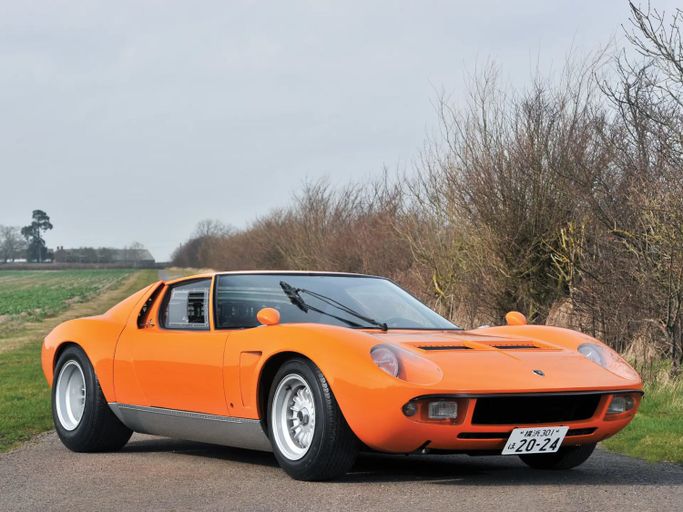
Lamborghini Miura S 'Jota' by Bertone, 1969
Lamborghini Miura
Lamborghini Miura•
•86 views
Chassis No.: 4280
Engine No.: 30633
Location: Monte Carlo, Monaco
€448,000 EUR | Sold
- A Lamborghini Miura S that has been upgraded to Jota specification
- Fitted with an original Miura SV engine
385 bhp, 3,929 cc mid-engined transversely mounted DOHC V-12 with four Weber carburettors, five-speed manual transmission, independent front and rear suspension with coil springs and telescopic shock absorbers, and four-wheel ventilated disc brakes. Wheelbase: 2,500 mm
Transverse V-12 engine, 3,929 cc, 385 hp, twin overhead camshafts per bank, four Weber carburettors, five-speed manual gearbox, independent front and rear suspension with coil springs and telescopic shock absorbers, ventilated disc brakes on all four wheels. Wheelbase: 2,500 mm.
To many, the Lamborghini Miura is unquestionably the world’s first supercar. Upon its introduction, the Miura pushed the boundaries of what was thought to be possible in designing an automobile. Not only did it push the envelope of performance, but it also pushed the envelope of automobile aesthetics, and it remains one of the most celebrated and instantly recognisable automotive shapes to this day. The Miura’s sensuous form captivated the crowd at its unveiling at the 1966 Geneva Salon, and that same design would remain largely unchanged until the last Miura left the production line of Lamborghini’s Sant’Agata factory.
The world had never seen all those aspects combined into such an incredible package, and because of it, Lamborghini became a household name almost overnight. Everyone wanted one, but only captains of industry, heads of state, and rock stars could afford to put one in their garage.
Despite its world-beating performance, the Miura was never intended to be more than a road-legal rocket ship available to paying customers. However, the late factory test driver Bob Wallace believed that the Miura could be something more. Wallace dreamed of building a more focused Miura, one that took the production model to another level by decreasing weight and increasing horsepower. Since Ferruccio Lamborghini did not want to channel his company’s efforts into racing, Wallace was left to his own devices to build such an automobile. Left with one chassis to experiment with, Wallace decided to aim for designing a competition car that would fit into the FIA’s Appendix J.
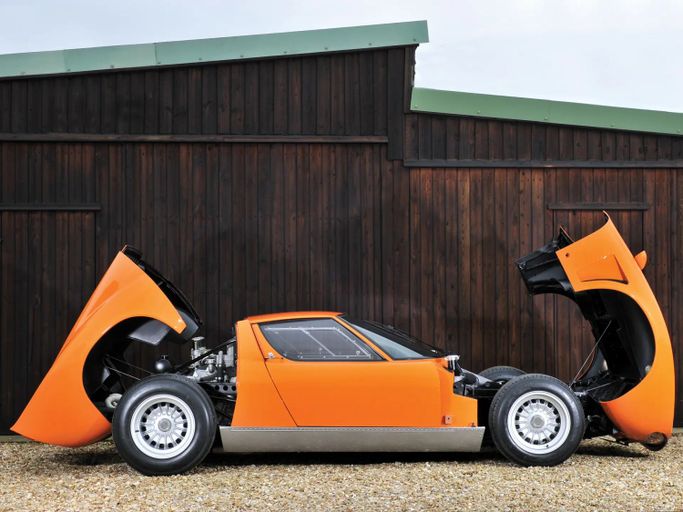
In order to achieve this, Wallace focused on decreasing weight and achieving a better weight distribution for the car. Everything that could be discarded was, leaving a completely bare-bones interior, a single windshield wiper, fixed headlights, and Plexiglas windows. The gas tanks were repositioned from the Miura’s nose to the sills, and its spare tyre was relocated behind the engine. Additionally, Wallace utilised all the upgrades that were featured in the 1971 SV, including a more rigid chassis, a wider rear track with larger suspension wishbones, and a split-sump lubrication system that would be introduced in later production SVs. The resulting automobile was the Miura Jota.


Whilst the car was originally destined to be scrapped by the time the Miura SV was introduced, it was instead restored at the factory and subsequently sold to millionaire Alfredo Belpone in Brescia, Italy. Unfortunately, the Jota’s post-factory-prototype life would be short-lived, as it was crashed by Belpone in 1972 during additional testing on a closed Italian autostrada. The Jota was completely destroyed in the resulting fire and would never be rebuilt, closing the door on the history of one of Lamborghini’s most fascinating cars.
This 1969 Lamborghini Miura S was completed on 23 October 1969 as production number 423, and it left the factory finished in red. Following production, the car was shipped to Mizwa Motors, the authorised Lamborghini dealership in Japan, and it was sold to its first owner, who was located in Yokohama. From there, the car remained in Japan, passing through three subsequent owners in the cities of Kobe, Chiba, and Fukuoka over the course of the next 30 years. In the 1980s, the original S-specification engine was removed and the Miura was fitted with a genuine Miura SV engine, bearing number 30633, which was the first SV engine produced. The current owner purchased the car in 1998 from the previous owner in Fukuoka, Japan, who had owned it for 10 years.
The conversion to Jota specification was completed in early 2013 by two separate Italian car specialists located in Japan. Whilst the car was being converted to Jota specifications, all components were fully restored, ensuring that the Miura will function as it would when new in every respect.
Had the original Jota not met its end in 1972, there is no doubt that it would be one of the most desirable automobiles in the world, as it took the most radical automobile the world had ever seen and raised the bar of performance one step higher. The Jota, in its pursuit of greater performance, combined the best aspects of the original Miura design with more aggressive cosmetic and mechanical enhancements, to make the most intense Miura that ever left Sant’Agata. This converted Jota-specification Miura provides an excellent chance for a lucky enthusiast to relive the experience that the original Jota provided—an experience that is no longer available in its original form. For the enthusiast looking to have a Miura that stands out from the rest, look no further.
Many consider the Lamborghini Miura to be the world’s first supercar. At its launch, the Miura pushed the boundaries of what was thought possible in automotive design. It did so not only in terms of performance, but also in automotive aesthetics, and it remains one of the most instantly recognisable cars to this day. The Miura’s sensuous lines captivated the public when it was unveiled at the 1966 Geneva Salon, and its shape remained largely unchanged until the last Miura left the production line at Lamborghini’s Sant’Agata factory.
Never before had all these qualities been combined in such an incredible package, and as a result, the Lamborghini name entered households almost overnight. Everyone wanted one, but only captains of industry, heads of state, and rock stars could afford one.
Despite its outstanding performance, the Miura was never designed to be anything more than a high-performance road car sold to customers. However, the late factory test driver Bob Wallace believed the Miura could be more than that. He dreamed of building a more focused Miura, taking the production model to another level by reducing weight and increasing power. Since Ferruccio Lamborghini did not want his company to devote its efforts to racing, Wallace had to undertake the project on his own initiative. With one chassis available for his project, Wallace decided to design a competition car that would comply with Appendix J of the FIA regulations.
To achieve this, he set about reducing the weight and improving its distribution. He stripped away everything that was not essential, leaving a completely bare interior, a single windscreen wiper, fixed headlights, and Plexiglas windows. The fuel tanks were moved to the sills from the front of the Miura, and the spare wheel was relocated behind the engine. Wallace also adopted all the upgrades planned for the 1971 SV, including a stiffer chassis, a wider rear track with larger suspension wishbones, and a split-sump lubrication system that would be fitted to later SVs. The resulting car was the Miura Jota.
Although the car was destined to be scrapped around the time the Miura SV was launched, it was instead restored at the factory and subsequently sold to millionaire Alfredo Belpone of Brescia, Italy. Unfortunately, the Jota prototype’s life would be short-lived: Belpone crashed it in 1972 during further testing on a closed Italian motorway. The car caught fire and was completely destroyed; it would never be rebuilt, bringing to a close the story of one of Lamborghini’s most fascinating cars.
This Lamborghini Miura S left the factory on 23 October 1969 as production number 423, finished in red. It was then shipped to Mizwa Motors, the official Lamborghini importer in Japan, before being sold to its first owner in Yokohama. It remained in Japan, passing through the hands of three successive owners in Kobe, Chiba, and Fukuoka over the following 30 years. In the 1980s, the original S-specification engine was replaced with a genuine Miura SV engine: numbered 30633, it was the very first SV engine produced. In 1998, the current owner acquired the car from its previous owner in Fukuoka, who had owned it for 10 years.
The conversion to Jota specification was carried out in early 2013 by two Italian specialists based in Japan. Alongside this work, all the car’s components were restored to ensure that the Miura would function as well as it did when new.
Had the original Jota not met its end in 1972, it would undoubtedly be one of the world’s most desirable cars, for it took the most radical automobile ever produced and raised its performance to an even higher level. In its pursuit of greater performance, the Jota combined the best aspects of the original Miura design with more aggressive styling and mechanical enhancements, creating the most intense Miura ever to leave Sant’Agata. This Miura converted to Jota specification offers a fortunate enthusiast an excellent opportunity to relive the experience provided by the original Jota—an experience no longer available in its original form. For enthusiasts seeking a Miura that stands apart from the rest, look no further.
https://rmsothebys.com/auctions/mc14/lots/r117-1969-lamborghini-miura-s-jota-by-bertone/
Cost
1,843,305 AED