When to replace coolant in the Nissan Patrol
Nissan Patrol
Nissan Patrol•
•30 views
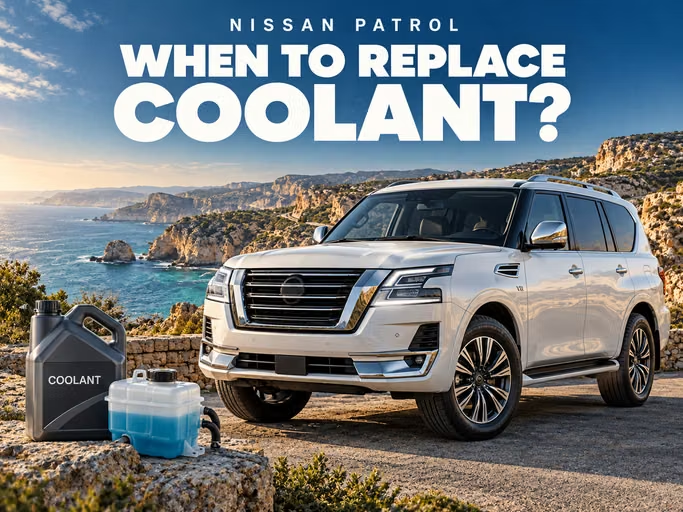
The coolant replacement date for a Nissan Patrol should follow the vehicle’s applicable maintenance schedule and service history. The model name alone is not enough: confirm the generation, engine, model year and previous replacement date before booking. If coolant is disappearing or the engine is overheating, arrange diagnosis without waiting for the scheduled change.
Establishing the replacement date
Sections 8-7 and 8-8 of the Nissan-published Patrol Y62 manual cover coolant requirements and checks without giving a universal replacement interval in years and kilometres. Check the maintenance documentation applicable to your vehicle. Do not automatically apply this manual to a Patrol Safari or the new Patrol generation.
What to ask the workshop
Ask the workshop to identify the schedule using the VIN, or vehicle identification number. Establish when replacement is due, which coolant is required and which date starts the next interval. If the schedule distinguishes the initial change from later replacements, keep both entries.
The Nissan service page bases its selection on model year, engine, time or mileage. Clarify any offer described simply as a “major service for any Patrol” before approving it. Ask for the basis of the coolant replacement recommendation, rather than relying only on the service package name.
When the history is unknown
Start with the invoices. “Coolant topped up” is different from a record of draining and refilling the system. Check the product name, mileage and reason for the work. After a radiator replacement or another repair, establish what was used to refill the system and which checks were completed.
If records are missing, agree on an inspection and a plan for documenting future maintenance. Do not start the replacement interval from the date you bought the vehicle: a change of ownership does not renew its coolant. When considering a used Patrol, compare current offers alongside documented maintenance and likely upcoming service costs.
| Situation | What to check | Next step |
|---|---|---|
| Replacement documented | Date, mileage and applicable schedule | Calculate the next due date |
| Only top-ups recorded | Reason for coolant loss | Arrange diagnosis |
| Recent cooling system repair | Work performed | Confirm refilling and final checks |
| No service history | Records and system condition | Document a maintenance plan |
Selecting suitable coolant
The cited Y62 manual specifies Genuine NISSAN Engine Coolant or a product of equivalent quality with the correct mixture ratio. A container labelled “for Nissan” is not sufficient confirmation. Before buying, ask the workshop to verify the exact product’s suitability for your vehicle.
Colour cannot identify the product
GLYSANTIN explains that colour alone cannot establish coolant properties and that mixing different formulations can reduce protection. Keep the product name and a photograph of its label. These are more useful than describing the fill as “blue” or “green”.
Use ready-mixed coolant according to its label and dilute concentrate as instructed. Do not arbitrarily increase the concentrate content because the weather is hot. If the previous product is unknown, agree on a suitable transition procedure first.
Can appearance show the remaining service life
Clear-looking coolant does not confirm its remaining life: corrosion inhibitors gradually lose effectiveness. General advice from a coolant manufacturer does not replace the Nissan schedule for your version. Record both the material used and the service date.
When an unscheduled inspection is needed
Tell the workshop if the level falls again after a top-up, fluid traces appear, temperature behaviour changes or cabin heating becomes irregular. Record when the symptom occurs: in traffic, after parking, on a climb or following recent repairs. Do not deliberately reproduce overheating.
Overheating is not always a coolant age problem
HELLA’s diagnostic guidance includes coolant level, leaks, airflow through the radiators, the fan, thermostat and pump. Replacing the fluid alone therefore does not guarantee that overheating will be resolved.
After driving in sand, describe the conditions to the technician and ask for the heat exchangers to be assessed. Cleaning the radiator externally and flushing its internal passages are different jobs. The quotation should make clear which is needed and why.
Monitoring the level safely
Check the level with the engine cold, following the instructions for your version. The Y62 manual uses MIN and MAX marks and calls for inspection when repeated top-ups are needed.
Agreeing on the replacement work
Before work starts, ask for diagnosis, materials and additional operations to be itemised. A “complete change” should have a clear description of the work involved. Confirm whether leak checks are included, how filling is performed and when the level should be checked again.
Flushing and removing trapped air
HELLA’s cooling system guidance explains that contamination requires suitable cleaning and trapped air can impair circulation. The method should match the system’s condition and the vehicle manufacturer’s procedure. Do not approve a chemical flush solely becauImportant.
Never open the radiator or reservoir caps while the engine is hot: pressurised fluid can cause burns. If an overheating warning appears, stop safely and follow the vehicle instructions; arrange assistance when needed.se it appears in a standard package.
If oil or sediment is found, ask for the source of contamination and the corrective work to be identified. Filling, leak-tightness and system operation need checking afterwards. Adding sealant to coolant should not replace finding the leak.
How much coolant to buy
Do not order the same number of containers for every Patrol. Have the workshop confirm the quantity for your engine and the chosen service procedure. Ask whether the figure describes total system capacity or the amount required for that particular operation. The final invoice should identify the material actually used.
Compare quotations using the same list of operations. A higher price may include diagnosis or additional work, but the difference should be explained. A package name and the number of containers do not, by themselves, demonstrate service quality.
What to check after servicing
☐ The job sheet identifies the correct vehicle and engine.
☐ The full coolant product name is recorded.
☐ The operations and reasons for additional work are clear.
☐ The workshop has confirmed its final system checks.
☐ The replacement date and mileage are recorded.
☐ The next due date and follow-up check are agreed.
If a warning or coolant loss returns, contact the workshop with the previous invoice. Establish whether the symptom relates to the completed work or needs separate investigation. Do not treat another top-up as a completed repair without an explanation of the loss.
Conclusion
A sound coolant replacement plan for a Nissan Patrol starts with the applicable schedule and documented history. Confirm product suitability, keep the service records and investigate coolant loss. This gives the next replacement a clear documentary basis and makes repair decisions depend on diagnostic findings.