Mercedes-Benz GLC brake fluid replacement
Mercedes-Benz GLC
Mercedes-Benz GLC•
•52 views
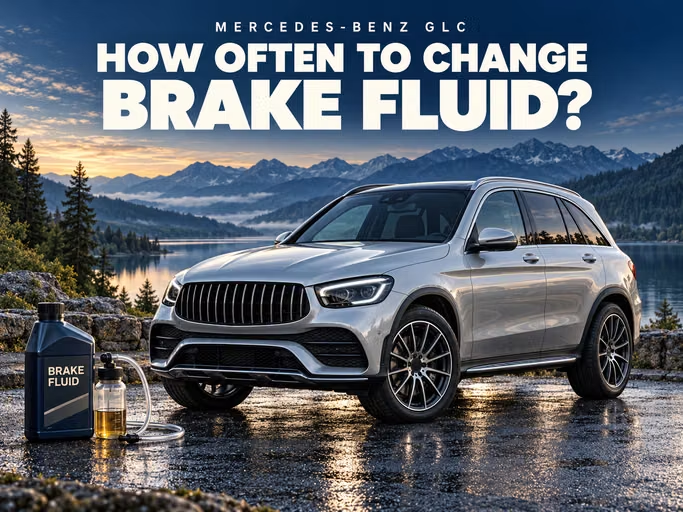
Brake fluid replacement for a Mercedes-Benz GLC is generally planned every two years, subject to the schedule for the particular vehicle. Mileage is only part of the picture: a family SUV may cover few kilometres while its fluid continues to age. Before a long journey with passengers and luggage, checking the maintenance history is especially useful. If braking behaviour has already changed, do not wait for the next scheduled service.
When the brakes need attention
Changes in pedal feel and braking performance can have several causes. Do not assume that replacing the fluid will resolve every problem. Arrange diagnosis if:
- The pedal feels unusually soft or its working travel increases.
- The pedal gradually sinks under steady pressure.
- Deceleration becomes noticeably weaker after repeated braking.
- There are signs of leakage or the reservoir level drops quickly.
- A brake system or low fluid warning appears.
Why replacement is based on time
Brake fluid transmits pressure through the hydraulic circuit. Over time, it absorbs moisture, which reduces its boiling point. Under intense heat, vapour pockets may form and interfere with pressure transmission. The problem can become much more apparent on a long descent than during a routine departure from home.
Clear fluid in the reservoir and familiar pedal feel do not establish that servicing can be postponed. Workshop measurements help assess system condition, but do not replace the prescribed schedule. Checking the records is particularly valuable if a GLC has been parked for a long period or its previous owner followed mileage alone.
The service history should contain a separate record of brake fluid exchange. Replacing pads, discs or engine oil does not automatically mean that this operation was completed as well. If there is no confirmation, agree an inspection and servicing plan: a known replacement date makes future maintenance easier to track.
Replacement timing, approval and quantity
Mercedes-Benz includes brake fluid exchange in its published Service B checklist; this service repeats approximately every two years or at the specified mileage. Use that as a planning reference. Confirm the work and next due date for your GLC using its VIN, service documentation and most recent invoice.
The January 2021 GLC SUV X253 manual specifies MB-Freigabe or MB-Approval 331.0 for brake fluid. Do not automatically apply that approval to every vehicle carrying the GLC name: first establish that the document covers its year and specification.
| Item | Reference | What to check |
|---|---|---|
| Timing | Approximately two years | Service schedule and last replacement. |
| Approval | MB-Approval 331.0 for the stated X253 | Manual applicability and product approval. |
| Quantity | Defined by the exchange procedure | Equipment and the scope of associated repairs. |
| Service record | A separate entry | Date, mileage, product and completed operations. |
Agreeing the correct consumable
Ask the workshop to identify the particular fluid and confirm its approval. A DOT designation or a statement that it is suitable for Mercedes-Benz is insufficient on its own. Compare the vehicle requirements with the product information, rather than choosing solely by boiling point, price or package size.
Servicing requires fresh fluid from sealed packaging. A universal quantity in litres would be inappropriate for all GLC versions: consumption depends on the exchange procedure and associated repairs. Reservoir capacity is also different from the amount the technician uses to renew fluid and remove air.
Load, heat and longer journeys
A GLC often serves as family transport. Passengers and luggage increase the mass that the brakes must slow. If the vehicle is approved for towing, a journey with a trailer also requires preparation according to its manual. Before such a trip, inspect the whole system, including pads, discs and hoses, rather than checking only the fluid replacement date.
Descents and driving fully loaded
On long descents, select the transmission settings specified in the manual and avoid continuous light braking. Reduce speed early and allow following distance appropriate to the load. All-wheel drive does not remove the need for proper brake maintenance or justify ignoring signs of overheating or increased pedal travel.
Hot weather alone does not establish one shorter replacement interval for every GLC. If the vehicle regularly faces heavy demands, discuss its use with the workshop. Should braking performance deteriorate, stop safely and arrange an inspection; familiar pedal feel returning after cooling does not prove that the cause has been resolved.
Differences between generations
GLC X253 and X254 vehicles need documentation for their respective generations. GLC Coupé models, plug-in hybrids and AMG versions also require checks of their specification and applicable manual supplements. Do not copy a bleeding procedure from another GLC simply because its body looks similar. Mention replaced calipers, hoses and other brake modifications when booking.
What workshop servicing involves
A complete exchange should renew the fluid in the specified circuits and remove air according to the repair instructions. Extracting fluid from the reservoir alone is insufficient. The fitted system determines the sequence, equipment pressure and any required diagnostic functions. Owners can agree the expected work and how its completion will be checked:
- Confirm the VIN, equipment and brake service history.
- Check for leaks and investigate reported symptoms.
- Agree fluid with the required approval and any necessary repairs.
- Exchange the fluid and bleed the system using the applicable instructions.
- Verify the level, check for leaks and test brake operation.
- Record the date, mileage, product and completed operations.
What the invoice should show
Ask for brake fluid replacement and the product used to be listed separately. If the hydraulic circuit was opened during repairs, the documentation should reflect that too. Confirm which checks are included in the price. The dashboard service reminder helps with planning a visit, but resetting it does not prove that a particular operation was performed.
A checklist before buying a used GLC
When browsing current listings, consider more than equipment and mileage. Brake service records help establish what may need attention after purchase:
☐ The date and mileage of the last complete fluid exchange are documented.
☐ The recorded product meets the requirements of this GLC version.
☐ Hydraulic repairs and brake equipment modifications are known.
☐ There are no uninvestigated pedal complaints, leaks or warnings.
☐ The next service date has been established from the vehicle documents.
Mistakes to avoid
- Using low annual mileage as a reason to skip replacement.
- Judging fluid suitability by colour alone.
- Buying a product without checking the required approval.
- Treating a top-up or reservoir extraction as a complete exchange.
- Expecting a fluid change alone to fix a mechanical fault.
Conclusion
For a Mercedes-Benz GLC, the two-year reference helps plan brake fluid replacement, while the vehicle’s service schedule determines the actual due date. Check the approval in the applicable manual, and finish the work with system checks and a documented service record. An inspection of all brake components is useful before a heavily loaded trip. Signs of a fault need attention regardless of the next scheduled service date.