


When to change the coolant in a Lexus IS
Lexus IS
Lexus IS•
•6 views
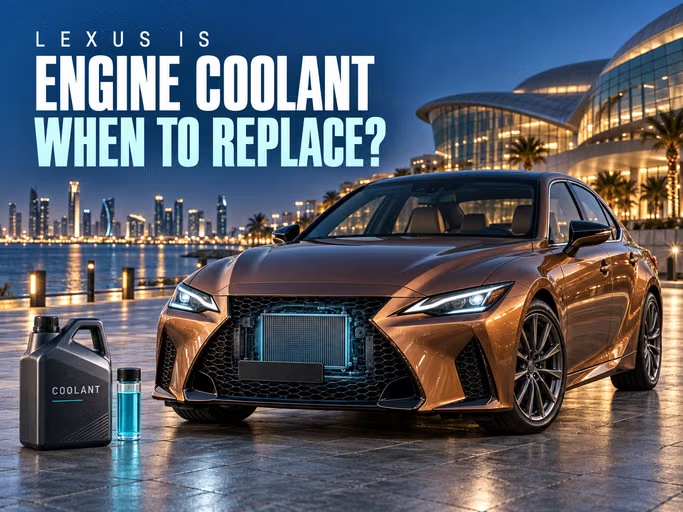
For a Lexus IS, match the coolant replacement schedule to the engine and vehicle documentation. The turbocharged IS 300 has a separate intercooler cooling circuit that can be overlooked when booking a service. This guide covers the IS 300 and IS 350 schedule, coolant selection and symptoms that call for attention before the next scheduled change.
How to establish the replacement interval
The Lexus IS 350 and IS 300 owner’s manual published on lexus.com.bh specifies an initial coolant change at 160,000 km, then every 80,000 km. See section 7-2, the table on page 526 and note 3 on page 528. For the IS 300, this maintenance item includes intercooler coolant.
Which versions this schedule covers
The cited manual covers the IS 350 with the 2GR-FKS engine and the IS 300 with the turbocharged 8AR-FTS. Match the model year, engine and VIN before applying the interval. The IS 300 name has been used for different configurations; the badge alone does not establish that the car has the two-litre turbo engine.
The replacement note gives a distance without a separate limit in years. Check the service booklet and local maintenance plan for calendar requirements. An IS 250, IS 200t, IS 300h, IS 500 or earlier IS needs its own schedule. Do not automatically transfer the figures in this table to those versions.
When the previous change is unconfirmed
Start with the service invoices. A “cooling system inspection” entry may mean a visual check and level inspection. Ask whether the specified fluid replacement procedure was completed, which product was used and which circuits were serviced. A top-up after a hose repair should not be treated as the starting point for a new replacement interval.
If records are missing, agree on an inspection and subsequent work with the workshop. Record any previous top-ups, temperature warnings and repairs under the bonnet. These details help the workshop prepare a useful quotation and can prevent you from paying again for work that has already been completed.
Choosing the right coolant
The cited manual requires Toyota Super Long Life Coolant or a suitable ethylene glycol equivalent with long-life hybrid organic acid technology, without silicates, amines, nitrites or borates. Check the complete requirements and stated application against the product’s technical description. A general “for Lexus” label is insufficient.
Why colour does not establish compatibility
Colour may help you notice a change in appearance, but it does not replace a specification. Do not select a top-up just because the container holds the same shade of fluid. If the existing product is unknown, show the workshop any available records and discuss an appropriate replacement method; mixing an unidentified fluid does not resolve the uncertainty.
Keep the product name and a photograph of its label. For a turbocharged IS 300, ask the workshop to identify what it used in the engine and intercooler circuits. Even when the product is identical, separate records clarify the work completed and help plan the next service.
Does the coolant need dilution
Use premixed coolant as directed on its label and dilute concentrate in the specified proportion. The HELLA guide to coolant composition explains that excessive antifreeze reduces heat transfer. Hot weather is not a reason to use undiluted concentrate. Plain water is not a replacement for suitable coolant during scheduled maintenance either.
Agree on the number of containers after identifying the engine and scope of work. Total cooling system capacity can differ from the amount drained during a particular procedure. The quotation should show the expected requirement, while the final invoice should identify the actual quantity and product used.
Which circuits to include in the work order
The table summarises the intervals for the versions described in the cited manual. The IS 300 has separate rows to help track completed work: changing engine coolant does not confirm that the intercooler circuit was serviced. For a different configuration, establish the cooling system layout before agreeing on the operations.
| Version and circuit | First change | Thereafter |
|---|---|---|
| IS 350 · 2GR-FKS Engine | 160,000 km | Every 80,000 km |
| IS 300 · 8AR-FTS Engine | 160,000 km | Every 80,000 km |
| IS 300 · 8AR-FTS Intercooler | 160,000 km | Every 80,000 km |
How to monitor the level
Check the reservoirs on level ground after the engine has cooled. The cited manual identifies FULL and LOW marks for engine coolant and F and L for the IS 300 intercooler reservoir. Compare readings at a consistent temperature; a reading immediately after driving can differ from one taken with the engine cold.
If the level drops again after topping up, record the date, mileage and quantity added, then pass this information to the technician. Inspecting the reservoir does not require opening a hot cap. Keep hands and clothing away from the fan and moving components, and locate the reservoirs using the diagram for your particular vehicle.
When changing the fluid will not solve the problem
The HELLA cooling system diagnostic guide covers circulation, the fan, radiator, thermostat and pump. Describe when overheating occurs: in traffic, at speed or following a repair. This helps the technician investigate the cause before parts are purchased or the coolant is changed again.
Fluid traces, sediment or an oily film are reasons to have the system inspected. Establish the function of any proposed replacement part: the engine radiator and air-conditioning condenser serve different purposes. Ordering requires the catalogue number, engine and VIN; a Lexus IS compatibility label alone is not enough.
What to agree before work begins
Ask for the quotation to identify the circuits, coolant and operations. If flushing is proposed, ask what contamination was found and whether the method suits the system. Oil traces call for investigation of the contamination source. Also agree on how additional costs will be authorised if further work is identified during disassembly.
Bleeding and checking the result
The guide to filling a cooling system explains that trapped air reduces circulation and can cause overheating. After replacement, the workshop should follow the vehicle-specific bleeding procedure and check for leaks. On the IS 300, confirm that these steps were completed for each circuit that received fresh coolant.
When collecting the car, ask when to recheck the cold level and whom to contact if it falls. Contact the workshop if leaks appear or a temperature warning is displayed. Do not assume continued coolant loss is a normal consequence of a recent change without investigation. The invoice helps connect symptoms with the work performed.
What to check before buying a Lexus IS
When browsing current offers, request cooling system service records and the reasons for previous repairs. Confirm the engine and ask for evidence of coolant replacement. On a turbocharged IS 300, ask specifically about the intercooler circuit. Assess fresh coolant before a sale alongside the inspection findings and vehicle history.
Checklist after servicing
☐ The work order correctly identifies the IS version and engine.
☐ All serviced circuits are listed.
☐ The date, mileage, coolant name and quantity are recorded.
☐ Bleeding and leak checks have been completed.
☐ You know when to recheck the cold level.
☐ The next change follows the vehicle’s documentation.
Conclusion
For a Lexus IS, establish the replacement interval from the particular engine and its maintenance schedule. Include the intercooler circuit on a turbocharged IS 300, retain a detailed invoice and monitor the level after servicing. Repeated top-ups and overheating require diagnosis regardless of the distance remaining before the scheduled change.


