


When to replace spark plugs and glow plugs in the Hyundai Sonata
Hyundai Sonata
Hyundai Sonata•
•23 views
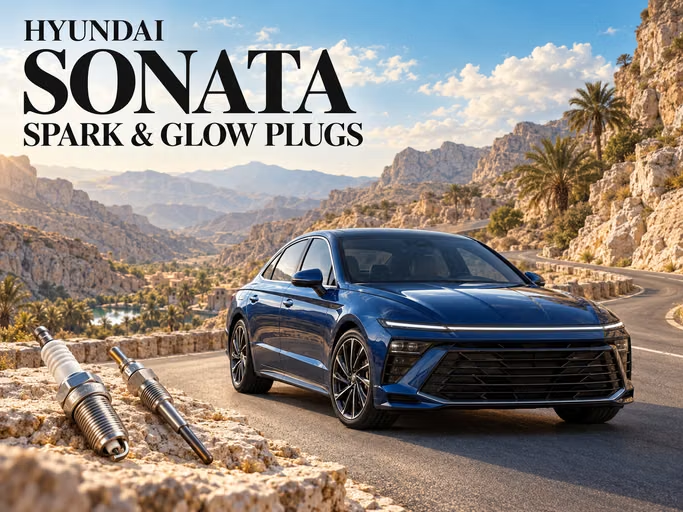
The Hyundai Sonata has been offered with naturally aspirated and turbocharged petrol engines, hybrid powertrains and diesels. There is no single plug set or replacement interval that covers the entire model range.
Modern petrol Sonatas and the Sonata Hybrid need spark plugs. Diesel cars from earlier generations use glow plugs, which perform a different function and require a different diagnostic approach. This guide covers both, so servicing decisions are based on the powertrain rather than the model name alone.
Before ordering parts, confirm the VIN, model year, engine code and previous replacement records. Take particular care with a used car: the same body shape does not guarantee the same fuel system or maintenance schedule.
Which plugs does your Sonata use?
Start with the engine rather than the badge on the boot. A single generation can include several powertrains. A 2.0 or 2.5 badge does not identify the injection system, turbocharging or exact engine specification.
| Version | Plug type | What to confirm |
|---|---|---|
| Petrol MPI and GDI engines | Spark plugs | Generation, engine and original part number |
| Sonata 2.5 GDI | 4 spark plugs | Exact engine and regional schedule |
| Sonata N Line 2.5 T-GDI | 4 spark plugs | Application specifically for the turbo engine |
| Sonata Hybrid 2.0 GDI | 4 spark plugs | Hybrid parts catalogue and schedule |
| Diesel Sonata, such as NF 2.0 CRDi | Glow plugs | Diesel engine code and glow system specification |
Standard Sonata and N Line
The naturally aspirated 2.5 GDI and turbocharged 2.5 T-GDI must not be treated as interchangeable simply because their capacity matches. Using the same number of plugs does not establish compatibility. Provide the full engine designation when ordering and check the approved part number.
Why the hybrid still needs spark plugs
The Sonata Hybrid combines an electric motor with a petrol engine. The electrical drive does not replace the ignition system. Nor should you subtract an estimated electric-driving share from the vehicle mileage to delay maintenance: the hybrid schedule remains the reference.
This table covers the main examples discussed here, rather than every Sonata ever built. Earlier generations, other capacities and replacement engines require separate checks of plug quantity and specification. A diesel system cannot be identified from the registration year or body styling alone.
When to replace the spark plugs
According to information published on ownersmanual.hyundai.com, the normal maintenance schedule for the Sonata DN8 2025 specifies a 150,000 km spark plug replacement interval for unleaded petrol. Use this figure only after confirming that the schedule applies to the particular vehicle.
| Situation | Reference | What to do |
|---|---|---|
| Applicable DN8 2025 schedule, normal use | 150,000 km | Match the engine, year and specification |
| Severe operating conditions | More frequent replacement according to condition | Use the relevant maintenance section |
| Another year, generation or hybrid | Its own schedule | Do not transfer an interval by engine capacity |
| Rough running before servicing is due | Prompt diagnosis | Check the complete ignition system |
What changes with city use?
The severe-use maintenance section on ownersmanual.hyundai.com recommends more frequent spark plug replacement depending on their condition. Relevant use includes repeated short journeys, extended low-speed driving, heavy traffic and frequent stop-and-go operation.
Selecting the correct schedule is particularly important for a Sonata used as a taxi or driven continuously in congested urban traffic. However, an arbitrary 30,000 or 60,000 km interval does not become a factory requirement simply because the vehicle operates in the UAE.
Buying a car with no replacement records
When browsing current offers for the Hyundai Sonata, ask about the date of the last plug change, the installed part numbers and why the work was done. A “full service” entry without an itemised parts list does not confirm replacement.
If records are missing, begin by identifying the engine and checking the system. Incorrect plugs or an overdue service are reasons to arrange replacement even when the engine currently runs smoothly.
Symptoms that call for investigation
An uneven idle, difficult starting and hesitation during acceleration can accompany worn plugs. Similar symptoms can result from a faulty ignition coil, a fuel-delivery problem, an intake leak or an engine mechanical fault. Buying a set purely because the car feels jerky is premature.
| Observation | Possible cause | What to investigate |
|---|---|---|
| Misfires under load | Ignition or mixture problem | Plugs, coils and engine fuelling |
| Oil outside the plug, in the well | Leak through a seal | Oil source and coil boot condition |
| Oily deposits on the firing end | Oil entering the cylinder | Oil consumption and engine condition |
| Dry black deposits | Poor combustion or fouling | Operating pattern, mixture and plug suitability |
| Rough running immediately after servicing | Incorrect part or installation error | Part number, insulator, connectors and seating |
Diagnosis before parts replacement
A misfire code helps direct the investigation, but does not by itself prove that a plug has failed. A workshop compares fault codes, the conditions in which the symptoms appear and cylinder test results. Finding the cause matters more than simply clearing the code.
If the engine shakes badly and the malfunction indicator flashes, stop accelerating and pull over safely. Continued running with serious misfires can damage the catalytic converter. If severe rough running persists, arrange transport to a workshop rather than continuing to drive.
What the removed set can reveal
Keep removed plugs in cylinder order: one noticeably different plug can help narrow down the search. Deposit colour alone is not a diagnosis. If a new plug quickly becomes fouled again, investigate the source of contamination instead of repeatedly fitting another set.
Glow plugs in diesel Sonatas
Diesel Sonatas were part of the model’s history, including the NF with the 2.0 CRDi engine. Their glow plugs heat the combustion area for starting. They do not create a spark and cannot be substituted for petrol-engine plugs. Systems with post-glow continue heating after the engine starts.
Service life and warning signs
The petrol-engine interval of 150,000 km does not apply to the glow system. Check the specific diesel schedule first; where no fixed replacement interval is prescribed, use diagnostic results to decide. Warm weather does not guarantee that every glow plug is working.
Reasons to visit a workshop include extended cranking after parking, uneven running during the first seconds, increased smoke and glow-circuit fault codes. These symptoms can also involve the battery, fuel system or compression, so testing should extend beyond removing the plugs.
Test the complete electrical circuit
NGK’s guidance describes resistance testing against the specifications of the particular plug. Do not connect a glow plug directly to the battery to see whether it glows red: unsuitable voltage can damage the heating element.
The workshop should also check the supply, contacts, wiring and glow control module. An individual channel fault does not always mean the plug itself is defective. The replacement must have the correct operating voltage, dimensions and heater type.
Replacement without cylinder-head damage
DENSO’s fault-finding and installation guidance highlights correct selection and the need to address the cause of failure. Removal procedures and tightening requirements must match the engine and component.
If a plug is seized, do not keep increasing force without control: a broken plug makes the repair more complicated. Use a workshop with suitable equipment. After removal, confirm that the heating tip is intact. Decide whether to replace one plug or the set after assessing the remaining components and control system.
Choosing and replacing spark plugs
Choose the original part number or a confirmed equivalent. Heat range, thread, reach, seat design and specified gap all matter. An “iridium” label does not make a plug suitable for every Sonata engine or authorise a longer service interval.
Pre-work checklist
☐ Confirm the VIN, engine, part numbers and quantity.
☐ Switch the vehicle fully off and prevent accidental starting.
☐ Allow the petrol engine to cool.
☐ Check that plug wells, coils and boots are clean.
☐ Prepare the correct tools and tightening specifications.
The servicing instructions on ownersmanual.hyundai.com warn against removing spark plugs from a hot engine. The spark plug maintenance section also calls for removing contamination from the insulator and the lower part of the coil boot.
Follow NGK’s installation guidance and the requirements for the engine: misalignment or incorrect tightening can damage the plug or affect its operation. Do not lubricate the threads without an explicit manufacturer instruction. Avoid rough adjustment or wire-brush cleaning of fine electrodes.
On a Sonata Hybrid, silence under the bonnet does not mean the vehicle is safely switched off: the petrol engine can start automatically. Follow the hybrid shutdown procedure before working; high-voltage components require separate training and precautions.
Frequently asked questions
Must the ignition coils be replaced too?
Not automatically. Replace coils when a fault is confirmed. During scheduled plug replacement, inspect connectors, insulation and boots, and address any oil or water in the plug wells.
What should you record after servicing?
Keep the date, mileage and installed part numbers. After a repair for rough running, check that the engine operates correctly under the conditions that previously triggered the fault, as well as at idle.
Conclusion
For the Hyundai Sonata, choose the plug set and replacement timing for the exact powertrain. Petrol versions and hybrids follow their applicable ignition schedule, while diesels require the correct glow-system checks. Confirmed parts compatibility and diagnosis of rough running help avoid repeat repairs.


