


When Should Hyundai Accent Brake Pads and Rotors Be Replaced?
Hyundai Accent
Hyundai Accent•
•14 views
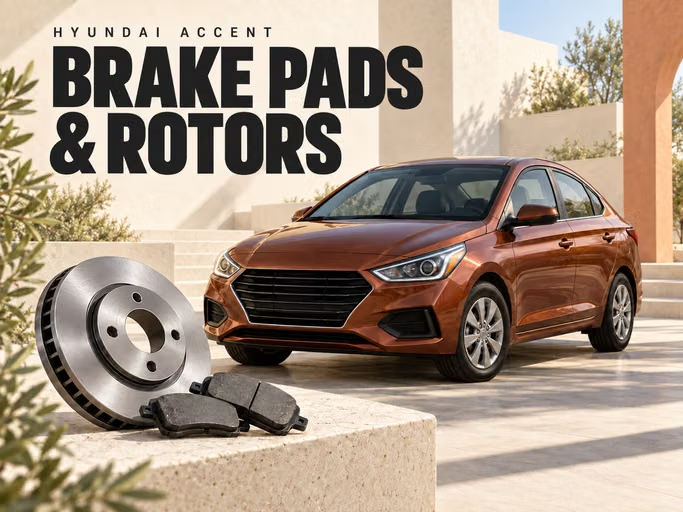
Replace Hyundai Accent brake pads and rotors according to inspection findings and measurements. There is no single replacement mileage for every car: traffic, load and mechanical condition all affect wear. Grinding, pulling or an unfamiliar pedal feel warrant attention before the next scheduled service. Both front and rear brakes need checking.
Start by identifying the rear brake design. The Accent HC catalogue on hyundai.com lists ventilated front discs and either drums or discs at the rear. An all-round pad and rotor kit therefore does not suit every Accent. Check the layout and service limits separately for other generations and specifications.
What to Check Before Ordering Parts
Give the workshop the VIN, build date, generation and engine details. Match these to the brakes fitted to the vehicle: registration year and body shape do not guarantee identical equipment. On a used Accent, establish whether calipers or other brake components have been changed.
For a rotor, confirm diameter, thickness, height, centre bore and mounting pattern. For pads, check shape, part number and caliper compatibility. Rear drum brakes need their own shoes, drums and fitting hardware. Disc-brake and drum-brake kits are not interchangeable.
- Accent RB. Confirm the brake specification through the VIN and parts catalogue.
- Accent HC. Establish whether the rear axle has drums or discs.
- Newer Accent generations. Do not carry over RB or HC dimensions and limits.
- Modified brakes. Check the identification of the components actually fitted.
Why Mileage Does Not Give an Exact Replacement Date
Two Accents with the same mileage can have different lining thicknesses. Frequent stops on short journeys generally work the brakes harder than steady driving. Follow the inspection schedule for your car and retain the readings. A sudden change in wear between checks calls for diagnosis as well as replacement parts.
When Replacement Is Necessary
For each component, the workshop should identify a measured limit or a specific defect. A squeal, an outer rotor lip or a darkened surface alone does not establish the repair scope. A serviceable rotor can remain with new pads if its thickness, condition and geometry meet the requirements for that specification.
- The friction lining has reached its service limit, cracked, separated or become soaked in oil or brake fluid.
- The rotor has worn to its minimum permitted thickness or has unacceptable cracks or damage.
- Runout or thickness variation exceeds the specification and an approved repair is not possible.
- A rear drum or its shoes has exceeded the wear limits, or damage requires replacement.
Metallic grinding needs prompt inspection. If braking also deteriorates, fluid leaks, smoke appears or the pedal sinks, stop safely and arrange assistance. Do not diagnose these symptoms through repeated hard braking.
Measurements to Request from the Workshop
The explanation on bremboparts.com identifies minimum rotor thickness as MIN TH. Take readings at no fewer than four points and use the lowest result. The outer lip must not distort the measurement. Ask for the measured thickness and the limit for your actual rotor: no single number applies to every Accent.
| Component | Measurement or check | What to record |
|---|---|---|
| Disc brake pads | Both linings in every caliper | Thickness, uneven wear and defects |
| Brake rotors | Thickness; runout and variation when indicated | Readings and applicable limits |
| Rear drums where fitted | Internal diameter, linings and mechanism | Wear, cylinder and adjuster condition |
| Actuation and hydraulics | Release, sealing and protective parts | Leaks, sticking and required work |
Why Both Pads Need Inspection
Often only the outer pad can be seen through the wheel. The inner pad may wear faster, for example when caliper movement is restricted. Check both linings in each assembly and compare the left and right sides. A noticeable difference calls for checks of the slides, piston and dust boots alongside replacement.
If the Rear Brakes Have Drums
A glance through the wheel is insufficient to assess a drum brake. The workshop checks the linings, wheel cylinders, springs and adjuster. Drum inspection includes its internal diameter and working surface. Do not substitute a disc’s minimum thickness for a drum’s maximum diameter: they are different wear criteria.
What Noise and Vibration May Indicate
Tell the technician when a sound occurs: after overnight parking, during the first stop or once the brakes are warm. Explain whether vibration is felt in the steering wheel, pedal or body. These details guide the checks but do not replace diagnosis. An absence of dashboard warnings does not establish adequate lining thickness.
| Symptom | Possible cause | Next step |
|---|---|---|
| Noise after parking | Moisture or surface corrosion | Arrange inspection if it persists |
| Persistent squealing | Wear, contamination or lining vibration | Check thickness, surfaces and seating |
| Metallic grinding | Severe wear or a foreign object | Stop normal use and seek service |
| Pulsation during ordinary braking | Rotor geometry or mounting issue | Measure rotors and check hubs |
| Pulling or one wheel overheating | Binding or another fault | Check assemblies, hydraulics and tyres |
If Symptoms Started After Replacement
The noise and vibration guidance on bremboparts.com covers caliper condition, the rotor-to-hub mounting surface and fitting hardware as well as pads and rotors. Installing another new set without identifying the cause may not help. Ask the workshop to check the rotor seating and free movement of the assembly.
What Accelerates Brake Wear
- frequent acceleration and stops on urban journeys;
- heavy braking after travelling at high speed;
- long descents with a full load;
- binding in a caliper or rear brake assembly;
- a parking brake that does not fully release a wheel;
- lining contamination caused by leaks;
- incorrect parts selection or assembly errors.
Hot weather alone does not establish a separate replacement interval. Before a mountain journey, checking lining thickness, rotor condition and freedom from binding is more useful. On descents, use the setting specified for your transmission to avoid holding the brake pedal down continuously.
Why Tightening the Handbrake Is Not Enough
If parking brake lever travel increases or the car is not held securely, check the rear brakes and operating mechanism first. Cable adjustment cannot fix a leaking wheel cylinder, worn linings or a sticking adjuster. After service, confirm that the parking brake both holds the vehicle and fully releases the wheels.
Pre-Replacement Checklist
Before approving repairs, ask to see the defects and have the measurements recorded. The job specification should state why replacement is needed, which parts are included and what the workshop will service. If your Accent has rear drums, confirm that their inspection is included.
☐ Confirm the VIN, generation and installed brake design.
☐ Describe squealing, vibration, pulling and altered pedal travel.
☐ Establish whether the rear brakes have discs or drums.
☐ Inspect both pads in every disc-brake assembly.
☐ Record rotor thicknesses and applicable limits.
☐ Where fitted, check drum diameters and shoe linings.
☐ Inspect calipers, wheel cylinders, hoses and protective parts.
☐ Confirm part numbers and required fitting hardware.
☐ Check parking brake holding and release.
☐ Obtain the brake test results and bedding-in instructions.
Common Service Mistakes
- choosing a kit solely by the Accent name and registration year;
- replacing one pad or one rotor instead of an axle set or pair;
- judging the entire assembly by the visible outer lining;
- machining a rotor or drum without checking permission and dimensions;
- masking a rear brake fault by tightening the cable;
- leaving a leak or binding unresolved after fitting new parts.
Conclusion
On a Hyundai Accent, brake replacement should follow assessment of the actual assemblies. Measure the rotors and linings, check caliper operation and identify the rear brake type. Drum brakes require their own inspection. Resolving uneven-wear causes matters just as much as selecting the correct new parts.
If you are considering a used Hyundai Accent, current offers can help you compare cars. Before buying, request its service history and arrange a brake inspection. Recorded measurements and an assessment of the rear brakes give a clearer picture of upcoming costs than a seller’s claim that the pads were recently replaced.


