


When to Change Ford Ranger Transmission Fluid
Ford Ranger
Ford Ranger•
•13 views
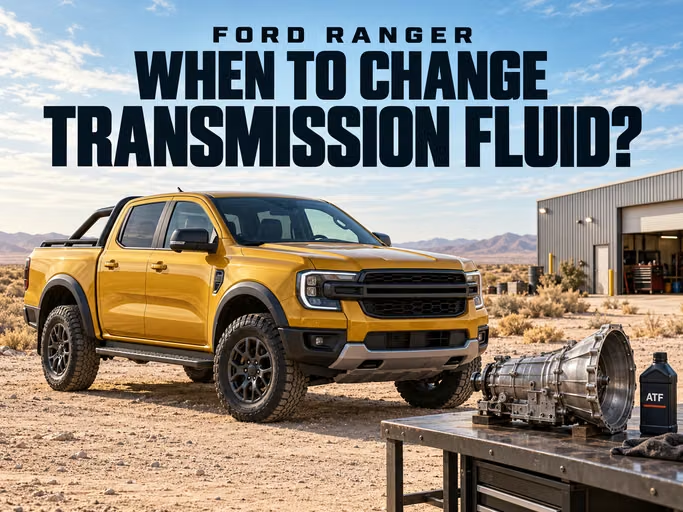
A Ford Ranger may carry tools between job sites, tow a trailer and head into the dunes at weekends. Two pickups with the same mileage can therefore have very different working histories. Transmission servicing needs to account for the gearbox fitted, how the vehicle is used and the requirements for that particular assembly.
Ranger models use different automatic and manual transmissions. The model name alone cannot establish one fluid or one replacement interval for all of them. This guide explains where to find the schedule, how LV and ULV requirements differ, how to plan the fluid quantity and which symptoms need diagnosis before a service.
How often should the fluid be changed?
The 2024 Ranger maintenance schedule published on fordservicecontent.com lists automatic transmission fluid and filter replacement at 240,000 km. This is an example from a specific manual, rather than a universal interval for every Ranger in the UAE. Check the vehicle version and its applicable service documentation before using that figure.
Mileage alone does not describe the working life of a pickup. Tell the workshop how much time it spends carrying a load, how frequently it tows, whether it has overheated and what previous services are documented. “Mostly city driving” does not distinguish a short unladen commute from daily low-speed work with equipment in the bed.
What changes with towing, heat and sand?
The same Ford section identifies high temperatures, dust, extended idling, heavy loads and towing as severe operating conditions. Check the corresponding requirements for your Ranger. A shortened interval for another Ford model should not be presented as a mandatory schedule for this pickup.
If the workshop proposes earlier replacement, ask for the reason: operating conditions, fluid condition, previous repairs or missing history. Keep the manufacturer's requirement separate from the workshop's preventive recommendation in the written plan. The next service can then follow an explained decision rather than an unqualified rule of thumb.
| Situation | How to decide |
|---|---|
| Known history, no symptoms | Follow the applicable vehicle schedule and account for work already completed. |
| Regular loads or towing | Check severe-use requirements and discuss a justified plan with the workshop. |
| Unknown history | Inspect and assess the condition before choosing the scope of the service. |
| Leak, overheating or lost drive | Arrange diagnosis without waiting for the next scheduled interval. |
Does every desert trip require a fluid change?
One trip alone does not establish a need for replacement. The load on the vehicle and its condition afterwards matter more. A warning, leak or unusual shift calls for an inspection first. Also tell the technician about any water crossing; that information should not disappear behind a vague description such as “a little off-road driving”.
Which transmission fluid does a Ranger need?
The Ranger specification table lists MERCON LV, WSS-M2C938-A, for the 6R80 separately from MERCON ULV, WSS-M2C949-A, for the ten-speed transmissions shown. The 2025 Ranger manual also specifies ULV. These are different requirements: “ATF” or “suitable for Ford” on a container is not enough information.
| Transmission / example | What to verify before buying |
|---|---|
| 6R80 in the Ranger table | MERCON LV; WSS-M2C938-A. Confirm the transmission actually fitted. |
| Ten-speed automatics listed | MERCON ULV; WSS-M2C949-A. Do not substitute LV fluid. |
| Manuals and earlier versions | Separate requirements apply. Do not use a modern automatic specification without checking. |
When considering an alternative product, check its technical data and conformity with the exact specification. “Universal” is not evidence of compatibility. Tell the workshop if the previous fluid is unknown or the gearbox has been replaced. Selecting fluid from the registration year and the appearance of the gear selector can lead to the wrong choice.
What if the Ranger has a manual gearbox?
For the six-speed manual in the Ranger 2.2L Diesel specification section, Ford lists SAE 75W and WSS-M2C200-D2. This example shows why automatic transmission advice cannot simply be applied to a manual. Identify the manual gearbox and its own maintenance requirements; clutch hydraulic fluid is also separate from the lubricant inside the gearbox.
How many litres are needed for a change?
Dry fill capacity describes filling an emptied assembly, not the amount required at every service. For example, the Ranger table above lists 12 litres for the 10R80 and notes that the quantity can differ during a fluid change. The six-speed automatic in the 2.2L Diesel section has a stated approximate dry capacity of 10.5 litres. Do not average these figures or choose a quantity simply by buying extra.
Some fluid remains in the system after draining, and the quantity required depends on the method and work performed. The workshop should plan materials for the actual operation, then verify the level using the transmission's procedure. Refilling only the amount drained is unreliable if the gearbox previously had a leak or was underfilled.
Ask how much fluid the quote includes, whether filter work is included and how the actual quantity used will be recorded. Fluid left in a container and the correct level in the gearbox are separate matters. Overfilling simply to use all the fluid purchased is not an acceptable way to finish the job.
Five signs that the transmission needs checking
1. A delay when selecting D or R. Note whether the pause occurs after an overnight stop or with the pickup fully warm. If engagement is followed by a bang, do not press the accelerator to make it engage sooner. This is particularly dangerous when manoeuvring near a trailer, wall or someone standing beside the vehicle.
2. Engine speed rises without the expected acceleration. A normal downshift also raises revs, so the nature of the change matters. If an unfamiliar loss of drive develops, do not test it with a heavy trailer or repeated hard starts. The technician needs a description of the conditions and diagnostic evidence, rather than further overheating of the assembly.
3. New jolts or vibration. Record the speed, warm-up state, driving mode and load. The source may involve components other than the fluid or transmission itself. A knock when moving away cannot confidently be blamed on “old oil” without checking the engine, mounts and driveline.
4. Fluid traces beneath the pickup. The source needs to be located: underbody protection and airflow can move the visible trail away from the leak. A stain's colour alone is not a reliable basis for choosing a top-up fluid. Ask for the source, level and sealing to be checked, not just for the dirty area to be washed before collection.
5. An overheating or malfunction warning. Reduce the load, stop safely and follow the vehicle message and handbook. If drive is lost or the warning returns, arrange assistance and discuss transportation. A message disappearing after a restart does not establish that the underlying problem has gone away.
The ATF checking section of the 2021 Ranger manual explains that the transmission does not normally consume fluid; leakage, slipping or slow shifts call for a check. Repeated topping up without finding the cause should therefore not be treated as a complete service.
Can fluid colour tell you when to replace it?
A single fluid sample does not provide the whole picture. Assess it alongside the mileage since the last service, specification, symptoms and inspection findings. Even fluid that looks clean may be the wrong product or at the wrong level. A photograph of fluid in a clear container does not replace an assessment of the vehicle.
If unusual contamination is found when the pan is removed, ask to see the evidence and have the next steps explained. Photographs and a written description are more useful than an unconditional promise that a fluid change will fix everything. Establish whether the job is maintenance on a healthy transmission or an attempt to address an existing fault.
How should the service be organised?
Agree on the scope first. A drain and refill, a service involving pan removal and a fluid exchange are different operations. For a high-mileage Ranger or one with unknown history, the method should follow an assessment of its condition. Owning an exchange machine does not itself prove that the proposed procedure is suitable for your gearbox.
1. Identify the assembly and assess its condition. The technician checks the gearbox and records, documents any complaint and inspects the vehicle. If fault codes are present, preserve the diagnostic information and investigate it first. Clearing codes before inspection can remove information that would help explain the problem.
2. Specify the fluid and parts. The job sheet should identify the product, specification, filter and required seals. Verify part numbers against the actual assembly. Packaging that mentions Ranger does not establish that a kit fits this particular year, engine and transmission version.
3. Perform the agreed operation. Use clean equipment and suitable materials. If the pan is removed, inspect it and record the findings. When an unexpected issue changes the scope, the workshop should explain it and agree on additional costs before proceeding with further repairs.
4. Verify the level and check for leaks. Set the final level using the service procedure. A universal temperature applied to every automatic transmission is inappropriate. If fluid was escaping before the service, the source must be addressed and the result checked afterwards.
5. Check operation after the work. Verify engagement, shifting and sealing. Record the mileage, operations and materials used. If the original complaint remains, a further diagnostic plan is needed; it should not be dismissed with an assurance that the gearbox will inevitably get used to the fresh fluid.
Are cleaning agents and additives necessary?
The 2021 Ranger manual warns against supplemental ATF additives, treatments and cleaning agents. If the quotation includes a “flush”, clarify whether it means an exchange using the correct fluid or a separate chemical treatment. A product marketed to stop harsh shifts should not replace finding the cause of the fault.
What affects the cost?
Compare quotations with the same scope: fluid, service parts, pan removal where required, level verification and a final check. A low starting price may cover only draining and refilling. Ask which operations cost extra and how additional expenditure will be approved. A price for one Ranger transmission cannot be applied to every gearbox used across the model range.
Checklist before booking the service
☐ Confirm the VIN, engine, model year and transmission actually fitted.
☐ Check the applicable schedule and records of previous fluid changes.
☐ Tell the workshop about loads, towing, sand, water and overheating.
☐ Specify the ATF requirement, parts and chosen method in the quotation.
☐ Agree on level verification, leak checks and an operational check.
☐ Keep the service mileage and a clear plan for subsequent maintenance.
Common Ranger owner questions
Should the fluid be changed immediately after purchase?
Start with the history and an assessment. When comparing current offers, ask how the pickup was used and what proves that the transmission was serviced. Low mileage does not rule out demanding work. Missing records are a reason to plan an inspection, not automatically to order the most expensive fluid-change package.
Should the filter be replaced with the fluid?
The applicable schedule and transmission procedure determine the work required. In the 2024 Ranger schedule cited above, the filter is included in the scheduled operation alongside the fluid. Check whether the workshop's offer includes it and the necessary seals; paying for a quantity of ATF alone does not establish that it does.
Is changing fluid dangerous at high mileage?
Mileage alone does not establish that fluid must never be changed. The wrong material, an incorrect level or an unsuitable procedure can cause problems. Existing slipping, severe bangs or contamination require investigation first. Fresh fluid cannot restore worn components or guarantee that a pre-existing fault will disappear.
Should adaptations be reset after a fluid change?
Do not include a reset automatically. Ask for the reason and the applicable procedure for the gearbox. If severe jolts appear after servicing, the work performed, fluid and level should be checked first. Describing every new symptom as “learning” without investigation does not explain the vehicle's changed behaviour.
Conclusion
Ford Ranger transmission maintenance starts with identifying the exact assembly. Check the schedule, distinguish LV from ULV requirements and separate dry capacity from the quantity needed for the actual service. For a working pickup, information about payload, towing and previous overheating is particularly useful.
If a leak, delayed engagement or loss of drive develops, do not postpone diagnosis until the scheduled mileage. A suitable procedure, verified level and retained records are more useful than a universal interval borrowed from someone else's advice. They help match maintenance to both the gearbox and the work your Ranger actually does.


