When to Change Ford Ranger Coolant: Intervals, Capacity and Checks Before Heavy Use
Ford Ranger
Ford Ranger•
•4 views
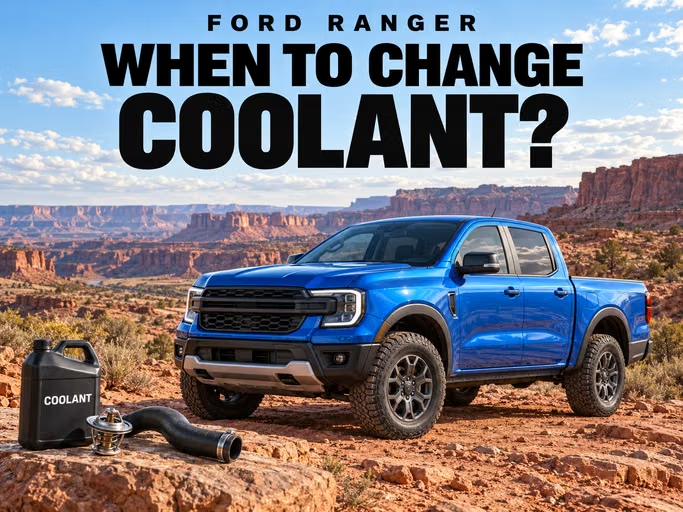
The cover is a thematic illustration. The container, thermostat and hose are illustrative; the image does not replace a technical diagram or fluid and parts selection for a specific Ford Ranger.
A Ford Ranger can visit a worksite, take the family out of town and carry equipment along a dusty trail in the same week. Its cooling system depends on more than mileage: radiator condition, sound connections and the correct fluid all matter. Yet the Ranger name does not identify one coolant capacity or a universal replacement interval. Here is how to approach coolant selection, prepare for demanding use in the UAE and avoid copying a petrol Raptor’s service requirements onto a diesel pickup.
Identify the Engine and Model Year First
Ford’s UAE model comparison includes several powertrains: single- and bi-turbo 2.0-litre diesels, the 2.3-litre EcoBoost petrol engine and the Ranger Raptor’s 3.0-litre V6. Used vehicles can introduce further variants. Start a coolant order with the VIN, model year and exact engine, rather than a photograph of the container another owner bought.
The examples below come from 2024 model-year Ranger manuals. They explain the differences without replacing the documentation for the individual pickup. Verification is especially important after an engine replacement, an aftermarket radiator installation or a purchase without reliable records. The year of first registration is not necessarily the model year used to identify the correct manual.
How Many Years or Kilometres Between Changes
One edition of the 2024 Ranger maintenance schedule, covering petrol versions, specifies an initial change at 10 years or approximately 320,000 km, followed by changes every five years or 160,000 km, whichever comes first. This is a specific schedule, not a blanket interval for all Rangers, including diesels. Confirm applicability to the UAE vehicle using its VIN, service booklet and local maintenance requirements.
A long first interval does not mean the system can be ignored for a decade. The same schedule includes coolant and hose checks at engine-oil services. Calendar age still counts on a low-mileage pickup. Topping up is not a complete replacement and does not restart the service clock, because the existing fluid remains in the system.
Does UAE Heat Require a Change Every Year
Ambient heat alone is not a sound basis for prescribing annual changes to every Ranger. Earlier service needs a reason: the applicable schedule, an unsuitable mixture, contamination, repairs or an unknown history. If a workshop recommends a short interval, ask for the reason to be recorded on the job sheet. That helps distinguish necessary work from a standard pre-summer service package.
How Much Coolant Does a Ford Ranger Hold
Capacity depends on more than engine displacement. The 2.0-litre diesel specification table distinguishes turbo configurations, transmissions and additional heating equipment. The 2.3-litre EcoBoost petrol specification gives a separate figure. The table below lists nominal capacities from the relevant 2024 Ranger manuals for standard cooling systems.
| Engine | Applicable configuration | Capacity |
|---|---|---|
| 2.0 diesel | Single turbo, manual, without engine heater | 8.0 L |
| 2.0 diesel | Single turbo, automatic, without engine heater | 8.4 L |
| 2.0 diesel | Bi-turbo, without engine heater | 9.0 L |
| 2.3 EcoBoost | Petrol; the 2024 manual edition linked above | 9.9 L |
These figures are not mandatory refill quantities after a routine drain. Some liquid may remain inside, and the service method affects the amount actually needed. Do not try to add the full nominal capacity on top of retained coolant. Raptor variants, vehicles with additional heaters and modified systems need separate verification; an entry reading only “3.0” does not identify the engine and equipment accurately enough.
Which Coolant Should You Choose, and Does Colour Matter
The manuals for the 2.0 diesel and 2.3 EcoBoost examples above specify WSS-M97B57-A2. Check the required specification on the packaging and in the product’s technical documentation. “For Ford”, “universal” or a similar colour does not establish compliance on its own. For another model year, identify the requirements for that particular vehicle first.
The Motorcraft Yellow Prediluted description identifies it as a ready-to-use 50/50 mixture that requires no added water. Concentrate is a different product and needs preparation according to the relevant instructions. Do not increase the concentrate percentage on the assumption that a stronger mixture is better in hotter weather, or dilute premix by guesswork. Changing products also requires consideration of the fluid remaining inside.
What If the Existing Coolant Is Unknown
Start with records: invoices, the product name and specification are more useful than a reservoir photograph. If records are missing, ask the workshop to assess the fluid and recommend a justified replacement procedure. Repeated additions of different products only make an unknown mixture harder to identify. Keep the product name, specification, date and mileage after servicing so that the next owner or technician does not have to repeat the investigation.
Which Signs Call for Diagnosis
The Level Falls Despite a Recent Top-Up
The manual’s coolant-checking section calls for checking the reservoir markings with the engine cold. Compare readings under similar conditions. Repeated losses need investigation: record how much was added and over what mileage. Do not wait for a large puddle; damp connections and dried residue can also help locate a leak.
Temperature Rises in Traffic, on a Climb or Under Load
Overheating does not prove that the coolant has simply reached the end of its life. HELLA’s diagnostic guidance considers radiator airflow, fan, thermostat and pump operation, as well as the accuracy of temperature readings. Tell the technician when the problem appears and whether the vehicle has been modified. The same dashboard warning can require different diagnostic checks.
Deposits, a Surface Film or Unusual Heater Behaviour Appear
Colour alone does not reveal the fluid’s remaining service life. Deposits or a surface film warrant inspection, especially after repairs or mixing products. If both the level and heater behaviour change after a refill, tell the workshop so it can assess filling quality and circulation. A single symptom is not enough to justify replacing the thermostat or pump.
What to Check After Dusty Trails and Before Carrying a Load
For a Ranger, distinguish fluid condition inside the system from cleanliness outside the heat exchangers. Fresh coolant cannot clear blocked fins or restore obstructed airflow. After a dusty route, ask for an inspection of the front heat-exchanger assembly, protective components and accessible connections. This is especially useful before towing, a sustained climb or a journey far from workshop support.
Avoid directing a powerful water jet at close range into the fins or dismantling components for a quick wash. Cleaning should account for access and component condition. Ask the workshop to separate external radiator cleaning, coolant replacement and internal flushing on its estimate. They are different jobs, and the need for one does not establish the need for all three. Arrange inspection early enough to address any findings.
What a Proper Coolant Service Should Include
- Identification and inspection. The workshop checks the VIN, engine, specification, top-up history and reported symptoms. Suspected fluid loss should be investigated rather than concealed with a fresh refill.
- Agreement on scope. A routine drain, a repair and removal of contaminated fluid require different approaches. The estimate should identify the product, quantity, any reason for flushing and separate diagnostic operations.
- Refilling to the correct procedure. Service the system cold using the instructions for the particular variant. Air must be removed by the prescribed method; one improvised sequence of engine running and cap removal is not suitable for every Ranger.
- Checking the result. After servicing, check for leaks, confirm system operation and recheck the level after full cooling. If further topping-up is needed, the workshop should explain why and establish the follow-up checks.
- Keeping records. Retain the invoice with the product, specification, mileage and completed work. Record part numbers for replaced components, particularly on a pickup with a modified cooling system.
HELLA’s guidance on flushing and bleeding explains the importance of correct filling; vacuum equipment can help remove trapped air. Owning the equipment does not, by itself, establish service quality. The vehicle-specific procedure and verified result matter more. Internal flushing should have a condition-based justification rather than being added automatically to every drain.
When a Radiator Is Needed Instead of Another Fluid Change
Consider a replacement radiator after diagnosis confirms damage, leakage or another relevant fault. One example with restricted applicability is the CSF 8228 radiator: its manufacturer lists 2024–2026 Ranger models with 2.3/2.7 EcoBoost petrol engines and the 3.0 Raptor. That does not establish fitment for a 2.0 diesel. Check the VIN, cooling-system configuration and part number before ordering; an aftermarket radiator’s increased capacity also affects servicing.
How to Assess the Cost of Service in the UAE
A coolant change does not automatically require a new water pump, thermostat or reservoir cap. If these appear on the proposed job sheet, ask for the test findings and an explanation of the fault. It may be convenient to complete related work while an assembly is already dismantled, but that decision should reflect component condition and the dismantling involved. A generic parts list for every Ranger cannot replace an inspection of the individual pickup.
Compare quotations in AED for the same scope. A low price may cover only a partial drain, while a higher one may include diagnosis, cleaning, a damaged connection replacement and a cold-level recheck. Request separate fluid, labour and parts charges. Confirm whether consumables and taxes are included and which additional jobs require agreement. One price for every engine and system condition provides little useful guidance.
If you are still choosing a pickup, compare current offers alongside their maintenance histories. Ask sellers about overheating incidents, repeated top-ups, radiator replacement and off-road modifications. A clean reservoir and fresh-looking fluid do not replace service records. An independent inspection before purchase can help distinguish routine maintenance from an existing fault that still needs investigation.
Conclusion
Good Ford Ranger cooling-system maintenance starts with identifying the variant, then checking its schedule, fluid specification and actual service requirements. In UAE use, an inspection before demanding work is more useful than a replacement decision based on colour or another owner’s mileage. Keep records, monitor the cold level and investigate repeated losses. Fresh coolant should complete a sound service, rather than hide a problem until the next challenging journey.