


When to change brake fluid in a Ford Ranger
Ford Ranger
Ford Ranger•
•19 views
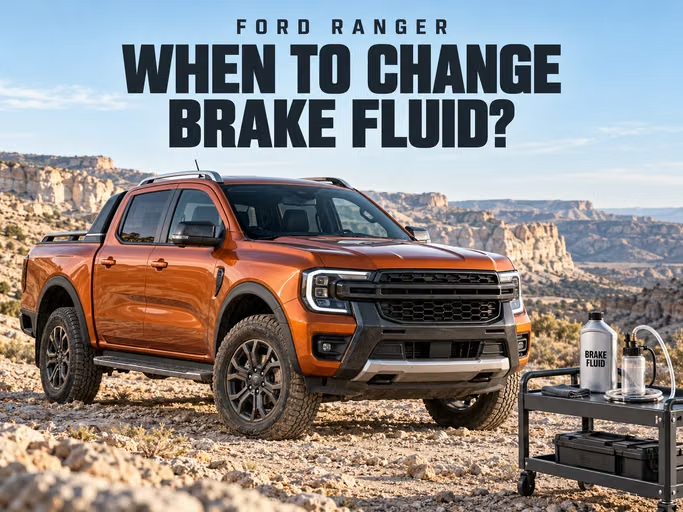
Illustrative cover. The vehicle and service accessories introduce the brake-maintenance topic; the image does not replace a technical diagram or repair procedure for a particular Ford Ranger.
The reviewed online owner's manual for the 2024 Ford Ranger specifies a brake fluid change every three years. Confirm the interval for your pickup using its VIN and service documents: this figure should not be applied automatically to every generation and specification. A leak, a sinking pedal or reduced braking performance needs diagnosis without waiting for the scheduled date.
A Ranger can carry tools, handle city journeys and head onto a rocky trail with camping equipment within the same week. That use makes both the fluid-change history and the condition of the brake hardware relevant. Off-road tyres and four-wheel drive do not provide a reason to postpone hydraulic-system maintenance.
Identify the Ranger version before applying a schedule
The Ranger name covers vehicles from different years with different engines, transmissions and equipment. Start with the VIN, model year and documents supplied for the particular vehicle. For a diesel pickup, a petrol version, a Raptor or a vehicle with modified brakes, the workshop needs to confirm applicability separately. Similar bodywork does not establish an identical service procedure.
The 2024 Ranger maintenance schedule lists brake fluid replacement as a separate operation every three years. That entry does not add a mileage threshold. The engine oil reminder belongs to a different system, so resetting it does not start a new service period for the fluid in the brakes.
If the service booklet conflicts with a table found online, ask a specialist to confirm the applicable schedule for the VIN. Do not automatically choose the longer interval. The vehicle's own documentation and relevant service updates are more useful than a general chart for the whole brand. The work order can identify the reference used to set the next replacement date.
Which date should start the service period
Find a record of a complete replacement with its date and mileage. Entries for a brake check, a top-up or new pads describe different work. If the paperwork is brief, ask the workshop for details. Buying the vehicle, registering it again or completing another general inspection does not reset the age of its fluid.
For a Ranger with an uncertain history, begin with diagnosis and agree the initial maintenance required. After replacement, keep the product name and a record of the operations performed. Where several drivers use the pickup, retain this information in a shared vehicle history so that a later top-up is not mistaken for a full change at the next appointment.
Why low mileage does not cancel maintenance
The technical explanation on hella.com describes how glycol-based brake fluid absorbs moisture. As moisture accumulates, its boiling point falls; substantial heating can then produce compressible vapour bubbles that interfere with pressure transmission. A calendar deadline therefore matters even for a pickup that spends much of its time parked.
A useful Ranger example is the change from short, unloaded journeys to a long descent with a loaded bed. An absence of complaints in the first situation does not demonstrate readiness for the second. Check the maintenance history before a demanding route, leaving time to address findings rather than booking only the inspection immediately before departure.
Does hot weather require an annual fluid change
Heat, towing and intensive use are reasons to discuss system condition with the technician. They do not, by themselves, establish one annual interval for every Ranger in the UAE. An earlier replacement should have an identifiable basis: an applicable service requirement, a test result, contamination or repair work that makes the operation necessary.
If a workshop recommends shortening the interval, ask it to explain the reason for your pickup. This is particularly useful for frequent towing or fleet operation. Consider drivers' reports and the circumstances in which symptoms arise alongside the fluid history. A general service stamp cannot describe all of those conditions, especially when the vehicle changes drivers between workshop visits.
Choosing fluid and agreeing the quantity
The reviewed 2024 Ranger fluid specification identifies DOT 4 LV High Performance fluid meeting WSS-M6C65-A2; the accompanying note also refers to ISO 4925 Class 6. LV means low viscosity. This is a verified example from the manual reviewed, while the final product choice still needs to match the documentation for the particular Ranger.
Compare the complete requirement with the product label and technical data sheet. A large DOT 4 marking on the front of a bottle does not confirm every characteristic. A higher advertised boiling point or a claim of sporting performance is not enough to establish compatibility either. For a Raptor, the word performance on the packaging should not replace that check.
Agree the consumable before booking, especially if you intend to supply it yourself. Use fresh fluid from a sealed container. Do not plan the work around an old remainder in an opened bottle of uncertain history. Ask for the actual product used to appear on the final invoice so that the next workshop does not have to infer it from a vague entry for consumables.
Why reservoir capacity is not the replacement quantity
Ford's reviewed table gives a fill-as-required instruction without a fixed number of litres. Agree the amount needed for the complete procedure with the workshop, taking account of the operations and any associated repair. Reservoir size does not show how much material will be consumed while renewing the system and removing air.
Ask for the fluid quantity to be identified in the quotation and establish how additional material will be authorised. If the hydraulic clutch circuit is being serviced as well, that operation should also be recorded. Purchasing a bottle does not establish that every required part of the hydraulic system has been renewed. The scope of the work is as important as the quantity supplied.
What changes on a Ranger with a manual gearbox
The brake and clutch fluid check section in one Ranger manual explicitly describes a shared supply reservoir for the two systems. This feature concerns the relevant versions with hydraulic clutch operation. Confirm it for your own specification instead of assuming that every manual-transmission Ranger has the same arrangement.
Where that arrangement is fitted, an invoice saying brake fluid change does not explain whether the clutch branch was serviced. Before work begins, clarify the required scope and have the completed operations recorded. A common reservoir does not make the two systems the same component or remove the need for separate checks after repairs.
If clutch-pedal behaviour and the fluid level have both changed, report both observations. Do not restrict the booking description to difficult gear engagement or a request to add brake fluid. The hydraulic-clutch advice does not apply to an automatic gearbox; automatic transmission fluid belongs to another system. Keeping the complaints and requested work clear helps the workshop assess the correct components.
What the fluid level tells you and when diagnosis is needed
The Ranger fluid-level instructions describe the range between MIN and MAX as normal: there is no need to top up merely to reach the upper mark. The cap should remain closed unless fluid is being added. Follow the checking conditions in your vehicle's manual and avoid introducing dirt into the reservoir.
A gradual reduction can accompany brake-pad wear. Rapid loss, repeated top-ups or visible fluid require the cause to be established. Adding fluid does not repair a leak. When handing over the vehicle, explain how often the level has changed and which operations were performed before the change became noticeable.
The brake-service guidance on me.ford.com lists unusual pedal behaviour, vibration, noise, an overheating smell and a warning indicator as reasons for inspection. These observations do not automatically identify fluid as the only problem. The system needs assessment, with the repair scope decided after diagnosis rather than promised in advance.
● The pedal becomes soft, its travel increases or it continues to sink.
● Braking performance deteriorates or a strong overheating smell develops.
● There are visible leaks, a falling level or a persistent brake-system warning.
● Pedal feel changes or new symptoms appear after recent servicing.
Is a fluid change needed after off-road use or water
The Ford guidance for the period after off-road driving calls for vehicle inspection and checks that the brakes are free of mud, stones and debris. Cleaning the mechanisms and changing the fluid address different tasks. Fresh fluid cannot remove a stone beside a disc or restore a damaged hose.
After the route, tell the technician about substantial impacts, unfamiliar noises and any change in braking. A complaint that started immediately after leaving the road is useful diagnostic information. Avoid deciding in advance that the fluid is simply old, or that the symptom is an unavoidable consequence of using a pickup off road.
The section on driving through water includes a gentle brake-function check once it is safe to perform. However, wet external brake components do not prove that water entered the hydraulic circuit. Flood exposure or suspected fluid contamination requires a separate assessment; there is no universal rule requiring a complete fluid change after every puddle.
What a fluid tester can establish
According to the explanation from Bosch Car Service, a visual check shows level and appearance but does not establish the fluid's actual suitability for continued use. Ask for the test method and result to be recorded. If a replacement is recommended from an instrument reading, it should be clear which property was assessed and how the finding supports the recommendation.
A good result from one test does not automatically extend a manufacturer deadline. Equally, a photograph of dark fluid cannot establish the entire repair required. Consider the measurement alongside history, symptoms and system condition instead of treating it as the answer to every braking concern. This also makes a recommendation easier to review if a different workshop later inspects the vehicle.
Agreeing a complete change with the workshop
Before handing over the keys, establish that the service means renewal using the applicable procedure, not just removing fluid from the reservoir. Work on ABS-equipped systems can require diagnostic equipment depending on the operation and system condition. The technician should obtain the bleeding sequence and equipment settings from the repair information for the particular version.
- Identify the configuration, schedule and fluid specification using the VIN.
- Inspect the system and investigate a low level or reported symptoms.
- Agree the product, material quantity and clutch-circuit work where applicable.
- Replace the fluid and remove air according to the repair procedure.
- Check for leaks, verify the final level and assess brake operation.
- Record the date, mileage, product used and next service deadline.
An owner can check the completeness of the record and discuss the result, but this general list is not a DIY bleeding procedure. Work after a hydraulic repair may differ from scheduled servicing of a sound system. Any additional operations should be explained and agreed before they are performed, with the reason recorded clearly enough to understand later.
What determines the service cost
Compare quotations for equivalent work. Ask about the fluid, replacement and bleeding, included checks and any separate diagnostic charge for an existing complaint. For a manual-transmission vehicle, clarify whether the applicable clutch work is included. Request the total including taxes and establish how additional spending will be approved.
There is no single verified price covering every Ranger. A seized connection, a discovered leak or previous repair work can change the job. If extra work is proposed, ask for a description of the defect and the suggested remedy. This makes the estimate easier to assess than comparing the cost of a consumable with the cost of a completed workshop service.
Checking the history of a used Ranger
When reviewing current offers, consider brake-service records alongside equipment and overall condition. A working pickup and a weekend vehicle can show similar mileage despite different use. The following checks help establish what is known before purchase and which maintenance remains to be confirmed.
☐ The VIN, model year and transmission match the service documents.
☐ A complete fluid change is documented with its date and mileage.
☐ The product is identified rather than hidden in a general consumables entry.
☐ Previous top-ups, leaks and hydraulic-clutch repairs, where relevant, have an explained history.
☐ An independent brake inspection considers the loads and towing use you plan.
If confirmation is missing, allow for inspection and initial maintenance after purchase. New pads cannot replace an absent fluid-service history. If the seller promises to complete the work before handover, request the final invoice with specific operations. That provides a useful starting point for your own records and makes the agreement easier to verify.
Servicing mistakes to avoid
● Applying another Ranger version's schedule without checking the documents.
● Relying only on mileage, fluid colour or a new set of pads.
● Choosing a product from its DOT 4 marking without the full specification.
● Replacing diagnosis with repeated top-ups.
● Forgetting to clarify hydraulic-clutch work on versions where it is relevant.
● Counting brake cleaning after an off-road trip as fluid replacement.
Checking the vehicle after servicing
Collect a record of the agreed work and retain the next replacement date. If warnings, unusual pedal travel or signs of fluid appear after the visit, raise them with the workshop before travelling further. Being told to drive until the symptom settles does not establish that the brakes are functioning correctly.
For a Ford Ranger, servicing starts with identifying the version and its requirements. Suitable fluid, a complete procedure and a clear work history support planning for cargo and towing use. If braking changes, respond to the system's condition: a future scheduled replacement date does not remove the need for timely diagnosis.


