When to Change Ford F-150 Transmission Fluid
Ford F-150
Ford F-150•
•39 views
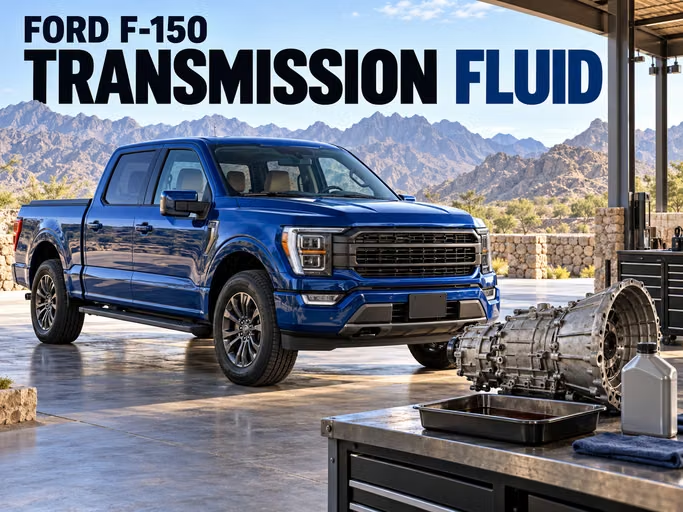
The cover illustrates transmission maintenance. The component shown is not a technical diagram of a specific Ford F-150 gearbox.
Ford F-150 automatic-transmission fluid should be changed according to the installed gearbox’s schedule and operating conditions. The normal schedule in a published 2024 owner’s manual calls for fluid and filter replacement at 240,000 km. That does not mean every pickup can reach that mileage without checks: towing, heavy work and the vehicle’s regional specification require the applicable instructions to be verified.
This article focuses on recent petrol F-150 models with a ten-speed automatic, particularly the 10R80. Earlier trucks and hybrid versions need separate checks. Loss of drive, overheating or a leak requires diagnosis now, regardless of the scheduled interval. Fresh fluid is part of maintaining a healthy transmission; it is not a substitute for finding a fault.
Identify Your F-150’s Transmission First
The model comparison on me.ford.com lists conventional and hybrid ten-speed transmissions. “F-150 automatic” is not enough information to choose fluid. You need the VIN, model year, engine and transmission identification. Check whether the gearbox has previously been replaced, too: repair records may be more useful than a general trim description in an advertisement.
When buying a used pickup, investigate how it has been used. Regular towing, carrying loads and sand driving reveal more than a clean cabin. When reviewing current offers, compare the mileage with service invoices and inspection findings. A change of owner does not erase the truck’s accumulated operating and maintenance history.
5 Signs of an Automatic-Transmission Problem
1. Delayed engagement of D or R. A recurring pause followed by a harsh engagement needs investigation. Do not accelerate to force the gearbox to respond: the truck could move unexpectedly. Tell the workshop whether the delay occurs only after parking or also returns when the vehicle is warm.
2. Rising rpm without corresponding acceleration. A brief rpm increase during a downshift differs from sustained slipping. New loss of acceleration under a familiar load is a concern. Avoid reproducing it with repeated hard launches or a heavy trailer, which could make an existing problem worse.
3. Harsh shifts, vibration or jerking. Record the speed, temperature and selected drive mode. Similar sensations can come from the transmission, engine, mounts or driveline. Saying that all ten-speed automatics behave this way does not explain a severe new symptom or replace a diagnostic assessment.
4. Wet areas on the casing or spots after parking. Fluid can spread along an undertray, so the drip may not identify the source. The workshop should check for leaks and establish the level before topping up. Oil near the gearbox is not automatically ATF; its source still needs to be confirmed.
5. A warning or unusual temperature rise. Stop somewhere safe and follow the display instructions. If drive is lost, there is a burning smell or a warning returns, do not continue driving under load. Preserve the message and diagnostic information. A warning disappearing after a restart does not itself prove that the fault has cleared.
Choosing the Replacement Interval
The Normal Maintenance Schedule
The 2024 F-150 normal maintenance schedule on fordservicecontent.com lists 240,000 km, or 150,000 miles, for automatic-transmission fluid and filter replacement. Check the vehicle’s manual, service booklet and VIN-specific regional requirements before using that figure. It must not replace a different version’s schedule or instructions that apply to a particular duty cycle.
Check the units in the paperwork: 150,000 miles is not 150,000 km. Find the last documented change and what it included. An entry saying only “transmission service” does not establish whether the filter was replaced, fluid was merely topped up or a different driveline component was repaired.
Towing, Sand and Commercial Duties
An F-150 may carry loads daily, tow a trailer or spend long periods moving slowly away from paved roads. Describe the frequency and duration of that use to the workshop. An occasional towing trip differs from continuous loaded work. In the UAE, the combination of heat, low speed and sustained load deserves attention alongside the odometer reading.
The published manual’s special operating conditions section includes an ATF replacement example at 48,000 km, but the tables beneath it do not establish that as one interval for every severe-use category. It should therefore not be presented as a universal F-150 requirement without further verification. Ask the workshop to confirm your applicable schedule and distinguish any separate preventive recommendation it makes.
| Conditions | What to agree with the workshop |
|---|---|
| Normal use confirmed | The vehicle-specific interval and the filter replacement requirement. |
| Regular heavy work | The applicable special schedule, workload and regional requirements. |
| Unknown history or symptoms | Diagnosis and work needed now, followed by the next service point. |
When Mileage Is No Longer the Main Guide
After a leak, overheating, water contamination or a repair, the next step depends on the gearbox’s condition and service procedure. With an unknown history, do not simply count a new interval from the current odometer reading. Establish what is needed now. If the previous change is documented, keep the record and agree the next check against the truck’s actual workload.
Which Fluid Does the F-150 Need?
MERCON ULV for the Appropriate Transmission
The 2024 F-150 fluid specification lists Motorcraft MERCON ULV, WSS-M2C949-A. Technical information on motorcraft.com confirms its application in the F-150 with the 10R80. Check the precise requirement in your own vehicle’s documentation: a recognised brand and a generic automatic-transmission label do not establish compatibility.
Confirm the product before work starts and have its name included on the invoice. An alternative needs technical documentation and confirmed suitability. Check container sizes as well: a quart and a litre are different units. Comparing service prices by bottle count alone is meaningless without knowing their volume and the operation included.
Why LV and ULV Are Not a Newer-Is-Better Choice
The 2016 F-150 manual specifies MERCON LV for the relevant automatic transmissions. This illustrates why one fluid recommendation cannot cover the entire model history. The MERCON ULV product information expressly excludes its use where MERCON LV is required. A newer name does not make a product a universal replacement for an earlier specification.
| Item | What to verify |
|---|---|
| Transmission | Gearbox identification, model year and VIN-specific application. |
| ATF | The exact specification; MERCON ULV for the appropriate 10R80. |
| Filter and seals | Part references matching the installed gearbox and service operation. |
| Filling | The service quantity and level-check procedure, not just dry capacity. |
How Much Fluid Will a Change Require?
One 2024 F-150 capacity table for the 10R80 gives 12.3 litres as an approximate dry-fill capacity and notes that the amount used during a change can differ. This is reference information for the stated configuration, not an instruction to add that amount after every drain. Fluid may remain in the system, and the quantity depends on the work performed.
Another F-150 manual does not publish a capacity because achieving the correct level requires specialised equipment and procedures. The practical conclusion is the same: the workshop needs information for the particular gearbox. Do not choose a universal checking temperature or refill amount from someone else’s video. Measuring the drained amount is useful, but does not prove the starting level was correct.
The PowerBoost hybrid needs its own documentation checked even though its specification also mentions ten speeds. This conventional automatic-transmission service guidance does not apply to the electric F-150 Lightning. On a four-wheel-drive pickup, axle and transfer-case fluids must also be selected independently rather than automatically following the ATF requirement.
What Can Delayed or Incorrect Servicing Cause?
ATF provides lubrication and a hydraulic working medium, helps remove heat and supports the intended friction characteristics. Insufficient fluid, contamination or the wrong formulation can disrupt transmission operation. Continued driving with slipping can damage components that fresh fluid cannot restore. Preventive maintenance and fault repair therefore need to be discussed separately.
Colour and smell can inform an assessment, but neither provides a diagnosis on its own. The workshop should consider fluid condition alongside complaints, fault codes, leaks and test findings. A new engagement delay after a service should not automatically be dismissed as the gearbox settling in: the level, selected product and work performed need to be checked.
What a Proper Workshop Fluid Change Includes
1. Checks before intervention. The technician identifies the transmission, reviews its history and records complaints. Where needed, the work includes a diagnostic drive, fault-code scan and inspection of connections, the pan and accessible fluid lines. Original data should be retained before resets so the result can be compared after servicing.
2. Agreement on method and parts. The quotation identifies the fluid, filter, required seals and replacement method. Draining some ATF, servicing with pan removal and exchanging fluid are different operations. Ask how the proposed method meets the filter requirement if the applicable schedule includes one.
3. Following the service procedure. The technician uses clean filling equipment, the correct consumables and the prescribed sequence. If the pan is removed, its condition and deposits are assessed. Unusual particles should be discussed before additional work; simply mentioning metal debris without describing it does not establish the necessary repair scope.
4. Filling and setting the level. Vehicle position, fluid temperature and the sequence of operations must match the gearbox’s requirements. Overfilling is not a useful reserve, and underfilling is not a saving. Where fluid had previously leaked out, adding only the amount drained does not establish the correct level.
5. Verifying the result. The workshop checks for leaks, engagement and operation after warm-up. Records should identify the product, quantity, mileage and replaced parts. If the complaint remains, agree further diagnosis rather than repeating the fluid change or resetting adaptations without an explanation.
Pre-Service Owner’s Checklist
☐ The VIN, model year, engine and transmission identification are confirmed.
☐ The applicable schedule and previous replacement records have been checked.
☐ Towing, loads, sand driving and extended low-speed use have been described to the workshop.
☐ The ATF specification and exact product appear in the quotation.
☐ The filter, seals, method and level-check procedure are agreed.
☐ Leak checks, a verification drive and a record of completed work are included.
If jerking is the reason for the visit, prepare a short description: cold or warm vehicle, selected mode, speed and whether a trailer was attached. One precise observation is more useful than asking for an oil change to stop all harsh shifts. Do not reproduce unsafe behaviour for a video; report the circumstances already observed.
Common Owner Mistakes
- Identifying the gearbox only by its number of speeds. Conventional and hybrid transmissions need precise identification. An equal gear count does not determine a service kit.
- Treating MERCON ULV as a universal upgrade. The installed gearbox’s requirement determines the fluid. Switching from LV to ULV without confirmed suitability is inappropriate.
- Using dry capacity as the refill amount. Fluid remains after a routine drain. The procedure establishes the final level, not the total volume of containers purchased.
- Trying to cure every harsh shift with a machine exchange. The cause may involve control systems, internal components or another part of the driveline. Select the service method after assessing condition.
- Assuming adaptation resets are always necessary. A reset needs support from diagnostic findings and service instructions. Erasing data does not repair a failed component.
- Overlooking the filter and paperwork. A fluid-only change does not equal fluid-and-filter service where that is required. Keep the invoice with precise materials and mileage.
Conclusion
For the Ford F-150, start with the installed gearbox and applicable schedule before choosing fluid and work scope. On a pickup that regularly tows or operates in sand, kilometres alone do not describe the workload. Service history, leak prevention and a correctly established ATF level deserve particular attention.
Do not wait for a scheduled fluid change when there is loss of drive, repeated overheating or severe harsh engagement. A useful service leaves a clear work record, suitable fluid and verified operation. That information supports the next maintenance decision and helps assess the vehicle without relying on guesswork.