


How often should you change the brake fluid in a Ford Explorer?
Ford Explorer
Ford Explorer•
•19 views
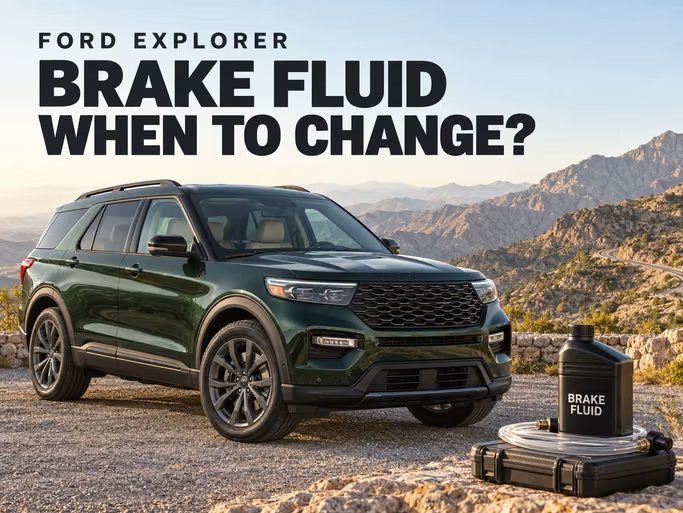
The cover illustrates brake maintenance. The vehicle and service accessories are shown for context; the image does not replace a technical diagram or instructions for a particular Ford Explorer.
The examined 2024 Ford Explorer handbook specifies a brake-fluid change every three years. For a vehicle in the UAE, confirm that schedule against its VIN and service documentation. Review the history before travelling fully loaded or towing. A leak, sinking pedal or noticeable loss of braking requires attention before the scheduled date.
An Explorer may carry the family around town during the week and head into the mountains with passengers and luggage at the weekend. It helps to distinguish a calendar-based fluid change from checking the brakes before a demanding journey. A complaint about pedal behaviour needs attention even when the replacement date has not yet arrived.
This article primarily concerns the petrol Explorer, using verified sections of the 2024 handbook, including the specifications for the 2.3 and 3.0 engines. Another model year, a hybrid or the electric Explorer requires the corresponding documentation. A shared model name does not establish identical fluid requirements or service procedures.
Establishing the replacement date for your Explorer
The 2024 Explorer maintenance schedule lists brake-fluid replacement separately, at three-year intervals. That entry does not require the vehicle to reach a particular mileage first. The engine-oil reminder concerns a different service item and is not the signal for changing the fluid in the brakes.
Start with the latest detailed invoice. It should establish the complete replacement date, mileage, product and operations performed. A general “service completed” entry is insufficient. If the documents show only a brake inspection or top-up, ask the workshop whether fluid throughout the system was renewed.
When buying a car with incomplete records, agree on a maintenance plan following inspection. The interval cannot restart simply because ownership has changed. If the seller promises to replace service items before handover, record the scope and obtain the final invoice. The next due date can then be based on documented work instead of a verbal promise.
An inspection and a complete change have different outcomes
The brake-service section on me.ford.com describes fluid checks, topping up and system inspection. These are useful but distinct operations. When booking, explain whether the Explorer needs a condition check, scheduled replacement or fault diagnosis. This avoids expecting a complete service when the quoted work covers only a level check.
Why the calendar matters for a lightly used car
The technical explanation on hella.com describes glycol-based brake fluid absorbing moisture, which lowers its boiling point. Under high thermal loads, compressible vapour bubbles can interfere with normal pressure transmission. Making few journeys does not stop this process or establish that the fluid will remain suitable for several more years.
Consider an Explorer that spends most of its time on level city roads before taking passengers down a long mountain descent. A gentle trip to the shops cannot establish how the brakes will behave in those conditions. Arrange the pre-trip inspection early enough to address any findings before departure.
The guidance from Bosch Car Service distinguishes visual inspection from assessing fluid condition. A light colour does not reveal the actual boiling point. If testing is proposed, ask for the method and result to be recorded. A measurement helps inform servicing decisions but does not cancel the interval specified in the vehicle’s documentation.
Which brake fluid is specified?
The Explorer 2.3 EcoBoost specifications identify DOT 4 LV High Performance brake fluid meeting WSS-M6C65-A2 for the hydraulic braking system. The 3.0-engine section gives the same requirement. LV means low viscosity. Before purchase, still compare the requirement with the handbook and service information applicable to the particular VIN.
Check the complete designation, not only a prominent DOT 4 label on the front of the bottle. Ask the workshop to name the product and provide its technical information in advance. If supplying fluid yourself, agree on it before the appointment. A familiar brand or a claim of enhanced sporting performance does not replace checking the specified requirements.
Why one replacement volume cannot cover every Explorer
The examined sections do not give a universal brake-fluid replacement quantity in litres. Agree on the material requirement with the workshop, accounting for the procedure and associated repairs. Do not transfer quantities from neighbouring entries in the specifications: transmission, coolant and axle capacities do not describe the brakes.
Clarify how much material the estimate includes and how additional consumption will be agreed. Buying one bottle does not define the work performed. Acceptance should rely on recorded operations and verification of the result. This is particularly relevant after hydraulic repairs, when additional steps may be required to remove air.
Checking the level without unnecessary interference
The brake-fluid check instructions call for parking on level ground and reading the reservoir against MIN and MAX. A reading between the marks is acceptable. Leave the cap closed for an ordinary visual inspection; a level outside those limits requires the vehicle to be checked as soon as possible.
Identify the reservoir using the under-bonnet diagram for your version first. Equipment and protective covers can make access or visibility less straightforward. Do not add fluid to a container whose purpose has not been established. If the markings are hard to see, ask a technician to check instead of opening several caps to find the right one.
A small, gradual fall can accompany pad wear, but that does not rule out a leak without inspection. Note the change and discuss it with the workshop. A rapid drop or recurring need to top up requires the cause to be found. There is no need to keep bringing an acceptable level back to MAX merely to maintain the same reservoir appearance.
Use only the agreed fluid from a sealed container. If oil, coolant or another unsuitable product has been added accidentally, report it before continuing to use the vehicle. Keep the packaging and note approximately how much was added. Diluting contamination with the correct fluid does not establish that the problem has been resolved.
Full loads and mountain journeys
Before the trip, explain the intended use to the workshop: passengers, luggage, a trailer and extended descents. This helps define the inspection. However, neither occupied seats nor hot weather alone justify inventing a new replacement interval. The due date and any additional work should have a clear basis.
Ask for the complete brake system to be checked, including pads, discs, hoses and connections. Report any vibration, overheating smell or altered pedal behaviour already noticed during everyday driving. Fresh fluid cannot repair a worn component, sticking mechanism or leaking connection.
What Tow/Haul contributes when towing
The Tow/Haul description explains that it changes transmission operation for a trailer or heavy load and provides engine braking on descents. Use it as directed for your equipment. The mode assists vehicle control in the relevant circumstances, but its presence neither tests the hydraulics nor cancels scheduled servicing.
When preparing to tow, distinguish the Explorer’s brakes from the trailer’s equipment. If the trailer has its own braking system, discuss its maintenance and inspection separately. Approval of work on the car does not establish the condition of the entire combination. Clarify the scope beforehand, particularly when the trailer has been stored for an extended period.
Auto Hold and familiar behaviour in traffic
The Auto Hold instructions describe holding the vehicle after it stops and the brake pedal is released. This convenience feature does not indicate the fluid’s remaining service life. The examined version also requires Auto Hold to be switched off before towing. Follow the instructions for your own vehicle; electronic assistance does not replace maintenance.
If pedal behaviour changes, report whether it occurs with the holding function active, during ordinary braking or after repairs. Do not attempt a test on a slope by relinquishing control. The circumstances already observed are more useful for diagnosis than deliberately recreating a potentially unsafe situation.
Symptoms that should not wait for routine service
Describe what the vehicle does as precisely as possible. Note whether the issue starts immediately, after repeated braking or on a descent. If a dashboard warning appears, retain its exact wording after stopping safely. This helps identify the appropriate checks without assuming in advance that the fluid is responsible for everything.
● The pedal becomes soft, travels noticeably farther or continues sinking while held.
● Normal slowing requires more effort, or braking weakens after demanding use.
● The level falls quickly, connections look wet or there are signs of leakage.
● A brake-system warning accompanies a change in pedal response.
Grinding, pulling to one side and vibration also warrant attention, but can have other causes. Scheduled fluid replacement should not substitute for diagnosis. If braking returns to normal after cooling, report the episode anyway; the disappearance of a symptom does not explain its cause.
Agreeing the work with the workshop
Ask for the service to be described before work starts: complete fluid renewal using the applicable procedure, air removal and verification of the result. A technician should determine the equipment and any diagnostic operations from the service documentation. The list below helps agree the work; it is not a procedure for bleeding the system yourself.
- Identify the Explorer by VIN, model year and installed braking system.
- Record complaints and inspect its condition before replacement begins.
- Agree the product, specification, material quantity and cost.
- Follow the applicable procedure and agree any identified repairs separately.
- Check the level, leak-tightness and pedal operation after servicing.
- Provide a record of the date, mileage, operations performed and next due date.
If the workshop proposes only extracting the reservoir contents, ask why the service is described as a complete change. Compare prices for the same scope of work. Leak diagnosis, replacement of damaged components and additional operations following repairs should be itemised separately. Establish who will report a newly identified fault and agree changes to the estimate.
Before leaving, make sure the original complaint has been addressed and the technician has explained the outcome. Report a persistently soft or sinking pedal immediately. Saying that new fluid needs to “bed in” does not resolve the issue. Keep the final invoice with the vehicle’s other records so a future workshop can see what has been done.
Checking a used Explorer before purchase
When reviewing current offers, request service documents before viewing the car. Ask about towing, loaded journeys and changes to the brake equipment. These circumstances help frame questions for an independent workshop but do not establish vehicle condition by themselves. Decisions about necessary work should follow inspection and documented history.
☐ Match the VIN and model year to the service documents.
☐ Find the date of a complete brake-fluid change and the product used.
☐ Check whether a general service entry actually covers only topping up.
☐ Ask about leaks, hydraulic repairs and previous pedal complaints.
☐ For modified brakes, request documentation for the installed equipment.
☐ Arrange an independent inspection where history is incomplete or system operation is uncertain.
Mistakes to avoid
● Applying another generation’s schedule, or an electric Explorer schedule, without checking applicability.
● Judging fluid condition solely by its colour or reservoir level.
● Restarting the interval after topping up or fitting new pads.
● Choosing a product by the DOT 4 label alone and overlooking the complete specification.
● Treating Tow/Haul or Auto Hold operation as evidence that the brakes are sound.
● Postponing diagnosis of altered pedal behaviour until the next scheduled service.
Conclusion
Confirm the Explorer’s interval and fluid specification from its own documentation, retain invoices and check the brakes before loaded journeys. A normal level does not establish freshness, while leaks or changed pedal behaviour require diagnosis separately from scheduled replacement.


