


BMW X5 vs Porsche Cayenne: is the premium worth paying?
BMW X5
BMW X5•
•9 views

Editorial illustration. Vehicles are illustrative; individual specifications and equipment may differ.
Paying more for a Porsche Cayenne instead of a BMW X5 makes sense when the buyer gains useful options, preferred chassis behaviour and a car in better condition. Power alone does not justify the premium: the three-litre petrol versions compared here both produce 340 metric horsepower. A higher Porsche asking price does not automatically mean quicker acceleration or lower ownership costs.
In offers checked on 27 November 2026, a 2020 BMW X5 was advertised at AED 119,000 and a same-year Cayenne at AED 145,000: a difference of AED 26,000. We examine what could justify that gap between a G05-generation X5 and a regular five-door third-generation Cayenne before their facelifts. The Cayenne Coupé, hybrids and higher-performance variants are excluded from the comparison table.
How large is the premium, and what sits behind the prices?
The selected Cayenne costs 21.8% more than the X5. However, this is not a pure brand premium: the Porsche has substantially lower advertised mileage. Both sellers declare GCC* specifications. That description does not establish an accident-free history or replace a documentary check.
* GCC means Gulf Cooperation Council; in vehicle listings it denotes a regional specification for those markets.
| Checked on 27 November 2026 | BMW X5 | Porsche Cayenne |
|---|---|---|
| Year | 2020 | 2020 |
| Asking price | AED 119,000 | AED 145,000 |
| Advertised mileage | 143,000 km | 98,433 km |
| Engine | 3.0-litre petrol | 3.0-litre petrol |
| Regional specification | GCC | GCC |
The figures come from the BMW X5 listing and Porsche Cayenne listing. Their mileage difference is 44,567 km. That matters, but service invoices and an independent inspection are needed to assess condition. These two offers illustrate an individual buying decision, rather than average model prices or completed transaction values.
Does paying more for the Cayenne buy faster acceleration?
No: the factory figures do not support that conclusion for the base petrol version. BMW’s launch specification and Porsche’s launch material give the following figures. These are early European specifications, not measurements of the particular used cars advertised.
| Parameter | X5 xDrive40i* | Cayenne 3.0 |
|---|---|---|
| Engine | 3.0-litre straight-six | 3.0-litre six-cylinder, V layout |
| Power, metric horsepower | 340 | 340 |
| Torque | 450 Nm** | 450 Nm |
| Transmission / drive | Eight-speed automatic / all-wheel | Eight-speed automatic / all-wheel |
| 0–100 km/h | 5.5 seconds | 6.2 seconds; 5.9 with Sport Chrono* |
xDrive is BMW’s all-wheel-drive designation. Nm means newton-metres, a measure of torque. ** Sport Chrono is a Porsche performance package that also affects the quoted acceleration time.
The X5’s quoted sprint is therefore 0.7 seconds quicker, or 0.4 seconds quicker than a Cayenne with the performance package. That challenges buying purely on badge appeal. Throttle response, transmission behaviour, brake modulation and cornering feel still need to be assessed on a separate test drive.
Which Cayenne options are worth paying extra for?
Prioritise equipment that improves how you use the car and is actually fitted. Porsche’s Cayenne chassis description covers available systems including rear-wheel steering, three-chamber air suspension and PDCC*. They should not be assumed to come with every Porsche badge. Check the equipment against the car’s factory specification.
* PDCC, Porsche Dynamic Chassis Control, is an active system that reduces body roll when cornering.
Rear-wheel steering may help with manoeuvring, while suspension settings can matter on longer journeys. An attractive options list is not enough: systems should operate without warnings, unusual noises or the body sinking. Ask for the available modes to be demonstrated, then compare how the cars feel over a familiar section of road.
The X5 also offered sophisticated chassis equipment, including Integral Active Steering*, described in BMW’s technical material. Compare individual specifications accordingly. A base Cayenne is not necessarily better equipped because it costs more, and an X5’s sporty exterior package does not prove that every expensive chassis system is installed.
* Integral Active Steering is BMW’s system combining control of the front and rear wheels to improve manoeuvrability and stability.
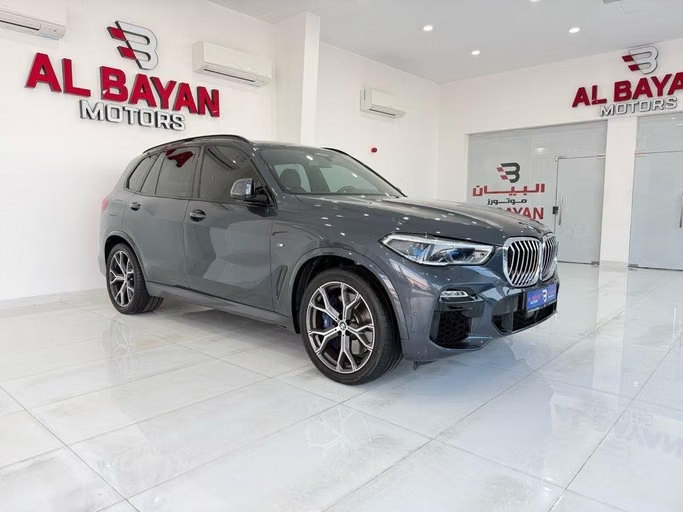
Picture 1. BMW X5 G05, a 2020 petrol version. Vehicle photographs.
Which is more practical for passengers and luggage?
That depends on your passengers and cargo. Published boot capacities are 650 litres for the X5 and 770 litres for the regular Cayenne. These are manufacturer figures for the relevant configurations. Try your own pushchair and suitcases before buying: a single capacity number cannot establish how useful the opening, load-floor height or space for awkward items will be.
One practical X5 feature is its split upper and lower tailgate. Check whether reaching deeper into the boot over the lower section suits you. Seat passengers behind correctly adjusted front seats, try the belt access and check the climate control. For everyday journeys, these details can be more valuable than decorative trim on the seller’s equipment list.
How can inspection show whether the premium is justified?
Compare the cost of bringing both vehicles to the required condition. Before paying a deposit, obtain separate quotations for identified defects, tyres and upcoming maintenance. With an initial AED 26,000 price difference, work costing a similar amount on the cheaper X5 would eliminate the saving. This is an arithmetic scenario, not a failure prediction or a repair budget.
On air-sprung examples, check height adjustment and whether the body maintains its position after parking. Inspect cold-start behaviour, cooling-system integrity, transmission shifts and all-wheel-drive operation on both cars. Clearing fault codes is insufficient: ask what any abnormal findings mean and obtain written rectification prices. Check any remaining manufacturer or dealer service package in the documents, including whether it transfers to the new owner.
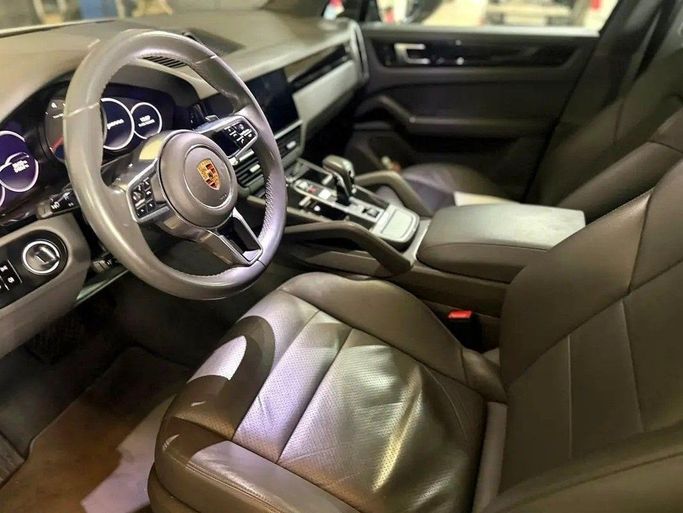
Picture 2. Cabin of a 2020 third-generation Porsche Cayenne. Vehicle photographs.
Does choosing a diesel X5 change the comparison?
Yes. The B57-powered X5 xDrive30d is a separate alternative, and the petrol 40i’s specifications do not apply. Different diesel versions appear in the pre-facelift European G05 range, making production date and confirmed specification important. Their differences, servicing and inspection points are covered in “The B57 diesel in the BMW X5 G05 xDrive30d”.
Conclusion
The BMW X5 xDrive40i offers a persuasive combination of performance and practicality without automatically requiring Cayenne money. Paying more for the Porsche makes sense when verified condition, useful equipment and your driving impressions justify it. Compare current X5 offers and Cayenne offers on those terms: their matching 340 metric horsepower is only the starting point.


