5 mistakes resellers make when selling a BMW 7 Series in the UAE
BMW 7 Series
BMW 7 Series•
•13 views

Editorial illustration. The vehicle and setting are illustrative and do not establish the specification of a particular car.
A BMW 7 Series resale can lose its profit before negotiations begin. Misidentifying the version, promising missing equipment or mistaking cosmetic preparation for mechanical health all create avoidable costs. An executive saloon needs evidence behind its asking price: an attractive cabin draws attention, but questions about suspension, servicing and body repairs still need documented answers.
These five mistakes concern the sixth-generation G11/G12*, particularly pre-facelift petrol 740i and 740Li models. Prices for the next generation and repair budgets for different engines are unsuitable shortcuts. The seller’s task is to preserve a worthwhile result after preparation and negotiation while making claims that survive an inspection.
* G11 and G12 are BMW’s internal designations for the standard-wheelbase and long-wheelbase sixth-generation 7 Series respectively.
Mistake 1. What should a BMW 7 Series cost, and why is an average misleading?
Set the asking price against comparable cars: the same generation, production period, engine, body length and original market. A general “7 Series price in Dubai” combines very different vehicles. Similar mileage does not make a documented car equivalent to one with uncertain repairs.
Start with the documents and VIN*: establish the factory version, production date and original market. First registration is not necessarily the model year. Confirm wheelbase from factory information too: model names differ between markets, and badges can be replaced. An inaccurate description attracts unsuitable enquiries and undermines confidence in the remaining information.
* VIN means Vehicle Identification Number; it identifies the car when checking factory information and available history.
Review current offers, then retain suitable UAE comparisons. Separate export offers, unverified specifications and cars in materially different condition. Advertised prices are seller expectations, not completed transaction values. A premium over comparable listings needs clear support from documented work, condition and equipment actually fitted.
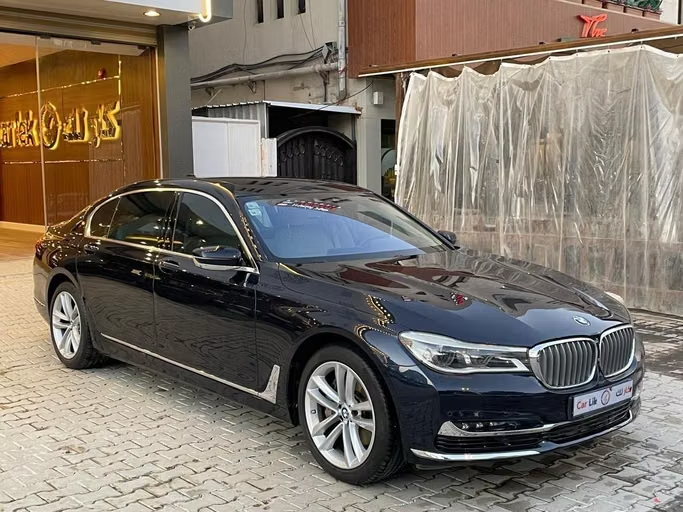
Pre-facelift BMW 740Li, generation G12. Model photo in the catalogue.
Mistake 2. Why can “full options” derail a sale?
Buyers may interpret it literally, while equipment varies between cars. The manufacturer’s generation launch material describes Executive Lounge* as optional equipment. Rear entertainment screens alone do not establish that the complete package is present.
* Executive Lounge is a rear-passenger comfort package; content and availability depend on the version and market.
Name individual features and test them: seat adjustments, ventilation and massage where fitted, climate zones, cameras and soft-close doors. Demonstrate each advertised function at the viewing. A factory equipment list establishes what was installed, not whether it still works.
A short video demonstrating the equipment is more useful than a specification copied from another vehicle. Identify any non-working function and the proposed arrangement: repair before handover or sale in an agreed condition. Do not describe an absent option as a fault or promise activation without confirming feasibility and cost.

BMW 740Li G12 cabin. Upholstery and seat appearance do not establish the full range of comfort functions. Model photo in the catalogue.
Mistake 3. Does a healthy engine guarantee a trouble-free sale?
No. Engine checks do not replace assessment of the suspension, body and electronics. The description on newsroom.bmwgroup.com specifies self-levelling air suspension on both axles for this generation. Check body height after parking, system warnings and road behaviour before budgeting repairs. Sagging requires diagnosis; it does not justify replacing every strut on that evidence alone.
For petrol 740i/740Li versions with the B58*, assess cold starting, the cooling system and performance under load. Reduced power does not prove turbocharger failure. A repair estimate should identify the cause, proposed work and verification after repair. Buyers can reasonably ask what was fixed even after a warning has disappeared.
* B58 is BMW’s family of turbocharged inline-six petrol engines; this discussion concerns early versions in pre-facelift 740i/740Li models.
For the related engine checks, see “The B58 turbo engine in the BMW 740i and 740Li G11/G12”. It supports questions about boost and cooling, but cannot replace diagnosis of the individual vehicle.
Read service paperwork carefully. The 2017 BMW US maintenance booklet lists engine oil, spark plugs and other service items separately. One oil-change invoice does not establish completion of all maintenance. The applicable schedule depends on the vehicle’s market, year and version.
Mistake 4. How do preparation and a small discount consume profit?
They reduce the difference between the sale proceeds and all vehicle-related costs. A purchase-versus-sale calculation is incomplete. Prioritise necessary diagnosis and repairs before deciding on cosmetics. Expensive wheels, retrofits or repainting for a fresher appearance do not guarantee an equivalent price increase. A buyer may prefer the original specification.
Illustrative calculation, not a market valuation: purchase at AED 80,000, diagnosis and preparation at AED 6,000, plus AED 2,000 of other costs attributable to the car. A sale at AED 95,000 leaves AED 7,000 before tax and allocated business overheads. A discount of AED 3,000 cuts that result to AED 4,000, a reduction of almost 43%, although the buyer receives only about 3.2% off the selling price.
Practical rule: set the discount limit against the remaining transaction result. Include transport, advertising, storage and financing where incurred. Run an additional-cost scenario separately: another AED 2,000 of unexpected expenditure would leave just AED 2,000 after the discount in this example. That exposes the risk before a final price is promised.
If the asking price produces no serious enquiries, revisit the comparisons and description. Do not add expensive equipment simply to justify a higher figure. Each extra job needs a purpose: resolving a fault, establishing condition or improving presentation without concealing history.
Mistake 5. Which promises put the seller’s reputation at risk?
Unsupported promises such as “needs nothing”, “everything serviced”, “all original paint” or “everything under warranty” are particularly risky. Replace them with facts: work completed, dates and mileage, known defects and the exact cover provided by an active warranty. Check its duration, conditions and transferability rather than relying on the existence of a document.
Photograph visible defects separately and arrange an independent inspection before final settlement. Washing and interior cleaning are appropriate; concealing leak evidence or presenting restored trim as untouched is not. A discrepancy discovered during inspection can undermine accurate claims elsewhere in the listing.
Keep a copy of the listing and the agreed work. If a fault appears after publication, update the description and inform an interested buyer. Repeat business depends on consistency: photographs, messages, inspection results and the car’s actual condition should tell the same story.
Conclusion
Sell a BMW 7 Series through the documented strengths of the individual car. Accurate identification, working equipment, clear repair history and a complete cost calculation support a defensible price. Protect the transaction result by discovering costs early and promising only what the vehicle and its records can substantiate.