How fast is the BMW 540i to 100 km/h? Figures for the 5 Series G30
BMW 5 Series
BMW 5 Series•
•3 views
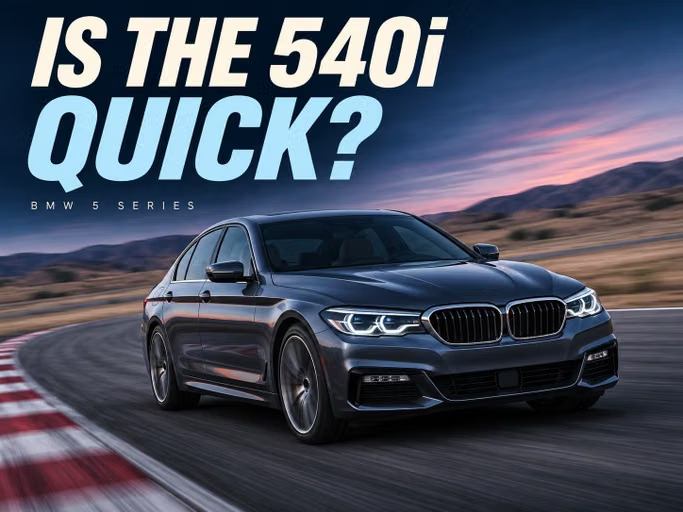
Editorial illustration. The car and closed-circuit scene are illustrative, depicting a pre-facelift BMW 5 Series G30.
The BMW 540i G30 reaches 100 km/h in 5.1 seconds with rear-wheel drive or 4.8 seconds with xDrive*, according to its original factory figures. All-wheel drive takes this 5 Series below five seconds without moving to a higher V8 model. However, the 540i badge spans different years and specifications, so an advertised time must be tied to the actual car.
* xDrive is BMW’s all-wheel-drive system.
For a UAE buyer, this is more than curiosity about speed. The differences between a 530i, a 540i and an updated 540i shape expectations and the reasons for paying extra. This article concerns the G30 saloon. Figures for the G31 estate, long-wheelbase derivatives or the subsequent G60 should not automatically be applied to it.
What are the factory figures for the early BMW 540i G30?
BMW’s documentation for the February 2017 market launch lists a 2,998 cc six-cylinder petrol engine producing 250 kW, or 340 metric horsepower, and 450 Nm. Both versions use an eight-speed automatic. Acceleration is quoted at 5.1 seconds for rear-wheel drive and 4.8 seconds for all-wheel drive.
Consequently, “540i 3.0” is not a complete performance description. Generation, body style and drive type must match. If a seller quotes 4.8 seconds for a standard rear-wheel-drive car, establish the source rather than treating it as a particular advantage of that vehicle.
Power also needs consistent units. Metric horsepower and mechanical horsepower are slightly different units. Similar but unequal figures in documents for different markets do not always establish a mechanical modification. Kilowatts and the factory description of the particular version provide a clearer starting point.
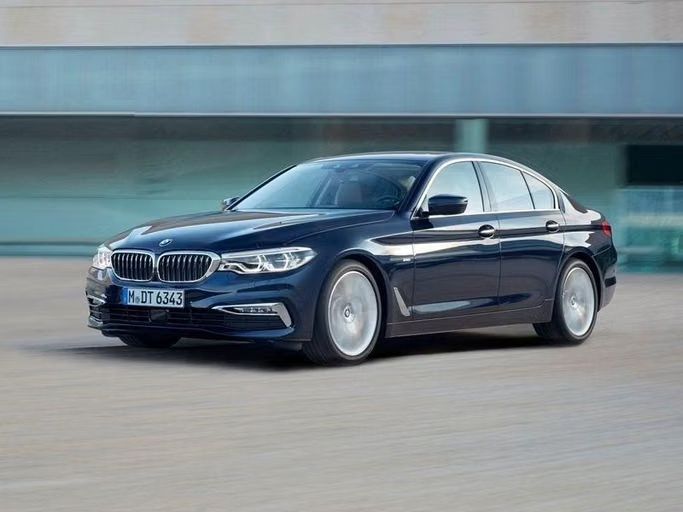
A pre-facelift BMW 5 Series G30 saloon. The photograph identifies the generation; an individual car’s specification establishes its output and drive type. Model photograph in the catalogue.
Why is the 540i xDrive quicker with the same power?
Acceleration from rest depends on putting power onto the road, not just producing it. All-wheel drive distributes driving force between the axles and can improve traction during a launch. Additional driven wheels do not increase engine output.
The quoted factory times differ by 0.3 seconds, approximately 5.9% of the rear-wheel-drive car’s time. That comparison describes the launch to 100 km/h. It does not prove the same advantage during every rolling acceleration, on every surface or with every load.
For everyday use, consider how much this particular launch advantage matters. In dense traffic, smooth response and predictable transmission behaviour are more frequently relevant. Paying extra for all-wheel drive should reflect your use of the car, rather than simply the appeal of a specification below five seconds.
What changed with the 2020 5 Series update?
The updated model’s international specification lists the 540i saloon at 245 kW, or 333 metric horsepower, and 5.2 seconds to 100 km/h. The 540i xDrive is quoted at 4.9 seconds. Those figures accompany versions with a mild-hybrid system*. They should not be assigned to every car from every market first registered in 2020.
* A mild-hybrid system provides electrical assistance to the petrol engine; it is not equivalent to a plug-in hybrid charged from the electricity supply.
A later car is therefore not necessarily quicker in the single 0–100 measurement. A tenth of a second says little about comfort, equipment or condition. When choosing between two production years, compare specification and history rather than assuming that a newer date guarantees stronger performance.
How much quicker is the 540i than the same-generation 530i?
For the original G30 range, BMW quoted 6.2 seconds for the 530i and 6.0 seconds for the 530i xDrive. Comparing like-for-like drive types gives the 540i an advantage of 1.1 and 1.2 seconds respectively. That is a larger distinction than the three tenths separating the two 540i versions.
The comparison involves different engines: the early 530i has a 1,998 cc four-cylinder unit producing 185 kW, while this 540i has a three-litre straight-six. The extra money buys a different powertrain, not simply a different boot badge. This is a meaningful consideration for someone who values stronger performance; it may carry less weight for relaxed urban use.
If the 530i remains on your shortlist, see the separate guide to the B48 engine in the BMW 530i G30. https://auto.ae/blog/car/bmw/bmw-5-series/the-b48-engine-in-the/556079/ It covers specifications, servicing and differences from American B46 versions. That article concerns the alternative 530i and should not be used as an engine guide for the 540i.
Why might a video show a different acceleration time?
The method, conditions or modifications may explain the difference. First establish whether the measurement ends at 100 km/h or 60 miles per hour: the latter is approximately 96.6 km/h. Then check whether timing begins at a complete standstill or after a small initial movement sometimes excluded from the result.
Road gradient, load, temperature and surface condition also affect comparability. One impressive video cannot establish that a car is healthier or more powerful than another. If the vehicle has been modified, request details of the changes and measurement conditions. Without them, a seller’s “faster than standard” description remains a claim rather than a verified specification.
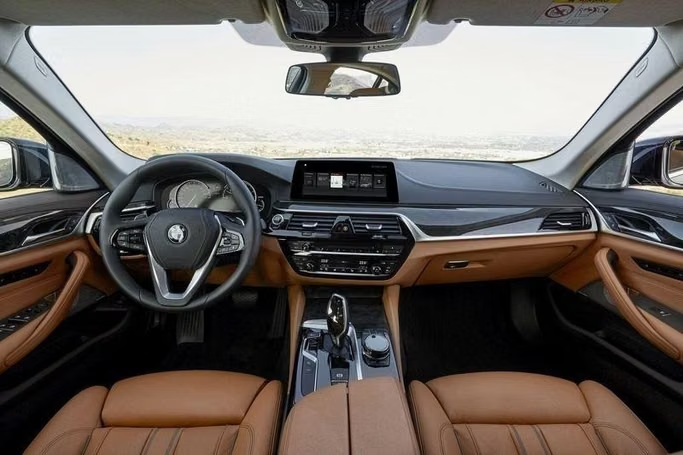
The pre-facelift BMW 5 Series G30 cabin. Interior styling and a sport mode do not establish the engine version. Catalogue photograph.
How should performance influence the choice of a used 540i?
Use factory times to select the right version, then assess the individual car’s condition separately. When browsing current offers, distinguish the 540i from other 5 Series derivatives first. Next compare cars with the same drive type and production period. Otherwise, part of the price difference reflects different specifications rather than the strength of the deal.
On a test drive, look for smooth, repeatable accelerator response within permitted driving conditions. Hesitation, warnings or a persistent loss of pull require diagnosis; age or sport-mode behaviour should not be used to excuse them. A maximum-acceleration test on an ordinary road is unnecessary for that assessment.
Consider the premium alongside forthcoming expenses. If two cars of the same version differ by AED 15,000, that is not automatically the price of “better performance”: mileage, equipment and documented work may explain it. This is a hypothetical comparison, not an observed market premium for the 540i.
Conclusion
For the early BMW 540i G30 saloon, the reference is 5.1 seconds to 100 km/h, or 4.8 seconds with xDrive. Updated versions need their own specification. Choose the 540i for its combination of a six-cylinder engine and executive-saloon performance, balancing factory capability against the individual car’s condition and the amount of extra money involved.