BMW 5 Series or Mercedes-Benz E-Class: which used car should you choose?
BMW 5 Series
BMW 5 Series•
•5 views
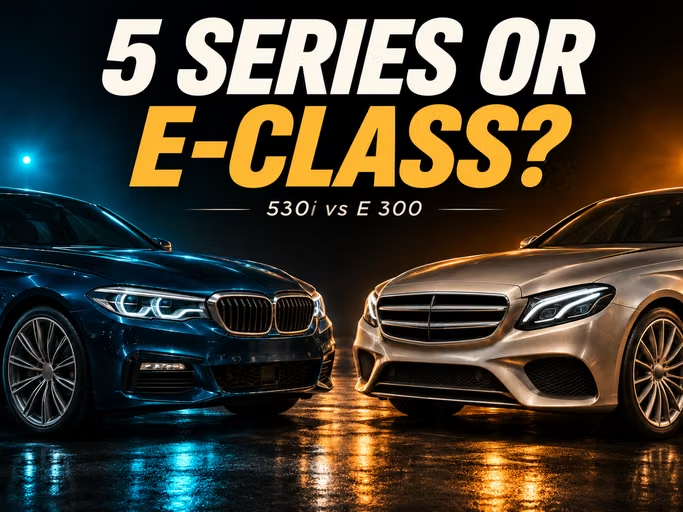
Editorial illustration. Vehicle appearance is illustrative; equipment varies by version and market.
The BMW 5 Series and Mercedes-Benz E-Class can sit in the same price bracket, but an equal budget does not buy an identical proposition. Among the offers checked on 26 November 2026 were a 2018 BMW 530i at AED 55,000 and a 2018 Mercedes-Benz E 300 at AED 59,000. The gap is AED 4,000, although mileage and regional specifications differ.
This comparison covers pre-facelift G30-generation BMW and W213-generation Mercedes-Benz saloons, focusing on the two-litre petrol 530i and E 300. It examines purchase price, size, performance and equipment worth seeking out. Newer generations and hybrid versions are outside this comparison.
Which BMW 5 Series and E-Class versions make a fair comparison?
Start with similar production years, the same type of drive and documented histories. A 530i or E 300 badge is insufficient: an imported car may differ from a regional model in power output, equipment and servicing requirements. The factory specifications below are therefore separate from the prices of the individual used vehicles.
| Parameter | BMW 530i G30 | Mercedes-Benz E 300 W213 |
|---|---|---|
| Turbocharged petrol engine | 1,998 cc, four cylinders | 1,991 cc, four cylinders |
| Power, kW / PS* | 185 / 252 | 180 / 245 |
| Torque | 350 Nm | 370 Nm |
| Automatic transmission | Eight speeds | Nine speeds |
| 0–100 km/h | 6.2 seconds | 6.3 seconds |
| Approximate length | 4.94 metres | 4.92 metres |
* kW means kilowatts; PS means metric horsepower. cc denotes cubic centimetres and Nm means newton-metres, a measure of torque. Performance figures refer to rear-wheel-drive versions: they are factory figures, not tests of the advertised cars.
The 530i figures come from BMW’s launch material; the E 300 figures appear in Al Fahim Group’s publication. A power difference does not establish a decisive real-world advantage: the quoted acceleration times are just 0.1 seconds apart. Engine condition, smooth shifts and throttle response on a test drive matter more to a used buyer.
What do the prices of the 2018 examples show?
The selected BMW costs AED 4,000 less, approximately 6.8% below the Mercedes asking price. This compares two offers, not market averages. Mileage and origin are seller declarations and should be checked against the vehicle’s documents before purchase.
| As checked on 26 November 2026 | BMW 530i | Mercedes-Benz E 300 |
|---|---|---|
| Asking price | AED 55,000 | AED 59,000 |
| Advertised mileage | 137,000 km | 149,000 km |
| Regional specification | Korean | American |
| Advertised drive | Rear-wheel drive | Rear-wheel drive |
Compare alternatives through current BMW 5 Series offers and Mercedes-Benz E-Class offers. First match production years and broadly similar equipment, then assess the records. A low asking price without a clear history is not enough to establish good value.
Is there a meaningful difference in size and cabin practicality?
The difference in external length is small: both saloons occupy close to five metres of parking space. The Mercedes-Benz specification gives the E-Class a length of 193.8 inches, approximately 4.92 metres. Choosing solely on garage fit offers little distinction. Instead, check the actual entrance width, door clearance and visibility when parking each car.
For family use, repeat the same seating test in both. Set the driving seat correctly, then have an adult sit directly behind it. Check knee room, headroom, access when fitting a child seat and reach to the seat belts. If five people regularly travel together, try the middle rear seat separately. Body dimensions cannot tell you whether your own passengers will be comfortable.
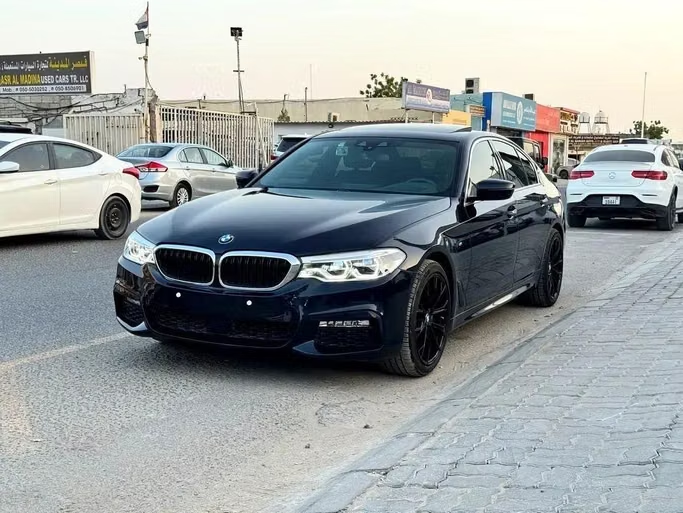
Picture 1. BMW 530i G30, 2018. Vehicle photographs.
Which options justify paying more?
Pay extra for useful equipment that actually works. BMW described a 10.25-inch iDrive screen in the highest specification. The E-Class offered a Widescreen Cockpit* with two 12.3-inch displays. Verify these systems against the factory equipment list: a photograph of an impressive dashboard is insufficient, especially where the multimedia hardware has been replaced.
iDrive is BMW’s interface for multimedia and vehicle functions. * Widescreen Cockpit combines the Mercedes-Benz digital instruments and central display in a unified dashboard layout.
Compare ride quality over the same route. Wheel size, tyre condition, suspension specification and worn dampers can affect the result more than the badge. Air suspension was optional on the early E-Class; it should not be assumed to be fitted to every E 300. Buyers prioritising a supple ride should establish the actual specification, then assess how each car deals with road joints and uneven surfaces.
During inspection, operate the climate control, cameras and every seat adjustment. Ask for the advertised driver-assistance functions to be demonstrated under suitable conditions. An expensive feature that does not work calls for a repair quotation, rather than simply accepting a token discount.
How should you compare costs beyond the purchase price?
Compare the complete outlay: purchase price, necessary work, insurance and registration. Obtain written quotations for identified defects, consumables and tyres on both cars. If the cheaper example immediately needs work costing more than the price gap, the apparent saving disappears. A contingency allowance should not be presented as a guaranteed servicing cost for the model.
For the BMW, identify the engine using the VIN*, because early 530i models from different markets may use a B48 or B46. Check cooling-system integrity, cold-start behaviour and diagnostic results. The relevant detail is covered in “The B48 engine in the BMW 530i G30”. That guide concerns a specific engine version.
* VIN means Vehicle Identification Number; it helps establish the factory specification and which documentation applies.
The E 300 needs the same independent inspection of its engine, transmission and running gear. On an imported vehicle, investigate previous damage and repairs rather than relying only on present paint thickness. A seller’s “no repair required” declaration does not replace diagnosis. Without comparable failure data, neither model can credibly be declared universally more reliable.
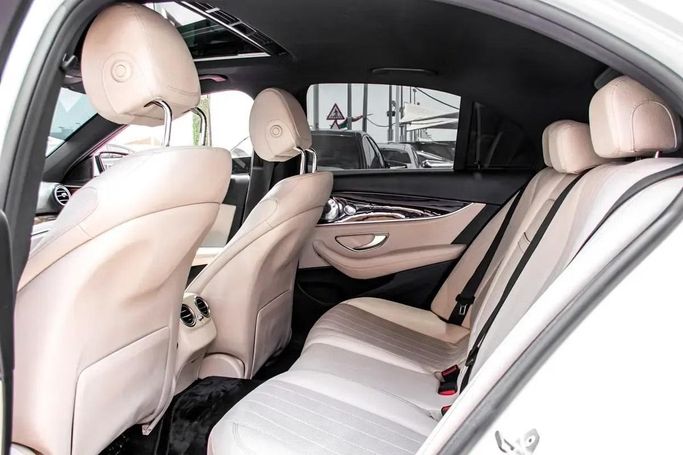
Picture 2. Rear cabin of a 2018 Mercedes-Benz E 300 W213. Vehicle photographs
Conclusion
Choose a BMW 530i G30 when the individual car suits your seating and driving preferences, passes inspection and leaves room in the budget for maintenance. An E 300 W213 is an equally relevant alternative when its verified cabin specification and ride better meet your needs. In this comparison, records, inspection findings and written quotations should decide the purchase, rather than seven metric horsepower or a 0.1-second difference on paper.