


BMW 5 Series: how the new generation changed the UAE market choice
BMW 5 Series
BMW 5 Series•
•3 views
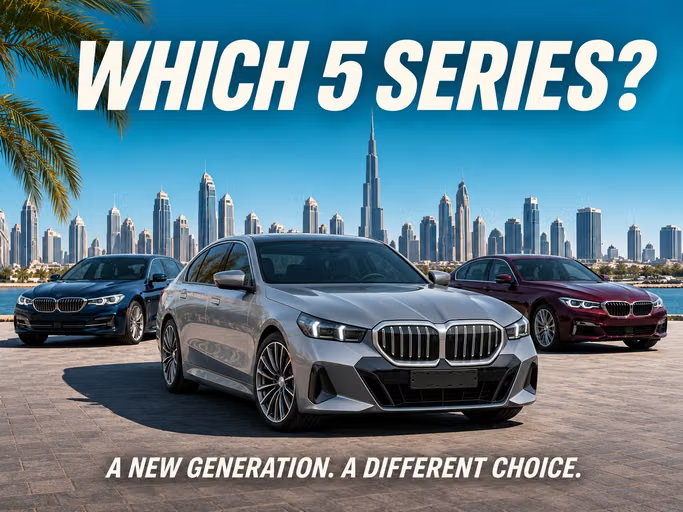
Editorial illustration. Vehicles are shown illustratively; equipment and specifications depend on the individual version.
The BMW 5 Series generation change has widened the choice in the UAE: familiar petrol saloons now sit alongside a larger current model and the electric i5. Buyers face several ownership scenarios under one family name. A newer body does not automatically make the previous 5 Series poor value: budget, specification and the features you will actually use still matter.
On 26 November 2026, listings include both previous-generation cars and current-generation saloons with substantial mileage. The choice is therefore more complex than “an old car or a new one from the showroom”. Here is what changed and how to interpret offers without confusing generations.
What changed with the new body?
BMW’s launch information dates the start of the new generation’s market introduction to October 2023. The standard saloon grew by 97 mm to 5,060 mm in length. Its wheelbase increased by 20 mm to 2,995 mm. These dimensions concern the standard saloon, rather than a long-wheelbase version intended for a particular market.
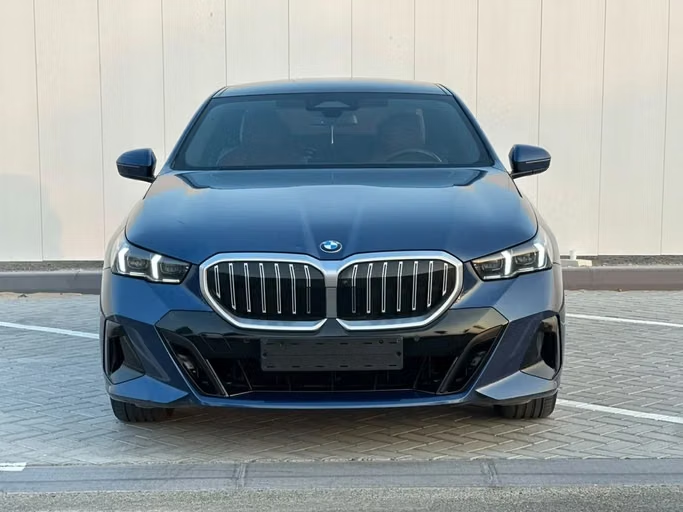
The current BMW 520i: the new body brings different proportions and front-end styling.
For daily use, those changes raise practical questions. Will it fit your usual parking space? Can you open the doors beside a column? Is the seat behind the driver comfortable? Extra exterior length does not translate directly into the same increase in rear knee room. Testing seating and manoeuvrability is more useful than judging space from photographs alone.
Separate the market into three groups: early examples of the previous generation, its facelifted versions and the current saloon. The year in a listing helps narrow the search, but around a model transition you should confirm both the body version and production date.
What do sellers ask for different generations of BMW 520i?
Three checked offers show the following seller-stated prices and mileage. All are described as GCC-specification* cars. This is a snapshot of individual choices on 26 November 2026, not an average valuation or a record of completed transactions.
* GCC means Gulf Cooperation Council; in vehicle listings it identifies a regional specification.
| Version and stated mileage | Asking price |
|---|---|
| 520i, 2019, previous generation; 118,995 km; Ajman | AED 62,000 |
| 520i, 2024, current generation; 110,000 km; Sharjah | AED 158,000 |
| 520i, 2026, current generation; 1,002 km; Sharjah | AED 255,000 |
Use current offers to compare other cars. Select the generation and version first, then account for mileage, equipment and history. The overall results cover different markets: listings in neighbouring countries and prices in other currencies should not be treated as local offers.
The two current-generation 520i examples differ by AED 97,000. That gap shows why a shared body and engine designation are insufficient for valuation: their age and stated mileage differ substantially. Equally, the difference between the 2019 and 2024 cars cannot be described simply as a premium for new styling without allowing for condition and equipment.
Has the new 5 Series displaced the previous generation?
There is no basis for treating the previous model as absent from the market: both generations are advertised simultaneously. However, available listings do not measure buyer demand. Claiming that one generation sells faster requires comparable evidence about selling times and completed transactions. A large number of advertisements can indicate either a broad choice or stock taking longer to sell.
Why is the previous 5 Series still worth considering?
It brings an executive-saloon experience within a lower initial budget. But the saving should leave room for work needed on the individual car. An older example with clear service documentation and verified condition deserves its own assessment, even when a more striking current model is available nearby.
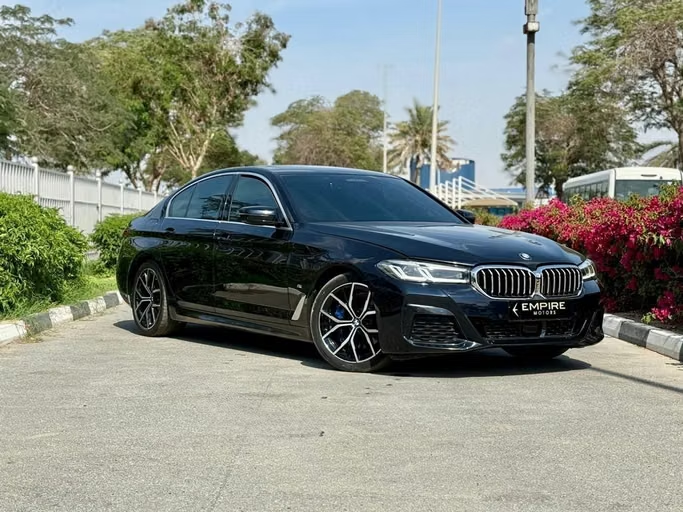
A facelifted previous-generation BMW 5 Series from 2022. This version differs from the early 530i covered in the engine article.
Look beyond appearance. On a test drive, assess seating, ride quality and how easily you can operate the climate controls. Check the equipment actually fitted: an identical version name does not guarantee identical seats, cameras or sound systems. Service records and an estimate for necessary repairs help establish whether the price difference remains a meaningful saving.
What should you know about a used 530i’s engine?
If your shortlist includes an early previous-generation 530i, read the guide to the B48 engine in the BMW 530i G30*: specifications, maintenance and checks. It explains the distinction between B48 and B46 engines in cars from different markets. Its findings should not automatically be applied to every 520i or current-generation 530i.
B48 and B46 identify BMW four-cylinder turbocharged petrol engine families. * G30 is the previous saloon generation’s factory code; the linked guide concerns its early 530i.
How should you read the current 520i’s specifications?
Distinguish combustion-engine output from the complete powertrain’s output. The regional model page lists 208 hp and 330 Nm for the 520i, with a qualification about temporary electrical assistance lasting less than ten seconds. A figure in a general advertisement therefore should not automatically be compared with the powertrain’s maximum output. Confirm the chosen car’s market, year and factory specification.
A mild-hybrid system* does not mean that the saloon needs plugging in. It does, however, add electrical components that should be considered when checking a used example. Understanding the specific version is more useful than choosing whichever advertisement shows the highest power figure.
* A mild hybrid uses an electric motor to assist the petrol engine. It should not be equated with a fully electric vehicle or a plug-in hybrid.
How has the electric i5 changed the choice within the family?
It introduces a purchase scenario where charging access becomes central. The bmw-dubai.com website presents the petrol 5 Series and i5 separately. If you can charge regularly at home or work, the electric version deserves consideration. Without that access, first assess the availability of charging stations on your normal routes.
Do not combine the petrol car and i5 into one calculation of residual value, running costs or inspection requirements. An electric example needs a separate assessment of its battery and warranty terms. A more modern cabin is no substitute for usability checks either: try climate controls, navigation and parking functions before committing to a purchase.
Conclusion
The new body has broadened the UAE’s BMW 5 Series choice: buyers now compare generations, wear and different powertrain types. The previous model remains relevant to a tighter budget, the current saloon offers a different vehicle package, and the i5 needs a charging plan of its own. A sound purchase starts with an exact specification and comparable offers; the age of the body design alone does not determine value.


